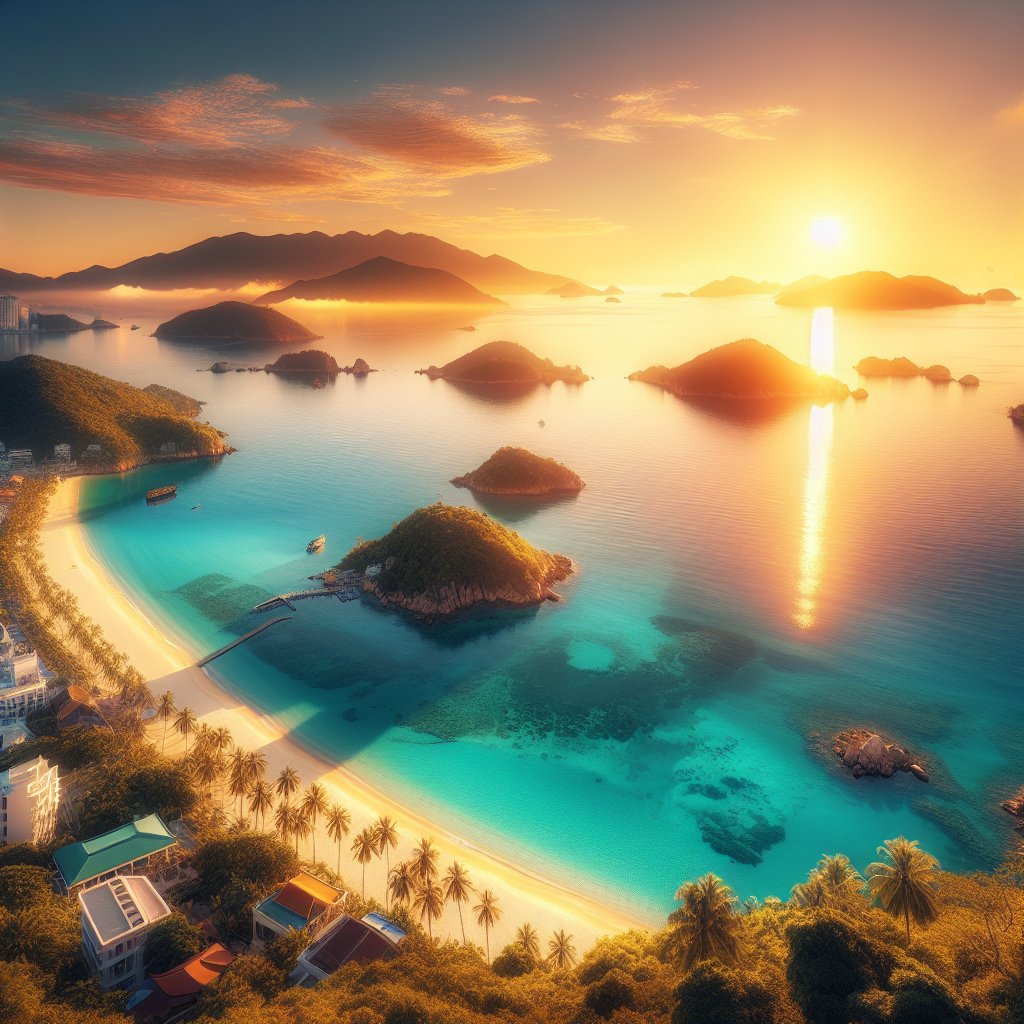
The Nha Trang travel guide begins, as all great coastal stories do, with water — specifically the kind of crystalline, turquoise-green water that makes you stop mid-sentence and stare. Nha Trang is Vietnam’s original beach city: a crescent of white sand backed by a bustling metropolis, flanked by jungle-covered mountains and dotted with offshore islands where coral reefs teem with life. It is loud, colourful, occasionally hectic and absolutely irresistible. Here is everything you need to know.

Nha Trang at a Glance: What Makes This City Worth Your Time
Nha Trang sits on the south-central coast of Vietnam, about 450 kilometres north of Ho Chi Minh City in Khanh Hoa province. The city is built around a six-kilometre stretch of beach that faces directly east — which means sunrise from the sand is a daily spectacle, the sky going from deep violet to pink to blinding gold as fishing boats putter across the bay. Behind the beachfront promenade, a real Vietnamese city pulses: markets, street food stalls, temples, coffee shops and the chaotic motorbike traffic that somehow flows with its own logic.
What sets Nha Trang apart from Vietnam’s other beach destinations is the combination of natural assets and urban energy. Phu Quoc is more tranquil, Da Nang more liveable, but Nha Trang is the one that never quite lets you switch off. Day trips to the islands for diving and snorkelling, evenings on the beach promenade with a cold Saigon beer and a grilled seafood platter, nights in the vibrant strip along Tran Phu — this city earns its reputation as Vietnam’s coastal playground.
The bay itself is ringed by 19 islands, several of which are accessible on day trips by speedboat or traditional wooden vessel. Hon Mun, Hon Tam and Hon Mot each offer coral gardens in various states of health; Hon Tre is home to Vinpearl, Vietnam’s most extravagant amusement resort. Even a half-day on the water leaves you feeling like a different person. If you are timing your visit carefully, Nha Trang’s best swimming season runs from January to August — for a full breakdown of Vietnam’s seasonal weather, read our Vietnam weather and best time to visit guide.
Nha Trang Beaches: Where to Swim, Sunbathe and Watch the World Go By

The main Nha Trang beach — Tran Phu Beach, named after the boulevard that borders it — runs for nearly six kilometres. In the morning it belongs to the locals: elderly Vietnamese do tai chi in the shallows, children splash at the edges, vendors wheel carts of coconut and sugarcane juice along the boardwalk. By mid-morning it transitions to the tourists — sunloungers and umbrellas for hire, jet ski operators touting energetically, the smell of coconut sunscreen drifting on the breeze.
For a quieter experience, head to Bai Dai Beach, about 25 kilometres south of the city centre near Cam Ranh airport. The sand here is finer, the water cleaner, and development — for now — remains modest. A handful of low-key beach clubs and resorts line the shore, making it a perfect half-day escape from the city buzz.
Doc Let Beach, 50 kilometres north of Nha Trang, is another gem that few short-stay visitors discover: a vast stretch of shallow, calm water ideal for wading, with the Hon Khoi salt flats visible in the distance. Visiting at dawn, when salt farmers begin their work in the pink early light, is one of those quietly extraordinary Vietnam moments that stays with you long after you have left.
For the best swimming conditions, the dry season from January to August offers calm, clear water. September and October bring rougher seas and occasional jellyfish. Always check local conditions before entering the water.
Nha Trang Diving and Snorkelling: Exploring Vietnam’s Best Underwater World
Nha Trang is the undisputed diving capital of Vietnam. The bay’s protected waters, combined with the surrounding coral-rich islands, create conditions that make it one of South-East Asia’s most accessible dive destinations. Water visibility is typically 10–20 metres on a good day; temperatures hover between 26°C and 29°C year-round.
The most popular dive sites cluster around Hon Mun Marine Protected Area, a 160-square-kilometre reserve established to protect Khanh Hoa province’s coral ecosystem. Dive sites include Moray Beach, where eels thread through brain coral, and Madonna Rock, a submerged pinnacle teeming with lionfish, grouper and occasional reef sharks. Soft coral gardens at 12–18 metres depth blaze in vivid purples and oranges when illuminated by a dive torch.
For snorkellers, the waters around Hon Tam and Hon Mot offer good reef access without full scuba certification. Many tour operators run day trips that combine two or three island stops, a beach lunch on a wooden boat, and sometimes a floating sea bar that bobs in the middle of the bay — a uniquely Nha Trang institution.
Dozens of PADI-certified dive centres operate along Biet Thu Street. A standard two-dive trip to Hon Mun costs around $40–60 USD including equipment. If you are doing a learn-to-dive course, the Open Water certification takes 3–4 days. Make sure your Vietnam visa is arranged well in advance so you have maximum time in the water.
Things to Do in Nha Trang Beyond the Beach
Nha Trang rewards those who look beyond the sunlounger. The Po Nagar Cham Towers, perched on a granite hill overlooking the Cai River just north of the city, are among the finest surviving examples of Cham Hindu architecture in Vietnam. Built between the 7th and 12th centuries, the main tower rises 23 metres — still actively used as a place of worship, with incense smoke curling past ancient bas-reliefs of dancing apsara figures. Arrive early before tour groups and you will have the hilltop almost to yourself, the city spread below and fishing boats threading through the river delta beneath.
The Long Son Pagoda, in the west of the city, is famous for its enormous white Buddha seated atop a hill overlooking the rooftops. The climb — past mosaic dragons and through incense-heavy halls — takes about 20 minutes and rewards you with a panoramic view that reframes the whole city’s geography.
For a taste of authentic local life, the Dam Market (Cho Dam) is the city’s oldest and most atmospheric wet market: a two-storey maze of dried seafood, tropical fruit, live crabs and bolts of fabric. Arrive before 8am for the freshest produce and most photogenic light.
Mud bathing at Thap Ba Hot Spring Centre is a quintessential Nha Trang experience — slightly absurd, deeply relaxing, and strangely good for the skin. You wallow in warm volcanic mineral mud, rinse off in a hot mineral pool, and emerge feeling genuinely restored. Enormously popular with Vietnamese tourists and, frankly, with good reason.
If you are keen to explore more of Vietnam’s coast after Nha Trang, Da Nang’s beaches and city life make a compelling next stop north, while the extraordinary cave system of Phong Nha-Ke Bang is accessible by an overnight train from Nha Trang to Dong Hoi.
Where to Eat in Nha Trang: A City That Takes Seafood Seriously

Nha Trang is a seafood city, full stop. The morning catch — snapper, grouper, squid, clams, lobster — arrives at the harbour before dawn and ends up on grill plates and in clay pots across the city by lunch. Eating well here requires almost no effort.
The most atmospheric seafood experience is at the informal restaurants along Biet Thu Street, where tanks of live shellfish and tiger prawns sit outside every door and the grill smoke drifts down the entire block. Point at what you want, agree on a price per kilogram, and watch it cooked before you. A meal for two with cold beer rarely exceeds 500,000 VND (about $20 USD).
For Vietnamese breakfast, bun ca — Nha Trang’s own fish noodle soup — is the dish to eat before anything else. The broth is light but deeply savoury, coloured golden with turmeric, loaded with chunks of fried fish cake and fresh herbs. Find it at roadside plastic-stool joints near Dam Market from 6am onwards.
Nem nuong — grilled pork skewers wrapped in rice paper with herbs, green mango and a deep molasses-dark dipping sauce — is another Nha Trang speciality that does not travel well to other cities. Eat it here, eat it every day. Budget-conscious travellers will find that a full seafood dinner for two costs a fraction of what a resort would charge — for wider tips on keeping costs down, the Solo Travel in Vietnam guide covers budget eating strategies across the country.
Getting to and Around Nha Trang
Cam Ranh International Airport, 35 kilometres south of the city, receives direct flights from Hanoi, Ho Chi Minh City and Da Nang, as well as international connections from Singapore and Seoul. Budget carriers VietJet and Bamboo Airways run multiple daily services; the one-hour flight from Ho Chi Minh City costs as little as $25 USD booked in advance.
The Reunification Express train is one of Southeast Asia’s great rail journeys: the overnight sleeper from Ho Chi Minh City reaches Nha Trang after roughly 8 hours. Trains also connect northward to Da Nang (6–7 hours) and Hanoi (24 hours). Book sleeper cabins well ahead on national holidays.
Within the city, Grab and Be ride-hailing apps make getting around honest and cheap — fares are metered and the transaction happens via app. Motorbike rentals are available for $8–12 USD per day. For island day trips, the main boat pier at Cau Da Harbour is a 10-minute taxi ride south of the main beach, with typical departure at 8am and return by 5pm.
When is the best time to visit Nha Trang?
The best time to visit Nha Trang is from January to August, when the weather is dry and sunny and the sea is calm and clear. The peak diving and snorkelling season is January to July. September and October see rougher seas and more rain; November and December are transitional months as the city emerges from its wet season.
Is Nha Trang good for diving?
Yes — Nha Trang is widely considered the best diving destination in Vietnam. The Hon Mun Marine Protected Area offers coral reef dives with good visibility (10–20m) and diverse marine life including reef sharks, moray eels, lionfish and healthy soft coral gardens. Dozens of PADI dive centres operate in the city offering everything from introductory dives to full certification courses.
How many days do you need in Nha Trang?
Three to four days is the ideal length for most visitors: arrive and explore the city and beach on day one, take an island day trip for snorkelling or diving on day two, visit Po Nagar towers, Dam Market and Thap Ba mud baths on day three, then head to Doc Let or Bai Dai beach or depart on day four. Divers doing a full PADI Open Water course will want at least five days.
How do I get from Ho Chi Minh City to Nha Trang?
The most popular options are flying (1 hour, from around $25 USD on budget carriers) or taking the overnight train (about 8 hours, sleeper cabin from around $25 USD). Budget bus services also cover the route in 10–12 hours. The train is highly recommended for the scenic coastal views as you approach Nha Trang from the south.
Is Nha Trang safe for tourists?
Nha Trang is generally safe. The main risks are petty theft on the beach road, jet ski scams involving inflated damage claims, and swimming in rough seas during October and November. Use Grab rather than unmetered taxis, agree all prices before any beach activity, and pay attention to sea condition flags on the beach.
Leave a Reply