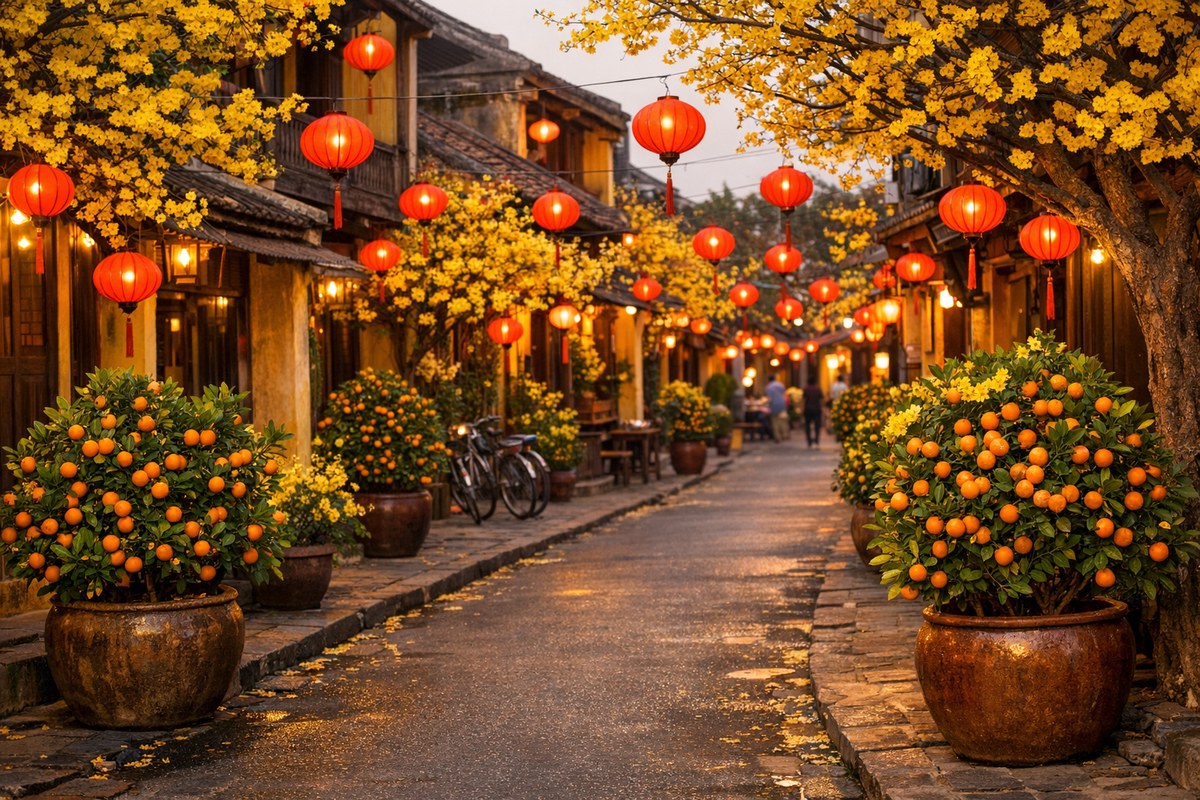
Planning a Tet 2027 Vietnam trip means planning around the most important week in the Vietnamese calendar, a moment when a whole country of 100 million people goes home, lights incense for its ancestors and pours into the streets in its finest clothes. In 2027 the Lunar New Year falls on 6 February, the dawn of the Year of the Goat, and travellers who understand how Tet works will find Vietnam at its most soulful, colourful and unforgettable. Those who do not may find themselves staring at shuttered noodle stalls and sold-out buses.
This guide explains what Tet is, which dates matter, what closes, what stays gloriously open, and where to be for the best experience. If you are still choosing your season, our month-by-month guide to the best time to visit Vietnam puts Tet in context with the rest of the year.
Tet 2027 Vietnam: Dates, Holiday Length and What the Calendar Means
Tet Nguyen Dan, “the first morning of the first day”, follows the lunar calendar, so it moves each year between late January and mid-February. In 2027 the first day of the new year is Saturday 6 February, which puts Tet Eve (the night of 5 February) on a Friday. Lunar months are the heartbeat of the celebration: the days before are busy with shopping, cleaning and cooking, and the days after are devoted to visiting family and temples.
The government has been weighing the length of the official break for 2027, and reports suggest a seven-day public holiday is favoured, though the final schedule is always confirmed by the authorities closer to the date. Because work swaps are common, the effective shutdown can stretch from the last days of January to around the middle of the second week of February. Treat the following as a practical rhythm rather than an exact timetable:
- Late January: Flower markets bloom, roads fill with trucks carrying kumquat trees and peach blossom, and tickets for trains, buses and flights sell out.
- 5 February (Tet Eve): Families gather for the reunion meal; cities empty and fall quiet until the midnight fireworks.
- 6 to 8 February: The first three days, when most family businesses close and visiting rituals take place.
- 9 February onward: Tourist services gradually reopen, though some restaurants and markets in smaller towns stay shut for another week.
The official Vietnam tourism authority publishes festival information at vietnamtourism.gov.vn, and it is worth checking there for the final holiday announcement before you book non-refundable flights.
The Tet Rituals That Make This Vietnam’s Most Magical Week
To understand Tet is to understand why the country pauses. The festival is a renewal in the fullest sense: debts are settled, houses are scrubbed, and old grievances are quietly forgiven. A week before the new year, families hold the Ong Tao ceremony, sending the Kitchen Gods to heaven with an offering of carp to report on the household. Ancestral altars are loaded with fruit, flowers and incense, because the dead are believed to return home for the celebrations too.
Then come the symbols. Yellow apricot blossom (hoa mai) glows in southern and central homes, while pink peach blossom (hoa dao) dominates the north. Kumquat trees heavy with orange fruit stand by every doorway as promises of prosperity. Children receive red envelopes of lucky money, and the very first visitor to cross the threshold on New Year’s morning, the “first footer”, is chosen with care because their luck is believed to shape the whole year ahead.

As a guest you are rarely a spectator for long. If you are invited into a home, accept. Bring a small gift of fruit, tea or sweets in even-numbered quantities, dress neatly, and wish your hosts “Chuc mung nam moi” (happy new year). Avoid sweeping the floor on the first day, which is thought to sweep away good fortune, and do not be surprised if conversations steer away from anything negative. Our guide to essential Vietnamese phrases for travellers will help you get the greetings right.
Where to Spend Tet in Vietnam: Hanoi, Hoi An, Hue and Ho Chi Minh City
Each city celebrates differently, and choosing the right one shapes your whole trip.
Hanoi is the classic choice for atmosphere. In the days before Tet, the Hang Ma and Hang Luoc streets burst with decorations, and the flower market at Quang An rolls out peach blossoms at dawn. On Tet Eve, the area around Hoan Kiem Lake is lit up and crowds gather for fireworks. Then the city falls hushed and almost romantic; the empty Old Quarter on the first morning, with incense smoke curling from doorways, is a rare sight. Our Hanoi travel guide covers the neighbourhoods to explore either side of the holiday.
Hue, the former imperial capital, honours the ceremonial side of Tet. Courtly traditions and temple rituals are especially strong here, and the Citadel often hosts cultural performances. Read the Hue travel guide to plan how to pair palaces with riverside quiet.
Hoi An is lantern-lit perfection, with its yellow shophouses draped in red and families offering fruit at ancestral altars. Many restaurants close for several days, but the Old Town itself is beautiful at this time; see our Hoi An travel guide for tips on the quietest streets and best riverside views.
Ho Chi Minh City hosts a spectacular flower street on Nguyen Hue Boulevard, a pedestrian avenue transformed into a garden of installations that locals crowd to photograph. The city empties dramatically as migrants return home, making roads the calmest you will see all year. Our Ho Chi Minh City travel guide lists what to do when the usual bustle takes a rest.
What to Eat During Tet: Banh Chung, Pickled Shallots and Family Feasts
Tet food is deeply symbolic, and much of it is cooked in advance because kitchens traditionally rest on the first days. In the north, families gather around huge pots simmering banh chung, square parcels of glutinous rice, mung bean and pork wrapped in dong leaves and boiled overnight. In the south, the equivalent is banh tet, a cylindrical cousin. Both are best sliced with string and served with pickled shallots, which cut through the richness beautifully.

Other classics include gio lua (Vietnamese pork sausage), thit dong (jellied pork), boiled chicken with lime-leaf, and mut Tet, a tray of candied fruits and seeds offered to guests. In the south you will also find braised pork and eggs in coconut water (thit kho). Restaurants catering to tourists often stay open in big cities, but small family eateries close, so the best way to eat well is to book a homestay or a hosted cooking experience. Our guide to Vietnamese cooking classes is a good starting point, and our street food safety guide remains useful if you graze at festival stalls.
Practical Tips: Transport, Bookings, Closures and Budget
Tet is the single hardest period to travel in Vietnam, but also one of the most rewarding if you plan ahead. Here is what matters most.
- Book early. Domestic flights, sleeper trains and long-distance buses can sell out weeks in advance, and prices spike in the days before and after the holiday. Plan to fly into your base city before the rush rather than moving around during it.
- Stock up. Supermarkets and convenience stores stay open in cities but street stalls, markets and many restaurants close for three to seven days. Carry cash, because some ATMs run dry; our Vietnam money guide explains currency and withdrawals.
- Choose accommodation wisely. Hotels in major cities remain open but often raise their rates; tourist areas such as Hoi An and Da Nang stay lively, while smaller towns can be nearly closed.
- Respect the quiet. The first days are family time. Keep noise low, dress modestly at temples and ask before photographing people at altars.
- Check your visa. Holiday closures can slow processing, so confirm requirements well in advance through the official portal at evisa.gov.vn, and read our Vietnam visa guide for the details.

As for budget, expect flight and hotel prices to be higher than normal, though street-level costs stay modest. Our Vietnam on a budget guide can help you plan around the premium. If you would rather avoid the crush entirely, consider arriving a week after Tet, when the country is back to work but the blossoms still linger in northern gardens.
Is Tet the Right Time for You? A Sample Seven-Day Plan
If you do choose to travel, a compact itinerary works best. Spend the first three nights in Hanoi to catch the flower markets and Tet Eve fireworks, then take a flight south to Hoi An for the lantern-draped quiet of the first days, and finish in Ho Chi Minh City for the flower street and the reopening of its famous markets. Keep your internal journeys to short hops, and make bookings for key dinners and tours before you leave home. In the north, bring layers: February is cool, damp and sometimes drizzly, so our packing guide for Vietnam will help you prepare.
Travellers who love slow, immersive experiences will find Tet unmatched. Travellers who want packed itineraries and every attraction open should consider travelling in another season. Either way, arriving with respect and curiosity will earn you smiles, invitations and a glimpse of Vietnam that most visitors never see.
Conclusion: Welcome the Year of the Goat in Vietnam
Tet 2027 in Vietnam is not just a holiday; it is an invitation. For one week the country slows, softens and opens its doors, and if you are there with an open heart you will leave with memories of blossom-scented streets, incense smoke and the warmth of a family that insisted you eat one more slice of banh chung. Start planning now, book early, and let the Year of the Goat begin on Vietnamese soil.
Frequently Asked Questions
When is Tet 2027 in Vietnam?
Tet Nguyen Dan 2027 falls on 6 February 2027, with Tet Eve on 5 February. It marks the start of the Year of the Goat.
How long is the Tet holiday in Vietnam in 2027?
The official break is expected to be around seven days, but reports show the final schedule is confirmed closer to the date. Many businesses stay closed for longer, especially outside big cities.
Is it a good idea to travel to Vietnam during Tet?
Yes, if you plan ahead. Cities are atmospheric and quiet, and tourist hubs stay open, but transport sells out, prices rise and many local restaurants and markets close.
What should I avoid doing during Tet in Vietnam?
Avoid sweeping the floor on New Year’s Day, arguing, wearing mostly black or white, and arriving at a home empty-handed. Keep a respectful tone at altars and temples.
What are the best places to experience Tet in Vietnam?
Hanoi for flower markets and fireworks, Hue for imperial traditions, Hoi An for lanterns, and Ho Chi Minh City for the Nguyen Hue flower street.
Leave a Reply