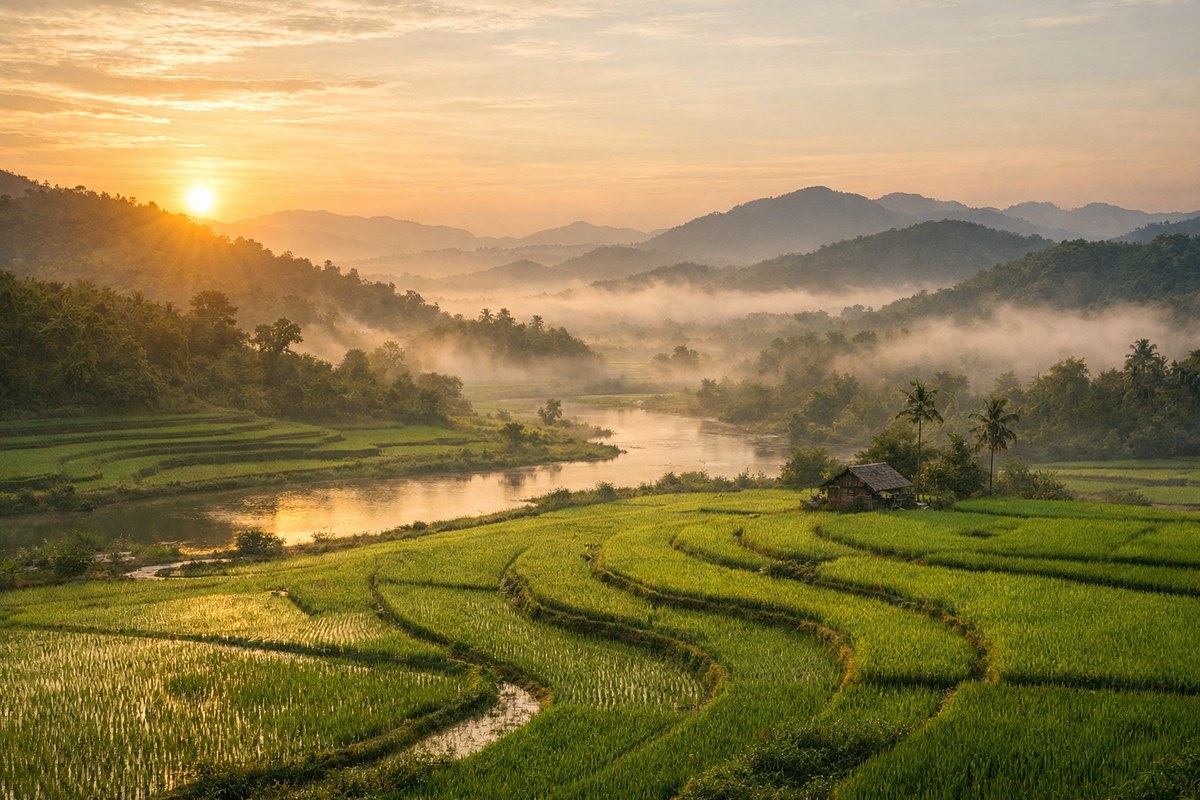
A Vietnam DMZ tour is not the kind of day trip that fills a camera roll with swimsuit selfies. It is the kind that leaves you quiet on the drive home, thinking about the people who lived, fought and endured on a narrow strip of land along the 17th parallel. Today the former Demilitarized Zone in Quang Tri province is green, peaceful and welcoming, a patchwork of rubber plantations, rice fields, pepper farms and coffee slopes. Yet beneath the calm lie some of the most compelling and moving historical sites in all of Vietnam.

What Is the DMZ and Why Visit Quang Tri?
After the 1954 Geneva Accords ended French colonial rule, Vietnam was divided at the 17th parallel along the Ben Hai River. A demilitarized zone stretched a few kilometres on either side of the river, separating the north from the south. Despite its name, the area became one of the most heavily militarised regions on earth during the war that followed. Quang Tri, the province that straddled the line, saw some of the fiercest fighting, and its towns, villages and hillsides were devastated.
Today, Quang Tri is one of the least visited provinces on the central coast, which is part of its appeal. There are no crowds jostling for position, and the guides you meet often have a personal or family connection to the history. Many visitors take the DMZ tour as a day trip from Hue, about two to three hours south, though it is also easy to reach from Dong Ha, Dong Hoi and Phong Nha. If you are travelling the length of the country, the DMZ fits naturally between Hue and Phong Nha, as part of the north-south route described in our two-week Vietnam itinerary.
It is worth approaching the day with a sense of respect. This is not a theme park but a landscape of loss and remembrance for many Vietnamese families. Dress modestly, speak softly at memorials and listen carefully to your guide. Many visitors say that hearing Vietnamese perspectives on the conflict, which locals call the American War, adds depth and nuance that no textbook can. For broader context on the country’s wartime past, see our feature on Vietnam’s military history and battlefields.
The DMZ tour is also a window into the daily lives of people in the central region today. Along the route you will pass roadside stalls selling coffee, banana chips and sweet rice cakes, and villages where life continues with an easy rhythm. The contrast between the serene landscape and its history is exactly what makes the day so memorable.
Top Sights on a Vietnam DMZ Tour
Most tours follow a loop that links several key sites, and the route can be varied depending on your interests. The highlights usually include the following.
Hien Luong Bridge and the Ben Hai River. The bridge across the Ben Hai River was once the physical dividing line between North and South. Its two halves were painted in different colours by each side, and you can still stand where the border once ran. A small museum and monument nearby tell the story of the divided country, and the river itself flows past quietly, as if nothing ever happened. It is a simple place, but its symbolism is powerful.
Vinh Moc Tunnels. The star of the tour for many visitors, this underground village was dug by the people of Vinh Moc to escape intensive bombing. Spread across three levels and extending for roughly two kilometres, the tunnels once sheltered about 90 families and included family rooms, wells, kitchens and a small medical room. Seventeen babies were reportedly born underground. Walking through the narrow, cool passages, with only the beam of your torch for company, brings home the courage and resilience of ordinary people. Unlike the better-known tunnels near Saigon, such as the Cu Chi Tunnels, Vinh Moc was a civilian settlement and has a gentler, more human feel. The tunnels exit onto a cliff overlooking the sea, where a short walk leads to a quiet beach.
Khe Sanh Combat Base. Located in the hills near the Laos border, Khe Sanh was the site of a famous 77-day siege in 1968. Today a small museum displays aircraft, tanks, bunkers and artillery pieces, and an open area marks the old airstrip. The location is remote, so tours that include it require a longer day, but the drive through highland coffee country is lovely in its own right. Visit early in the day if you can, when the mist lingers on the hills.

The Ho Chi Minh Trail and Dakrong Bridge. Many routes pass along a section of the legendary supply route that ran from north to south through the mountains and into Laos and Cambodia. At the Dakrong Bridge, the modern road crosses the river in a scene of rolling green hills, and the area includes a small memorial and a museum. Imagine thousands of porters and soldiers moving supplies on bicycles and by foot under dense jungle canopy, and the reality of the trail comes alive.
Truong Son National Cemetery. On the Ho Chi Minh Trail, this vast cemetery holds the graves of tens of thousands of Vietnamese soldiers. Row after row of white headstones stretch across the hillside, and the atmosphere is tranquil and solemn. Visitors are welcome, but should be quiet and respectful. Burning incense and offerings are left by visiting families, and it is a deeply affecting place to pause.
Quang Tri Citadel. In the provincial capital, the remains of the old citadel were the scene of a bloody 81-day battle in 1972. Little remains of the original walls, but a memorial and quiet parkland offer a place to reflect. A nearby site on the Thach Han River holds a floating memorial for the fallen, where locals launch flowers and paper lanterns.
How to Book: Guided Tours vs Self-Drive
The easiest way to see the DMZ is on a guided day tour from Hue. Departures are daily, with small-group minivans and private cars available, and the cost is generally modest compared with other Vietnamese day excursions. A good tour includes an English-speaking guide, transport, lunch and entrance fees, though it is wise to check the details before booking. Look for guides who have a strong knowledge of the history and who encourage questions and discussion, as the quality of the commentary shapes the entire experience.
Some travellers prefer to go with a private guide, which allows a more flexible schedule and a deeper conversation. A private car lets you add detours, such as a coffee break in a local village or an extra hour at a site that fascinates you. If you are travelling as a family or a small group, the extra cost is often manageable when split between several people. Hotels in Hue, Dong Ha and Phong Nha can arrange private tours at short notice.
Motorbike travellers can follow the route independently, joining Highway 1 north from Hue and branching onto smaller roads. The scenery is excellent, but navigation can be tricky and some sites are far apart. Because this is a former war zone, it is crucial to stay on marked paths and well-used roads. Unexploded ordnance remains a hazard in parts of Quang Tri, and responsible organisations continue to clear the land. Never wander off into undergrowth or pick up any metal object, however innocent it looks. For rules on riding as a visitor, see our getting around Vietnam guide.
Finally, do not forget about Dong Ha, the provincial hub. It is a convenient base if you want to explore the region over two days, with simple hotels, local restaurants and onward transport to Laos by road. Travellers heading north to Phong Nha can break the journey here, cutting the transfer time and adding a night in a quieter corner of Vietnam.
Best Time to Visit and Travel Tips
The central region has a distinctive climate, with the driest and sunniest weather usually between February and August. The summer months can be hot and humid, with temperatures climbing in the afternoon, while the period from September to January brings rain and occasional typhoons. Roads near the highlands can become slippery or flooded, and some sites may close in bad weather. Our guide to the best time to visit Vietnam offers more detail on regional weather patterns.
Pack light, breathable clothing, comfortable closed shoes, sunscreen, a hat and a refillable water bottle. A small torch or the light on your phone helps in the tunnels, which are low and narrow, so tall travellers should expect to stoop. People with claustrophobia or mobility issues may find the Vinh Moc passages challenging, although the visit can be shortened or skipped without losing the overall experience. Bring some cash in small denominations for snacks, souvenirs and donations; our budget travel guide shows how far a few dollars can stretch in the region.
A full day is long. Typical tours leave Hue around 7 or 8 in the morning and return in the late afternoon or early evening, with a lunch stop at a local restaurant. If you also plan to visit Khe Sanh, expect a longer day. Some travellers break up the sightseeing by staying overnight in Dong Ha, which allows a more relaxed pace and a chance to enjoy the countryside in softer light.

Reflecting on the Journey: Peace and Remembrance in Vietnam
What stays with many travellers is not a single site but the cumulative feeling of the day. You may begin the morning curious and end the evening quietly reflective. The guides, many of whom are happy to talk about their own family stories, often leave the strongest impression. Listening to someone describe growing up in a land that was once a battlefield, and now welcomes strangers with warmth and generosity, is a powerful reminder of how resilient Vietnamese people are.
Take your time and ask questions politely. Many guides welcome genuine curiosity, but avoid asking about politics in a confrontational way. The goal is understanding, not debate. Likewise, be mindful when taking photos at memorials and cemeteries; if in doubt, ask. And remember that kindness, patience and a smile go a long way in a place where memories remain close to the surface.
After the tour, treat yourself to a bowl of bun bo Hue or a plate of banh khoai in Hue’s imperial quarter, a gentler way to digest the day. Our guide to Hue will help you plan the evening, and if you have time to spare, the nearby UNESCO-listed monuments described on the UNESCO World Heritage Centre make a perfect contrast to the wartime story you have just heard.
A Vietnam DMZ tour is one of those rare travel experiences that balances education, scenery and emotion. It asks you to look, to listen and to remember, and it rewards you with a deeper understanding of the country you are visiting. Book your seat, bring an open mind and let Quang Tri tell its story.
Vietnam DMZ Tour: Frequently Asked Questions
How long does a DMZ tour from Hue take?
A standard day tour takes about 9 to 11 hours, including travel time from Hue. Tours that include Khe Sanh Combat Base are longer than those that stay closer to the coast.
Is the DMZ in Vietnam safe to visit?
Yes, the main sites are safe and well managed. Always stay on marked paths and never touch metal objects, as unexploded ordnance can still be found in some rural areas.
What are the Vinh Moc tunnels?
Vinh Moc is a network of underground tunnels in Quang Tri that sheltered an entire village from heavy bombing. The tunnels spread over three levels and are open to visitors, with a gentle exit onto a coastal cliff.
What is the best time of year for a DMZ tour?
February to August is usually the driest and most comfortable period. Autumn and winter are wetter, with a chance of storms affecting roads and sites.
Can I do the DMZ tour from Phong Nha or Hoi An?
Yes, but Hue is the most convenient base. From Phong Nha, Dong Ha or Dong Hoi the drive is shorter, while from Hoi An or Da Nang it is a very long day and many travellers split it with an overnight in Hue.
Leave a Reply