The Hai Van Pass is the road that makes people fall in love with Vietnam all over again. Winding about 21 kilometres across a mountain spur that plunges straight into the East Sea, it links Da Nang to Hue and Lang Co in a ribbon of tarmac so cinematic that you will want to stop every few hundred metres. Whether you ride it on a motorbike, roll over it in a car or pedal up in the morning cool, this is the Vietnam road trip that belongs on every bucket list.

Hai Van Pass Vietnam: What Makes It So Special
Hai Van means “ocean clouds”, and the name is no poetic exaggeration. The pass crosses a spur of the Truong Son range that reaches the sea north of Da Nang, rising to roughly 500 metres at its summit. On a clear day you look down at fishing boats like scattered confetti and a coastline that curves away in turquoise and jade. On a misty day the clouds roll in off the water, swallow the road and spit you out the other side into sunshine. Few roads in Southeast Asia deliver such drama in such a short distance.
The pass has served as a natural border for centuries. Historically it separated the kingdom of Dai Viet from the Champa realm to the south, and it still marks a subtle shift in weather. Locals will tell you that the north side is cooler and wetter in winter, while the south side stays warmer and drier. Standing at the top, you can sometimes see both climates at once: grey cloud over the Hue side and blue sky over Da Nang Bay.
The route also has a pop-culture pedigree. It was featured in a famous Top Gear Vietnam special, which introduced the road to millions of motoring fans and quietly changed its profile forever. Since then the pass has become one of Vietnam’s best-known scenic drives, drawing visitors who might otherwise never leave the beach. But despite the fame, it has lost little of its charm. Since the opening of the Hai Van Tunnel in 2005, an engineering feat of more than six kilometres that carries most trucks and buses beneath the mountain, the old road has become blissfully quiet, with mostly motorbikes, tour vehicles and curious cyclists sharing its curves.
If you are planning a longer central Vietnam adventure, the pass fits beautifully between two great cities. Start with our Da Nang travel guide, then finish with the imperial splendour described in our Hue travel guide. Along the way you can add Hoi An to the south, creating the classic Hoi An, Da Nang, Hue circuit that thousands of travellers follow every year.
How to Ride the Hai Van Pass: Motorbike, Car, Bike or Tour
The most popular way to experience the pass is by motorbike, and for good reason. With the wind in your face and the sea opening up below, the road feels made for two wheels. If you are an experienced rider with a valid licence for Vietnam, you can rent a semi-automatic or automatic scooter in Da Nang or Hoi An, and some riders prefer a larger manual bike for the climbs. If you have little riding experience, this is not the road to learn on. The hairpins are tight and the surface can be damp, so wear a proper helmet, closed shoes and lightweight protective gear, and check that your insurance covers motorbike riding.
The alternative is to hire an Easy Rider, a local guide who rides you as a pillion passenger on his own bike. These guides are famous across the central region, and they often combine the pass with stops at hidden beaches, noodle stalls and viewpoints. A half-day trip from Hoi An or Da Nang typically costs from a few dozen dollars up, depending on the route and the number of stops. It is a particularly good option if you are nervous about riding yourself, or if you want local stories alongside the scenery. You can read more about two-wheel journeys across Vietnam in our getting around Vietnam guide.
If you prefer four wheels, hiring a car with a driver is comfortable, safe and surprisingly affordable for groups. Private drivers can stop whenever you like, which is the whole point of the Hai Van Pass. Many hotels and tour operators will arrange transfers between Hoi An, Da Nang and Hue that include a scenic detour over the pass instead of through the tunnel. Just make sure to tell your driver clearly that you want the old road, since the default is the tunnel.
Keen cyclists will find the pass a rewarding challenge. The climb from the Da Nang side is steady and exposed, and the descent into Lang Co is exhilarating. Start early, bring plenty of water and a light rain jacket, and enjoy the freedom of watching the sea slide into view at your own pace. Group cycling tours are available out of Da Nang and Hoi An with support vehicles for those who want a little assistance.
Finally, the train. The railway line between Da Nang and Hue passes along the same coastline, hugging cliffs and crossing bridges in a series of postcard views. Seats on the Reunification Express can be booked in advance, and the stretch of track around Hai Van is routinely praised as one of the most beautiful rail journeys in the world. It is a leisurely, low-effort way to see the coast if riding the pass is not for you.
The Best Stops Along the Route
The joy of this road is the journey itself, but a handful of stops deserve your time. Heading north from Da Nang, you leave the city through the coastal suburb of Lien Chieu and begin to climb. The early bends reveal the sprawling curve of Da Nang Bay below, and on a clear day you can pick out the white spirals of the city’s riverside bridges and the hazy bulk of the Son Tra peninsula. Pull over in one of the small lay-bys to take it in.
Halfway up, you will find roadside cafes where owners serve cold coconuts, sweet Vietnamese iced coffee and bowls of noodles to riders taking a break. A stop at one of these terraces, with a view that stretches to the horizon, is a highlight in itself. Prices are a little higher than in town, but you are paying for the panorama. Take a moment to chat with the staff; many have run their stalls for years and have fascinating stories about the road and its characters.
At the summit, the pass opens onto a small plateau dominated by the remains of old military fortifications. Here you will find the Hai Van Quan, an old gate and fort first built in the nineteenth century during the Nguyen dynasty. The inscription above the gate calls the pass “the most majestic gateway under heaven”, a modest description. Beside it are the crumbling concrete bunkers and gun emplacements from the French colonial period and later wars, now quiet and covered in moss. Climb the steps, wander among the walls and feel the weight of centuries of travellers who crossed this same ridge.
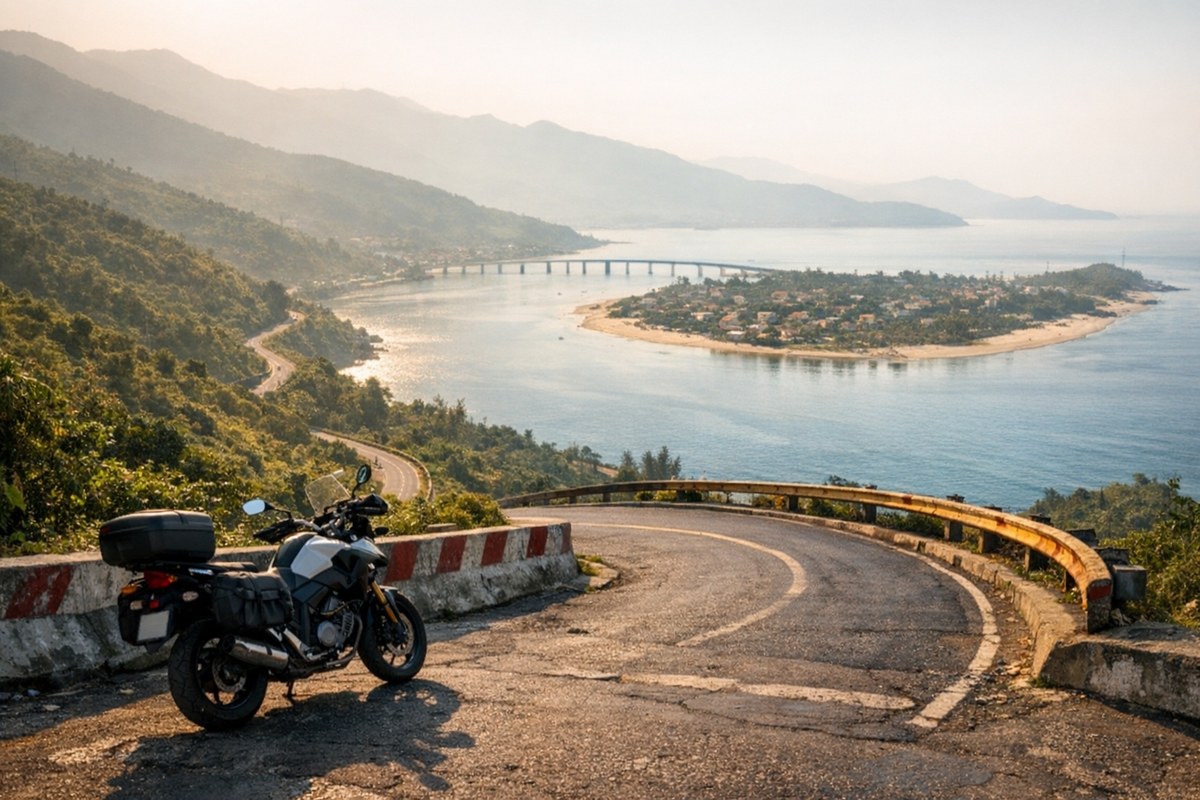
On the northern side, the road descends toward Lang Co, a long curve of pale sand fronting a shimmering lagoon. The view of the bay from above is among the most photographed in the country, with the sea on one side and the still, silvery Lap An lagoon on the other. Lang Co itself is a quiet beach town with seafood restaurants where you can eat fresh oysters, grilled squid and clams beside the water. It makes an ideal lunch stop, or a place to stay overnight if you want a slower pace.
If you have time to explore, the area offers extra adventures. Bach Ma National Park rises inland and provides waterfalls, jungle trails and cool mountain air, as described in our feature on trekking Bach Ma National Park. Back toward Da Nang, the Marble Mountains and Ba Na Hills make easy additions to a day of sightseeing.
Best Time to Ride the Hai Van Pass
Timing makes all the difference here. The best months for clear views and dry roads are generally February to August, with the warm, sunny stretch from March to June considered the sweet spot. During these months visibility is high, temperatures are pleasant and the sea glows in shades of blue and green. July and August are hotter and busier but still excellent for early starts.
From September to January, the central coast enters its wetter season, and typhoons occasionally sweep in, especially from October to November. Low cloud can obscure the views entirely, the road can be slick and the pass is sometimes closed for safety. That said, a misty ride has its own mysterious beauty, and travellers on a flexible schedule often catch lucky breaks in the weather. Our month-by-month guide to the best time to visit Vietnam explains the weather patterns across the country, and the feature on travelling in the rainy season offers advice for those who prefer fewer crowds.
Whatever the season, aim to start early. Mornings offer the clearest views, softer light and the least traffic. By midday, haze and cloud can build at the summit, and the heat on the road intensifies. A sunrise or early-morning start from Da Nang, with a lingering breakfast at a clifftop cafe, is a combination that is very hard to beat. Always check the forecast the day before, and ask your hotel or guide for local advice about road conditions.
Practical Tips for a Safe and Memorable Ride
Safety comes first on this road. Wear a certified helmet, keep your speed moderate and be ready for oncoming vehicles on blind bends, as some drivers swing wide. Heavy rain, fog and sudden showers can turn the surface slippery in minutes, so slow down and avoid braking hard in curves. Bring sunscreen, sunglasses and a light rain jacket, and carry water and a charged phone with you. Make sure your travel insurance explicitly covers motorbike riding, since many policies exclude it if you do not hold the right licence.
Rules for foreigners riding in Vietnam are strict. Riders are expected to carry a valid driving licence recognised in Vietnam, along with the vehicle registration papers. It is wise to check the latest requirements with official sources such as the Vietnam National Authority of Tourism before you travel. If you do not have the correct documentation, hiring a driver or Easy Rider is the safest and most responsible choice.
Fuel is available at both ends of the pass but not along it, so fill up in Da Nang or Lang Co. Roadside stalls sell petrol in bottles, but it is not always reliable, and you should only rely on it in an emergency. Cash is handy for cafes, coconuts and small entrance donations at viewpoints, while mobile signal can be patchy in the hills.

Respect the place. The pass is a working road and the summit is a historical monument, so take your litter with you, stay on marked paths around the ruins and treat the stall owners with courtesy. Finish your ride with a bowl of bun bo Hue in the imperial city, where the broth is as bold as the road you just conquered.
For those who love imperial history, the Complex of Hue Monuments is a UNESCO World Heritage Site, described in detail on the UNESCO World Heritage Centre website. With the pass behind you and the citadel ahead, you will understand why so many travellers call this journey the highlight of their trip.
The Hai Van Pass is more than a road. It is a slow unfolding of Vietnam’s best qualities: coastline, culture, food and unplanned kindness. Choose your wheels, pick a clear morning and let the sea clouds carry you north.
Hai Van Pass Vietnam: Frequently Asked Questions
How long is the Hai Van Pass?
The Hai Van Pass is about 21 kilometres long. Without stops it takes around 30 to 45 minutes to ride, but most visitors spend two to four hours enjoying viewpoints, cafes and the summit ruins.
What is the best time of year to ride the Hai Van Pass?
February to August offers the clearest weather, with March to June usually best. Autumn and winter bring more rain, cloud and occasional road closures.
Can I ride the Hai Van Pass if I have no motorbike experience?
It is not recommended to learn here. Book an Easy Rider guide, hire a car with a driver or take the train, all of which offer excellent views without the need to ride yourself.
How do I get from Hoi An to Hue via the Hai Van Pass?
Most travellers go by motorbike, private car or Easy Rider, stopping at Marble Mountains, the pass summit and Lang Co. The journey is roughly 120 kilometres and takes a full day with stops.
Is the Hai Van Pass dangerous?
The road is well maintained and quiet since the tunnel opened, but hairpin bends, fog and rain can be risky. Ride slowly, wear a helmet and avoid bad weather.
Leave a Reply