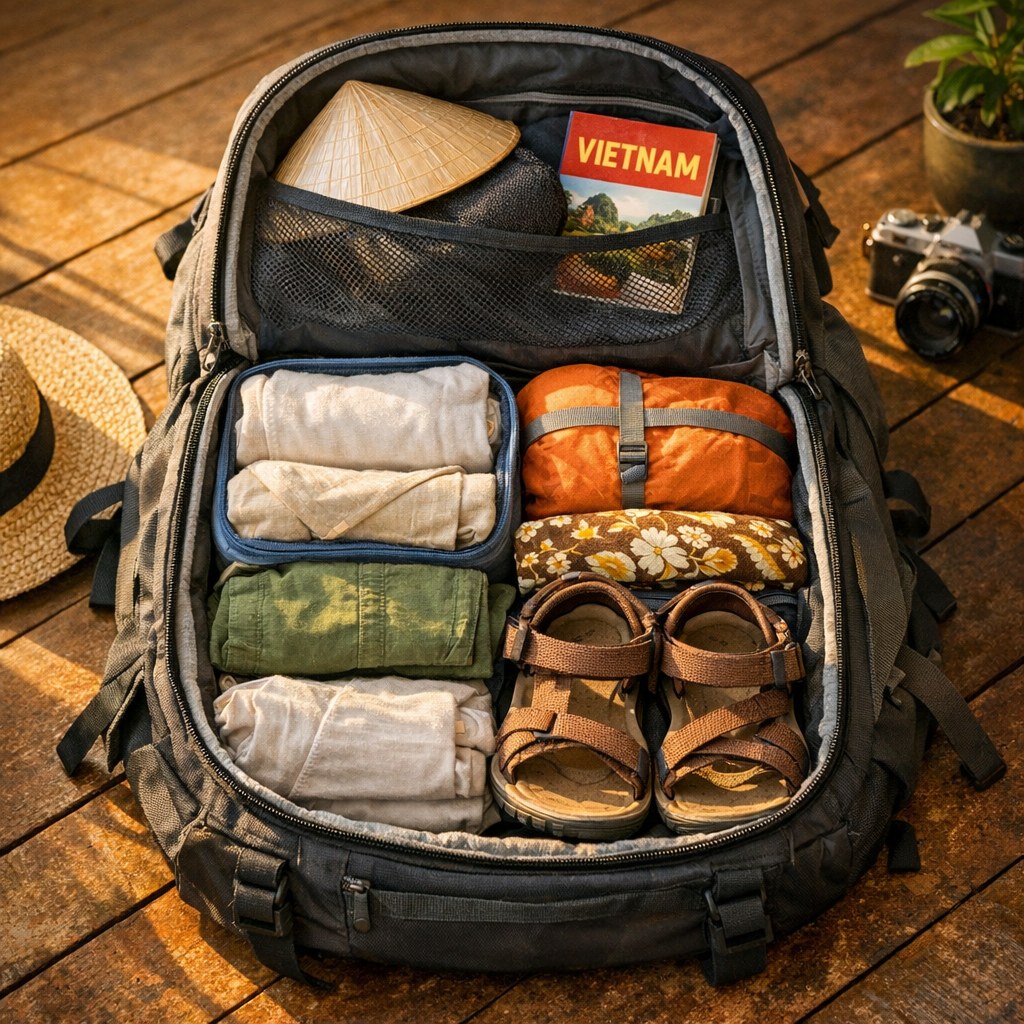
Knowing what to pack for Vietnam is half the battle before your flight even boards. This country stretches across 1,650 kilometres, from the misty highland valleys of Sapa in the north to the sun-soaked beaches of Phu Quoc in the south — and no single packing list fits all of it. The same trip that starts with a crisp Hanoi morning can end with humidity-drenched afternoons on the Mekong, with temple visits and motorbike rides in between. Pack wrong, and you will either be sweating through layers you cannot shed, or shivering in a mountain guesthouse with nothing warmer than a linen shirt.
This guide breaks down exactly what to pack for Vietnam by climate zone, activity type, and cultural expectation — so you can travel lighter, smarter, and with everything you actually need.
Vietnam Packing List: Clothing for Every Climate Zone
Vietnam is not one climate — it is at least three. The north (Hanoi, Sapa, Ha Giang) has a genuine cool season from November to March, with temperatures dropping to 8–12°C in the highlands. The central coast (Da Nang, Hoi An, Hue) is hot and dry from February to August but brings heavy rain from September to January. The south (Ho Chi Minh City, Mekong Delta, Phu Quoc) is tropical and humid almost year-round, with a wet season from May to November.
For most travellers doing a north-to-south route, the core clothing items that cover every zone are:
- 3–4 lightweight, moisture-wicking t-shirts. Merino wool or synthetic blends dry overnight and resist odour — critical when you may not have laundry access for several days.
- 1 long-sleeved shirt or thin layer. Useful for temple visits, air-conditioned buses, and cool highland evenings.
- 2 pairs of lightweight travel trousers or linen pants. Long trousers double as temple-appropriate attire and protect against mosquitoes after dusk. Skip jeans — they take forever to dry and are miserable in tropical heat.
- 1–2 pairs of shorts. For beach days, casual exploration, and anything south of Da Nang.
- A lightweight packable down jacket or fleece. Non-negotiable if you are visiting Sapa, Ha Giang, or Da Lat from October to March. Unnecessary in the south.
- A rain jacket or packable poncho. Vietnam’s rain is intense and often sudden. A packable rain jacket doubles as a wind layer on overnight trains and buses.
- 1 swimsuit. Even if beaches are not your focus, most guesthouses in beach towns have pools.
Before finalising your clothing list, check our month-by-month Vietnam weather guide — the difference between packing for February in Hanoi versus February in Saigon is significant enough to warrant separate lists.

What to Wear in Vietnam: Cultural Dress Codes and Temple Etiquette
Vietnam is a predominantly Buddhist country and temple dress codes are taken seriously. Arriving at the Temple of Literature in Hanoi or the Perfume Pagoda in shorts and a crop top will see you turned away or handed a covering at the entrance. What to wear in Vietnam for cultural sites follows a simple rule: cover your shoulders and knees. A lightweight long-sleeved shirt and the linen trousers already on your packing list will serve double duty everywhere.
Beyond temples, Vietnam’s cities skew casual. Locals in Ho Chi Minh City and Hanoi dress in smart-casual streetwear, but no restaurant or market will bat an eye at a traveller in clean shorts and sandals. The exception is upscale rooftop bars and fine-dining restaurants in major cities, where a clean shirt and closed shoes are appropriate.
A few specific notes on what to wear in Vietnam:
- Remove shoes at temple entrances. Slip-on sandals with easy buckles save time and frustration repeated dozens of times on a temple-heavy itinerary.
- Cover up at village homestays. In ethnic minority villages in the north, modest dress shows respect for local customs and is widely appreciated.
- Carry a sarong or lightweight scarf. Versatile enough to serve as a temple cover-up, beach towel, picnic blanket, or shoulder wrap on a cold overnight bus — it earns its weight every single day.
If you forget something, do not panic. Vietnam’s cities have excellent tailors — Hoi An is world-famous for 24-hour custom garments — and markets packed with affordable clothing. You can buy almost anything you need, but it helps to arrive prepared.
Health, Medical and Safety Essentials for Vietnam Travel
Vietnam’s street food is magnificent — satiny bowls of pho at 6am, bánh mì stuffed with pâté and pickled carrot, steaming plates of com tam on tiny plastic stools. But a digestive system unaccustomed to local water and spice needs some preparation. The medical essentials on every Vietnam packing list:
- Oral rehydration salts. Heat, spice and the occasional dodgy ice cube will catch up with most travellers at some point. ORS sachets are a lifesaver and weigh almost nothing.
- Antihistamines. Useful for mosquito reactions, dust, and tropical plant allergens.
- Imodium or similar. For when street food adventure goes slightly wrong.
- SPF 50 sunscreen. Expensive and inconsistently available in smaller towns. Bring more than you think you need.
- Insect repellent with DEET. Essential for the Mekong Delta, highland trekking areas, and any outdoor evening activity. Dengue fever is present year-round and mosquitoes peak after dusk.
- Any prescription medications. Bring your full supply plus a few days extra. Vietnamese pharmacies are well-stocked for common ailments, but getting specific prescriptions filled can be complicated.
- A basic first-aid kit. Plasters, antiseptic wipes, and blister pads are worth carrying if you plan trekking or motorbike riding.
Travel insurance is not optional. Motorbike accidents are the leading cause of traveller injuries in Vietnam, and healthcare costs in international-standard hospitals are significant. This is especially important to consider if you are planning solo travel in Vietnam, where you may be making more independent transport decisions.

Tech and Gear Every Vietnam Traveller Needs
Vietnam’s digital infrastructure is excellent — cheap SIM cards, fast wifi in almost every guesthouse and cafe, and smartphone-based transport apps like Grab that work seamlessly in every city. Your tech packing list should be lean but strategic:
- Universal power adapter. Vietnam uses Type A (US-style flat pins) and Type C (European round pins) sockets. A compact multi-adapter or a USB-C travel charger handles everything.
- Portable power bank (10,000–20,000 mAh). Essential for long bus and train journeys, full-day temple tours, and island trips. Look for one that is airline-approved (under 100Wh).
- Local SIM card or eSIM. Buy a local SIM at the airport on arrival — Viettel and Mobifone both offer 30-day data plans for under $5 USD. Alternatively, set up an eSIM before departure if your phone supports it.
- Noise-cancelling headphones or earplugs. Overnight sleeper trains and buses are noisy. Quality headphones or dense foam earplugs are worth their weight in sleep.
- Waterproof phone case or dry bag. Ha Long Bay kayaking, Mekong boat trips, and sudden monsoon downpours all threaten unprotected devices. A basic dry bag costs almost nothing.
- Camera with extra memory cards. Vietnam is extraordinarily photogenic — golden rice terraces, lantern-lit ancient towns, smoky street kitchens. You will fill cards faster than expected.
If you plan to get around Vietnam by overnight train — one of the great experiences of the country — a small padlock is also useful for securing luggage to the overhead rack on longer journeys.
Shoes and Bags: The Most Under-Considered Vietnam Travel Essentials
Footwear makes or breaks a Vietnam trip. The combination of uneven cobblestones in Hoi An’s old town, muddy highland paths in Sapa, and sandy beach tracks around Mui Ne means one pair of shoes is rarely sufficient. A practical three-shoe strategy works for almost every itinerary:
- Comfortable walking sandals (Teva or Birkenstock-style). Easy to slip on and off for temples, breathable in tropical heat, and suitable for beach towns. These will be your most-worn pair.
- Light trail runners or trainers. Needed for trekking, long days on your feet, and cooler highland weather. Also doubles as your smart-casual option for nicer restaurants.
- Flip-flops. For guesthouse showers, hostel common areas, and beach days. A slim pair tucks into any corner of a bag.
For luggage, a 40–50L backpack is more practical than a rolling suitcase for most Vietnam itineraries — it handles cobblestoned alleyways, boat transfers, and overhead bus storage far more easily. Add a lightweight 10–15L daypack for daily explorations so you are not carrying your full kit to every temple and night market. If you are travelling on a tight budget, guesthouses throughout Vietnam offer free luggage storage, letting you leave most of your gear behind on day trips.
What to Pack for Vietnam: Documents and Money
Beyond clothing and gear, a few administrative essentials deserve space on your packing list:
- Passport valid for at least 6 months beyond your departure date. Airlines and border officials will refuse travel otherwise — check this before anything else.
- E-visa printout or confirmed approval. Your Vietnam e-visa is approved and displayed digitally, but having a printed copy alongside prevents any confusion at immigration. Full details are in the Vietnam Visa Guide 2026.
- Multiple payment methods. Vietnamese dong (VND) is the local currency and cash is king outside major cities. Bring a debit card with low overseas fees for ATM withdrawals, and keep a small amount of USD as backup — many hotels and tour operators accept dollars directly.
- Photocopies or digital photos of all key documents. Passport photo page, visa, travel insurance certificate, and hotel bookings. Store copies in a cloud service so you can access them from any device, anywhere.
Planning your route? The two-week Vietnam itinerary covers the classic north-to-south route and will clarify which regions and activities require which specific gear.
What to Leave at Home: Vietnam Packing Mistakes to Avoid
Equally important as what to pack for Vietnam is knowing what not to bring. Vietnam’s cities are well-stocked with affordable supplies, and over-packing will slow you down on overnight buses, make hostel room changes exhausting, and leave you hauling unnecessary weight across airport security for no return.
- Heavy jeans or formal clothing. Unless you are attending a business meeting, jeans add bulk and misery in tropical heat. Pack linen or synthetic trousers instead.
- A full travel hairdryer. Every guesthouse and hotel in Vietnam — from a $10 hostel bunk to a boutique resort — provides one.
- Excessive toiletries. Shampoo, conditioner, body wash, and basic skincare are sold in every convenience store and pharmacy in Vietnam for almost nothing. Bring travel-sized amounts for the first day and restock on arrival.
- Multiple paper guidebooks. Download offline maps via Maps.me or Google Maps. Paper guidebooks are heavy and frequently out of date.
- Valuables you cannot afford to lose. Leave expensive jewellery and sentimental items at home. Vietnam is generally safe, but petty theft — particularly bag-snatching from motorbikes — is a genuine risk in Ho Chi Minh City and Hanoi.
The best Vietnam packing strategy is to pack light enough that everything fits in a carry-on. Not only does this save you checked baggage fees on the many domestic flights between Vietnamese cities — it means you can move faster, check in with ease, and adapt when plans change. And in Vietnam, plans reliably change. The country rewards flexibility above almost everything else.
What are the most important things to pack for Vietnam?
The most essential items are lightweight moisture-wicking clothing, SPF 50 sunscreen, DEET insect repellent, a packable rain jacket, comfortable walking sandals, a portable power bank, and a local SIM card. If visiting the northern highlands between November and March, add a lightweight down jacket or fleece.
Do I need to pack formal clothes for Vietnam?
Formal clothes are generally not needed. Vietnam’s travel culture is casual. For temples and religious sites, cover your shoulders and knees — a lightweight long-sleeved shirt and trousers are sufficient. Smart-casual attire works for upscale restaurants and bars in major cities.
Can I buy clothing and toiletries in Vietnam if I forget something?
Yes — Vietnam’s cities are very well stocked. Clothing is inexpensive and widely available, Hoi An is famous for custom tailoring within 24 hours, and pharmacies carry most toiletries. The main exceptions are SPF 50+ sunscreen and specific prescription medications, which are harder to source reliably outside major cities.
What shoes should I pack for Vietnam?
A three-shoe combination covers almost every situation: comfortable walking sandals for daily exploration and temples, lightweight trail runners or trainers for trekking and cooler weather, and flip-flops for beaches and hostel showers. Avoid heavy hiking boots unless your itinerary is primarily trekking.
Should I use a backpack or suitcase for Vietnam?
A backpack (40–50L) is more practical for most Vietnam itineraries — it handles cobblestoned alleyways, boat transfers, and bus storage far more easily than a rolling suitcase. Keeping your total luggage to carry-on size also avoids checked baggage fees on domestic flights between cities.
Leave a Reply