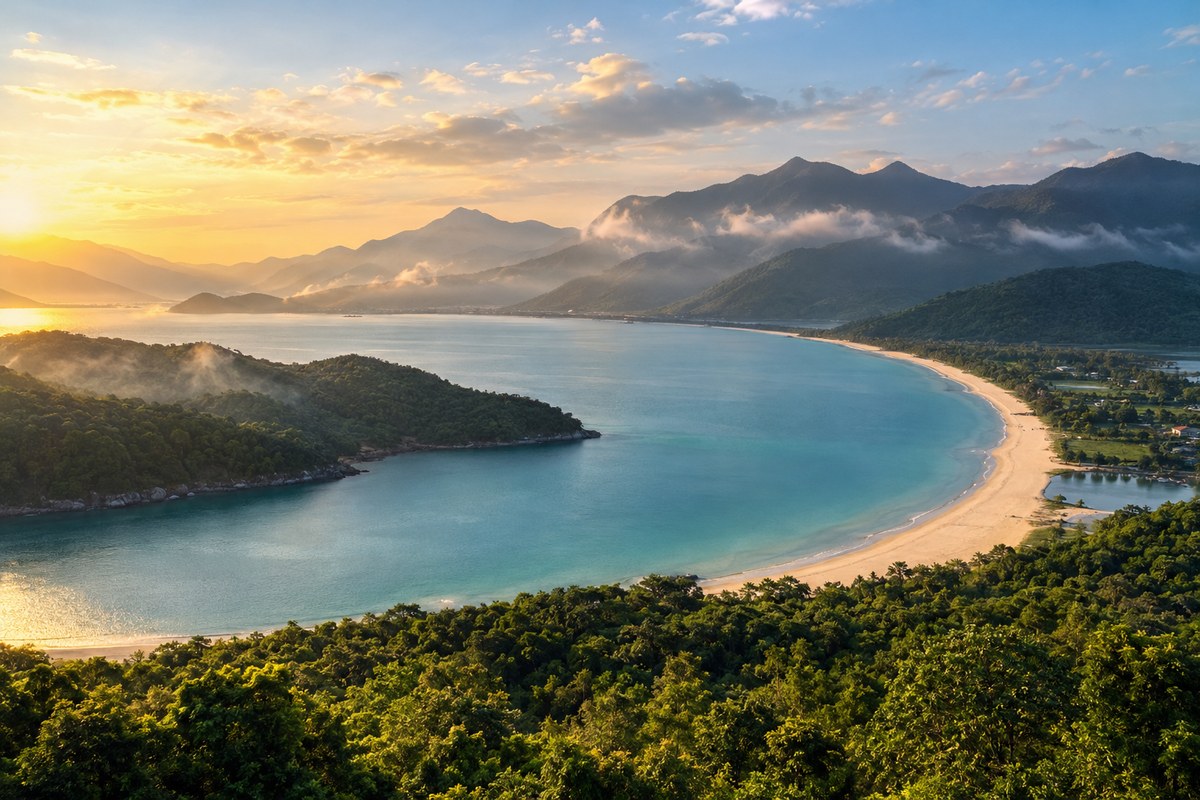
A Lang Co travel guide begins with a single, breathless moment: you crest the clouds on Hai Van Pass, the mist peels back, and a ten-kilometre crescent of pale sand appears far below, cradled between green mountains, a glassy lagoon and the open South China Sea. Most travellers racing between Hue and Da Nang glimpse this bay through a bus window and keep going. The wiser ones stop, kick off their sandals and stay a night or two.
Lang Co is not a place of ticking off sights. It is a place of slow mornings, oysters pulled from still water, salt on your lips and the long, soft light that turns the whole bay to hammered gold at sunset. Here is how to find it, reach it and fall for it properly.
Why Lang Co Belongs on Your Vietnam Route
Vietnam’s central coast is a string of famous names: Hue’s imperial citadel to the north, Da Nang’s bridges and beaches to the south, Hoi An’s lantern-lit lanes beyond. Tucked between them, almost exactly halfway, sits Lang Co, a quiet fishing town on a thin sandbar that separates a freshwater lagoon from the sea. It is widely counted among the most beautiful bays in the world, and a single glance at the sweep of sand backed by jungle-covered peaks tells you why.
What makes Lang Co special is the sheer variety packed into a small space. Within a few kilometres you have a wide, gently shelving beach, a tidal lagoon dotted with oyster stakes and fishing nets, a mountain pass famous for its hairpin curves, and a national park of cloud forest and waterfalls. It is the rare place in Vietnam where you can swim before breakfast, eat the freshest seafood of your trip at lunch and be standing in the mountains by mid-afternoon.
- Roughly halfway between Hue and Da Nang, so it slots neatly into any north-to-south or south-to-north journey.
- Far calmer and less crowded than the big-name beach towns, even in peak summer.
- Beach, lagoon, mountain pass and national park all within a short ride of each other.
If you are still deciding how to shape your route, our guide to north versus south Vietnam will help, and the two-week north to south itinerary shows exactly where a Lang Co pause fits between the imperial and the coastal.
There is a gentler pace here too, one that rewards travellers who have been moving fast. After the noise of Hanoi and the heat of the cities, Lang Co feels like exhaling. Fishing boats bob in the shallows, children cycle along the sea road, and the only real decision of the day is which seafood shack to choose for dinner.
Lang Co Beach: Ten Kilometres of Soft Sand
The heart of any Lang Co travel guide is the beach itself. It runs for around ten kilometres in one gentle, uninterrupted arc, with fine pale sand, clear water and a backdrop of forested mountains that tumble straight to the shore. Because it is so long, even on a busy weekend you can walk for a few minutes and find a stretch entirely to yourself.
Mornings are the finest time. The sea is usually calm, the air carries a faint coolness, and local fishermen are hauling in their nets by hand, shouting to each other across the shallows. Walk the water’s edge at sunrise and you will see the mountains turn from charcoal to emerald as the light creeps down their flanks. Swimming is generally pleasant from late spring through summer, when the sea is warm and mostly flat, though currents can strengthen at other times of year, so always heed local flags and advice.
- Best for: long barefoot walks, swimming in calm months, sunrise photography and doing very little.
- Facilities: a few beachfront resorts and simple cafes; stretches of the beach remain wonderfully undeveloped.
- Tip: bring sun protection, because there is little natural shade along the sand.
Evenings bring the town to life in a gentle way. Plastic stools appear outside seafood restaurants, grills start to smoke, and the smell of garlic and lemongrass drifts along the sea road. Order whatever the family brings in that day: grilled squid with chilli salt, steamed clams with ginger, crab cooked simply with tamarind. If you love coastal escapes, this beach pairs beautifully with the other quiet shorelines in our roundup of hidden beaches in Vietnam beyond Phu Quoc.

Lap An Lagoon: Oysters, Reflections and Sunrise
Turn your back on the sea and Lang Co shows a completely different face. Lap An Lagoon is a broad, shallow, almost silent body of water wrapped in mountains, where the surface is so still it doubles the sky. Wooden stakes rise from the shallows in neat lines, marking oyster farms that have supplied the region’s restaurants for years. At dawn, fishing boats slip through the mist, and the whole scene looks like a classical ink painting.
The lagoon is where Lang Co’s culinary reputation lives. Local oysters are plump, sweet and briny, and they are served in the simplest ways: raw with lime and pepper, grilled with spring onion and peanuts, or steamed with lemongrass. Eating them at a stilted shack above the water, with the lagoon lapping at the pillars beneath you, is one of the great small pleasures of central Vietnam. Prices are modest and portions generous, so order a few plates to share.
- Best time: sunrise for light and mirror-calm water, or late afternoon for a golden glow.
- Try: grilled oysters, steamed crab, lagoon shrimp and snail dishes at the waterside restaurants.
- Experience: hire a small boat for a quiet paddle among the oyster stakes and fishing nets.
Photographers adore this place. Arrive before the sun clears the ridge and you can catch the fishermen working in silhouette, nets thrown wide like lace across the water. It is among the finest scenes on the whole central coast, and it sits comfortably alongside the best entries in our list of Vietnam photography spots.
Hai Van Pass and the Road to Lang Co
Few roads in Vietnam inspire as much affection as Hai Van Pass, the “Pass of the Ocean Clouds”. The old road climbs from Lang Co’s side in great looping bends, up through jungle and cloud to a former military checkpoint, then drops toward Da Nang with the coast stretching away beneath you. On a clear day the views over the bay are astonishing; on a misty day the pass feels like a secret passage between two worlds, which is exactly what it has been for centuries as a natural border between ancient kingdoms.
Today, most vehicles slip through the long Hai Van Tunnel beneath the mountain, which means the old pass is left to motorbikes, cyclists and the occasional tour minibus. It has become one of the loveliest rides in the country. If you are hiring a motorbike, our motorbike rental guide for Vietnam covers licences, rules and safety, and our full guide to Hai Van Pass breaks down the route stop by stop.
- Ride or drive the old pass in the morning, before cloud and traffic build.
- Stop at the summit for coffee and views over both Lang Co Bay and Da Nang.
- Go slowly: the bends are tight and fog can arrive without warning.
Even if you do not ride yourself, you can hire a driver for a half-day loop that includes the pass, a stop at the summit and a seafood lunch back at the lagoon. It is an easy, unhurried way to see the finest scenery in the region without any stress behind the handlebars.
Bach Ma National Park and Day Trips from Lang Co
Lang Co’s wild backdrop is not only for looking at. Just inland, Bach Ma National Park rises from the coastal plain into cool, cloud-wrapped highlands, where forest trails lead to waterfalls, viewpoints and old French hill-station ruins. The temperature drops noticeably as you climb, so the park makes a refreshing change from the coastal heat, and its birdlife and butterflies draw nature lovers from across the country.
Plan on at least half a day for Bach Ma, longer if you want to hike deeper. Trails vary from easy forest walks to steeper climbs, so bring good shoes, water and a light rain jacket, since the mountain makes its own weather. Local guides can show you the best routes and explain the forest’s plants and wildlife.
- Hue: the imperial city is an easy day trip north; see our Hue travel guide for tombs, pagodas and royal cuisine.
- Da Nang and Hoi An: head south for city energy and ancient lanterns, starting with our Da Nang travel guide and Hoi An travel guide.
- Canh Duong and nearby beaches: quieter coastal stretches, ideal for a slow morning on two wheels.
Lang Co also works well as a base if you prefer sleeping somewhere peaceful and making day trips outward. You can reach both Hue and Da Nang in roughly an hour or two by road, then return to the quiet of the bay every evening.

How to Get to Lang Co and Where to Stay
Getting to Lang Co is straightforward. The nearest major airports are Da Nang and Hue’s Phu Bai, each roughly an hour or two away by road. A private car or a pre-booked transfer is the simplest option, and Grab can handle shorter hops in the region. If you are travelling by rail, some services on the Reunification Express stop at Lang Co’s small station, though timetables change, so check before you plan around it. Our guide to train travel in Vietnam explains how to book, and our overview of getting around Vietnam compares every option.
Accommodation ranges from big beachfront resorts to small family-run guesthouses and homestays along the sea road. Resorts offer pools, spas and sea-view rooms, while the smaller places give you a more local feel and some of the best home-cooked seafood in town. Book ahead for summer weekends and public holidays, when Vietnamese families flock to the coast.
- Best time to visit: roughly March to August for warm, drier weather and calmer seas; see our best time to visit Vietnam guide for the full picture.
- How long to stay: one night works as a stopover, two or three lets you slow right down.
- Budget: guesthouses are inexpensive, and seafood meals are very good value compared with bigger cities.
Before you go, check entry requirements on the official Vietnam e-visa portal, and browse the national tourism authority’s site at vietnamtourism.gov.vn for regional updates. If you are still sorting your entry paperwork, our Vietnam visa guide explains it all step by step.
Conclusion: Give Lang Co a Night or Two
Vietnam rewards the traveller who occasionally stops. Lang Co is that kind of place: unshowy, unhurried and quietly spectacular. Paddle across the lagoon at dawn, ride the old pass through the clouds, then eat oysters with your feet in the sand and watch the bay turn to gold. When you roll on to Hue or Da Nang, you will carry a little of its calm with you. Plan a stop, pack light and let the coast do what it does best.
Frequently Asked Questions About Lang Co
Is Lang Co worth visiting?
Yes. Lang Co offers a long, uncrowded beach, a photogenic lagoon, excellent seafood and easy access to Hai Van Pass and Bach Ma National Park, all roughly halfway between Hue and Da Nang.
How far is Lang Co from Da Nang and Hue?
Lang Co is roughly 70 kilometres from both Da Nang and Hue, usually about one to two hours by road depending on traffic and whether you use the Hai Van Tunnel or the old pass.
What is the best time to visit Lang Co?
The warm, drier months from around March to August are generally best for swimming and clear views. Autumn and winter can bring rain, rougher seas and typhoon risk, so check forecasts before travelling.
How many days do you need in Lang Co?
One night is enough for a relaxed stopover between Hue and Da Nang. Two or three nights let you add the lagoon, Hai Van Pass and a day in Bach Ma National Park without rushing.
Can you ride Hai Van Pass from Lang Co?
Yes. The old coastal road climbs directly from Lang Co’s side of the mountain and is popular with motorbike riders, cyclists and tour drivers. Go early, ride carefully and carry a valid licence if you hire a bike.
Images in this article were generated using AI.
Leave a Reply