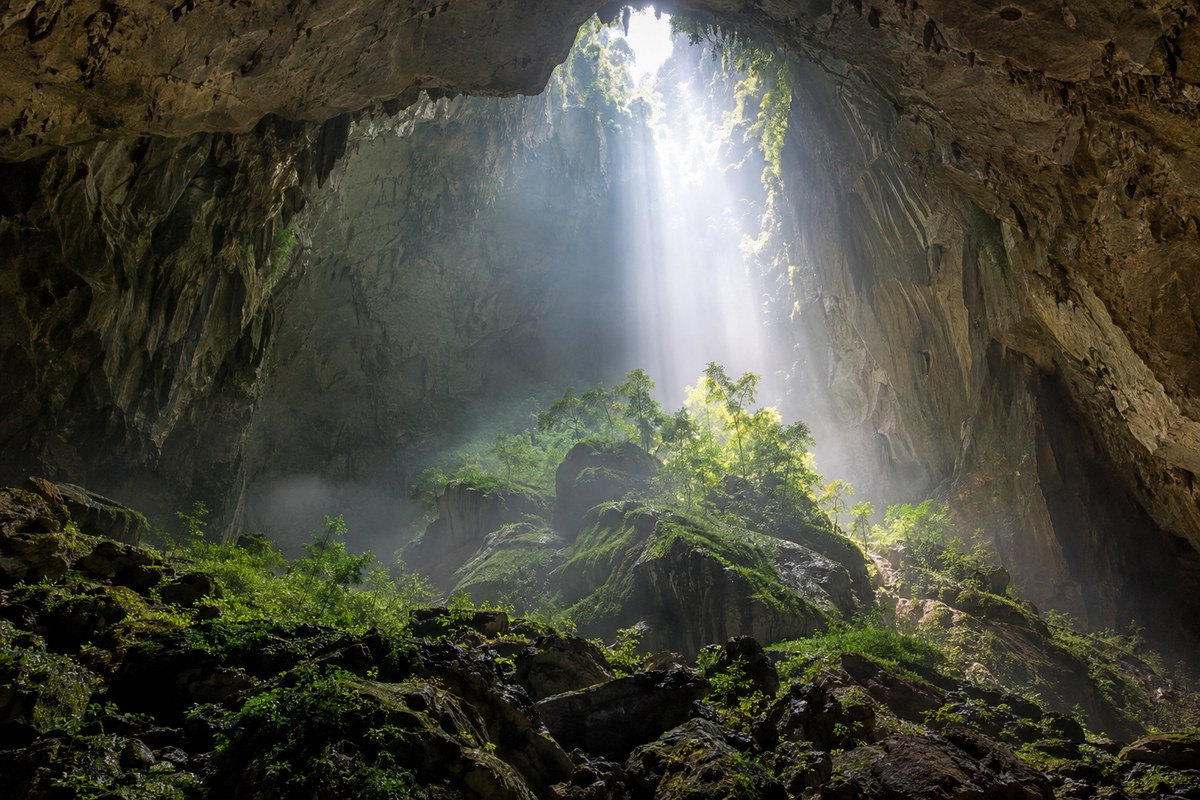
The Son Doong Cave expedition is the kind of journey that rearranges your sense of scale. Hidden beneath the jungle-draped limestone of central Vietnam, Son Doong is widely regarded as the largest known cave passage on Earth, a subterranean world with its own rivers, weather, forests and glowing skylights. Walking through it feels less like entering a cave and more like stepping into another planet. This guide explains what the trek involves, what it costs, when to go, how to prepare and what else to do if Son Doong is out of reach, so you can decide whether this extraordinary adventure belongs on your Vietnam list.
Son Doong lies inside Phong Nha-Ke Bang National Park, a region we cover in detail in our Phong Nha travel guide. If you are new to the area, start there to understand the caves, rivers and villages that surround this legendary place.

What Is Son Doong Cave and Why Is It So Famous?
Son Doong, whose name is often translated as “mountain river cave”, was found by a local man named Ho Khanh around 1990, when he sheltered from a storm and heard rushing water roaring from a hidden entrance. For years, the location was largely forgotten, until a British caving team led by Howard Limbert, working with local guides, rediscovered and explored it in 2009. Their findings stunned the caving world: a passage more than five kilometres long, with sections as tall as a forty-storey building and wide enough to fit a city block.
The cave was formed over millions of years as a river carved through limestone, and then collapses created enormous skylights known as dolines. Sunlight pours through these openings, and beneath them jungle has taken root, creating the famous “gardens” inside the cave. Mist curls through the shafts of light, and clouds sometimes form inside the passage. Ancient stalagmites rise like skyscrapers; one of the tallest known is about eighty metres. Deep pools, called cave pearls, glitter with perfectly rounded calcite beads, and clear rivers cut through the darkness.
The surrounding national park is also a protected landscape of global significance. Phong Nha-Ke Bang is a UNESCO World Heritage Site recognised for its extraordinary karst geology and biodiversity, which you can read about on the official UNESCO World Heritage Centre page. Our wider overview of Vietnam’s UNESCO World Heritage sites shows where else in the country such treasures can be found.
Tourism to Son Doong began in 2013 under tight control, and it remains one of the most carefully limited adventure experiences in the world. That restraint protects the fragile environment and keeps the cave from feeling like a crowded attraction. The result is an expedition that still feels like exploration rather than sightseeing.
The Son Doong Cave Tour: What the Expedition Is Really Like
The classic expedition lasts four days and three nights and is run by a single licensed operator, with small groups of no more than around ten guests accompanied by guides, cave specialists and a large crew of porters and cooks. You begin with a briefing and gear check, then trek through jungle, cross streams and walk through villages before reaching the first caves. Along the way you will pass through Hang En, a spectacular cave in its own right, where you camp on a sandy beach under a vast ceiling beside a river, a highlight that many travellers never forget.
The days are long and physical. You walk for several hours at a time over uneven ground, scramble across rocks, wade through rivers and, in places, use ropes to climb or descend. Underground, headlamps cut narrow beams through enormous darkness, so you only gradually grasp the true scale. Then you round a corner and a shaft of sunlight floods a huge chamber, illuminating drifting mist and green jungle. It is genuinely breathtaking.
Highlights include the Hand of Dog, a formation that resembles a paw pressed into the ceiling, the Great Wall of Vietnam, a dramatic calcite barrier you climb with the help of ropes, and the Garden of Edam, a lush jungle clearing beneath a skylight where you spend a night. Camping inside the cave is a magical experience. Tents glow like lanterns, the crew prepares hot meals, and the only sounds are dripping water and distant echoes. Food is typically hearty, with fresh Vietnamese dishes cooked in the field.

The hardest section for many travellers is the final climb out through the jungle, where fatigue meets steep terrain. But the sense of achievement when you emerge into daylight is profound. Expect aching legs, damp boots and a feeling that you have seen something very few people ever will.
Son Doong Cave Cost, Booking and Best Time to Go
Here is the part that surprises people: a Son Doong expedition is priced at around US$3,000 per person or more, and prices have risen over the years. That figure covers permits, guides, porters, camping equipment, meals, safety gear and transport within the programme, and it reflects the high cost of running a small-group expedition in a remote, protected environment. Always check the latest price and inclusions with the operator, because rates and conditions change.
Demand far outstrips supply. Places are limited, and trips for recent seasons have been reported as fully booked well in advance, in some cases for a year or more. If Son Doong is a must-do, begin planning as early as you can, ideally many months before you hope to travel, and have flexible dates. Booking early also gives you time to train, arrange travel insurance and check visa requirements. Our Vietnam visa guide covers entry rules, and our travel insurance guide explains why you should confirm adventure activities are covered.
The cave can only be visited in the dry season, because rising water floods the underground river during the monsoon and makes the route unsafe. The expedition season generally runs from around the start of the year until roughly August, though exact dates vary with weather and are decided by the operator. The weather in central Vietnam can change quickly, and tours may be rescheduled or cancelled for safety. If you are comparing seasons across the country, our best time to visit Vietnam guide will help you plan the rest of your journey around this big adventure.
Getting there is straightforward. The nearest airport is in Dong Hoi, served by domestic flights from Hanoi and Ho Chi Minh City, and the road from there to Phong Nha village takes about an hour. You can also arrive by train and bus from Hanoi or Hue; our domestic flights guide and train travel guide explain your options.
Fitness, Gear and How to Prepare for the Trek
Son Doong is a demanding adventure, though not a technical climbing expedition. You do not need to be an elite athlete, but you do need good endurance, steady balance and a willingness to be uncomfortable. Plan to train for several weeks or months with long hikes, stair work and strength sessions, ideally carrying a light pack. Practise walking in wet, uneven terrain if you can. The operator typically has health and fitness requirements, age limits and a medical declaration, so read the conditions carefully before booking.
Most technical gear, such as helmets, harnesses, headlamps, dry bags and sleeping equipment, is provided, but you should bring your own broken-in hiking shoes or boots with excellent grip, quick-drying clothing, warm layers for cool nights, a rain jacket and a few spare pairs of socks. Cotton is a poor choice in a humid, damp environment, so favour synthetic or merino fabrics. Insect repellent, sun cream and any personal medication are also important. Our Vietnam packing guide includes a seasonal checklist you can adapt for a jungle trek.
Prepare mentally, too. The cave is dark, wet and vast, and your world shrinks to the circle of your headlamp. Trust your guides, who are highly trained in cave rescue and safety, and follow instructions carefully. Respect the environment by staying on marked routes, never touching formations and carrying out all waste. Stay current on vaccinations and health precautions; our Vietnam health guide explains what to consider before travelling.

Other Caves Near Phong Nha if Son Doong Is Out of Reach
Not everyone has the budget, the fitness or the flexible dates for Son Doong, and the good news is that Phong Nha is rich in alternatives. Hang En, the cave where expedition groups camp, can be visited as a shorter trek, giving you a taste of jungle walking, river crossings and an immense cavern with a beach and a swimming hole. Many travellers say it is one of the most beautiful places they have been, and it costs a small fraction of the Son Doong price.
The Tu Lan cave system offers a more adventurous, adrenaline-filled day or two, with swimming through dark water, wading through chambers and kayaking across sunlit pools. Paradise Cave, one of the region’s most visited sites, is accessible by a wooden walkway and stairs, with spectacular, glittering formations that appear to stretch into infinity. Phong Nha Cave itself is explored by boat on an underground river, a gentle, atmospheric experience that suits families and older travellers.
Outside the caves, the area is a paradise for outdoor lovers. You can cycle past rice paddies, swim in the Chay River, take a boat along the Son River and sample local specialities in the small riverside village. If your itinerary continues north or south, history lovers will appreciate the wartime sites described in our DMZ tour guide, and the imperial city described in our Hue travel guide is a short journey away. For official regional information, visit the Vietnam National Authority of Tourism.
Frequently Asked Questions About the Son Doong Cave Expedition
How much does a Son Doong Cave tour cost?
The four-day expedition is priced at around US$3,000 per person or more. Check the latest price and inclusions with the licensed operator before booking.
When is the best time to visit Son Doong Cave?
The cave is open only in the dry season, generally from around the start of the year until about August. Exact dates depend on weather and water levels.
How hard is the Son Doong trek?
It is physically demanding, with several hours of walking each day over rough ground, river crossings and rope sections. Good fitness is required, but you do not need technical caving skills.
How far in advance should I book Son Doong?
Book as early as possible. Places are very limited and trips have been reported as fully booked many months to a year or more ahead.
What are cheaper alternatives to Son Doong?
Hang En, Tu Lan, Paradise Cave and Phong Nha Cave all offer memorable cave experiences in the same national park at a much lower cost.
Step Into the World’s Biggest Cave
Son Doong is not a place you simply visit; it is a place that stays with you. The hush beneath a skylight, the glow of tents in a cavern the size of a cathedral, the humbling sight of a tiny line of headlamps in an immense dark chamber: these are images that linger for life. Whether you commit to the full expedition or begin with a shorter cave trek nearby, Phong Nha will repay your curiosity. Start planning, train a little and prepare to be amazed.
Images in this article were generated using AI.
Leave a Reply