Ha Tien travel guide: beaches, caves, Hai Tac islands, seafood and border tips. Discover the Mekong Delta’s quietest seaside town and plan your trip today.
The Ha Tien travel guide you have been waiting for begins where Vietnam runs out of road. At the far south-western corner of the country, where the Mekong Delta’s patchwork of canals gives way to the Gulf of Thailand, a sleepy seaside town sits between limestone hills and a shimmering lagoon, with Cambodia just a few kilometres away. There are no high-rises, no tour-bus queues, and no one in a hurry. There is only pepper-scented air, fishing boats bobbing at dusk, and the kind of sunset that stops conversation mid-sentence.
Ha Tien has quietly been a trading port, a refuge for Chinese-Vietnamese merchants and a gateway between two kingdoms for more than three centuries. Today it is one of the most rewarding, least-visited corners of the south, perfect for travellers who want empty beaches, island hopping and honest seafood without the price tags of Phu Quoc. Here is how to make the most of it.

Why Ha Tien Belongs on Your Vietnam Itinerary
Most visitors to southern Vietnam follow a well-worn track: Ho Chi Minh City, the Mekong Delta, then a flight to Phu Quoc. Ha Tien rewards those who step sideways. Its landscape is unlike anywhere else in the country: sheer karst outcrops rise abruptly from flat green plains, ringed by mangroves, salt flats and pepper farms, and the sea beyond is dotted with tiny islands.
It is also a place with rare historical depth. The town was founded in the eighteenth century by Mac Cuu, a Chinese merchant who built a prosperous trading port here and eventually placed it under the protection of the Nguyen lords of Vietnam. Pagodas, temples and tombs from that era still stand on the hillsides, giving the town a layered, cosmopolitan character that blends Vietnamese, Chinese and Khmer influences.
For travellers, the biggest draw is the pace. Where Phu Quoc has grown rapidly and the Mekong Delta circuit can feel busy, Ha Tien still moves at the speed of a bicycle. Evenings are for riverside seafood, mornings are for strolls through the market, and afternoons belong to whichever beach or boat you fancy. It sits comfortably on a longer southern route, following on naturally from Chau Doc and Can Tho, and it makes a gentle bridge between the delta and the islands.
How to Get to Ha Tien
Ha Tien is about 300 kilometres from Ho Chi Minh City, and the journey typically takes six to seven hours by road. Comfortable limousine vans and sleeper buses run daily from the city, and many travellers choose an overnight service. From Can Tho the trip takes around four hours, and from Rach Gia, the main transport hub in Kien Giang province, it is roughly two hours.
The easiest way to combine destinations is with a loop through the Mekong Delta. Travel from Ho Chi Minh City to Can Tho, continue to Chau Doc for floating villages and Sam Mountain, then drop south-west to Ha Tien and ferry across to Phu Quoc. Our guide to getting around Vietnam explains how to book buses, trains and ferries for exactly this kind of multi-stop route.
High-speed boats link Ha Tien with Phu Quoc in around ninety minutes to two hours, making it an enjoyable way to reach the island without a flight. Check the latest timetable locally, since services change with the weather and season.
- From Ho Chi Minh City: 6 to 7 hours by bus or limousine van.
- From Can Tho or Chau Doc: 3 to 4 hours by road.
- From Phu Quoc: roughly 90 minutes to 2 hours by fast boat.
- From Cambodia: via the Xa Xia border crossing, close to Kep and Kampot.
Best Things to Do in Ha Tien
Start with the town itself. The riverside promenade comes alive at dusk, when families stroll, fishermen unload the day’s catch and street vendors fire up charcoal grills. The night market is a short walk away, and it is a fine place to graze on grilled squid, sweet corn and cool coconut desserts.
Climb to Thach Dong Cave, a limestone hill honeycombed with shrines and chambers, where incense drifts through shafts of light. Not far away lie the Mac Cuu Family Tombs, a cluster of elaborately carved graves on a hillside overlooking the town, which tell the story of its founder and his descendants. Tam Bao Pagoda and other temples reward a slow wander, each with its own mix of Chinese, Vietnamese and Khmer details.
No visit is complete without a beach day. Mui Nai, a few kilometres from town, offers a curve of golden sand, calm shallows and a small pagoda perched on a rocky headland. Sunrise paints the water pink and gold, while sunset brings the town out to watch the horizon. It is worth visiting on a weekday, when you may have it to yourself. For more secret shorelines, our guide to hidden beaches in Vietnam lists further spots to dream about.

On the edge of town, Dong Ho lagoon sits between sea and hills, a shimmering patch of water that looks its finest at sunset. Hire a bicycle and pedal the quiet lanes between lagoon and rice fields; flat terrain and light traffic make it easy riding, and cyclists will love the ideas in our guide to cycling the Mekong Delta.
Farther afield, the surrounding countryside offers pepper plantations, small caves, floating fish farms and the occasional unexpected temple. Hire a local guide or a scooter for a day to explore at leisure. If you plan to ride yourself, read our motorbike rental in Vietnam guide first.
Hai Tac Archipelago: Island Hopping from Ha Tien
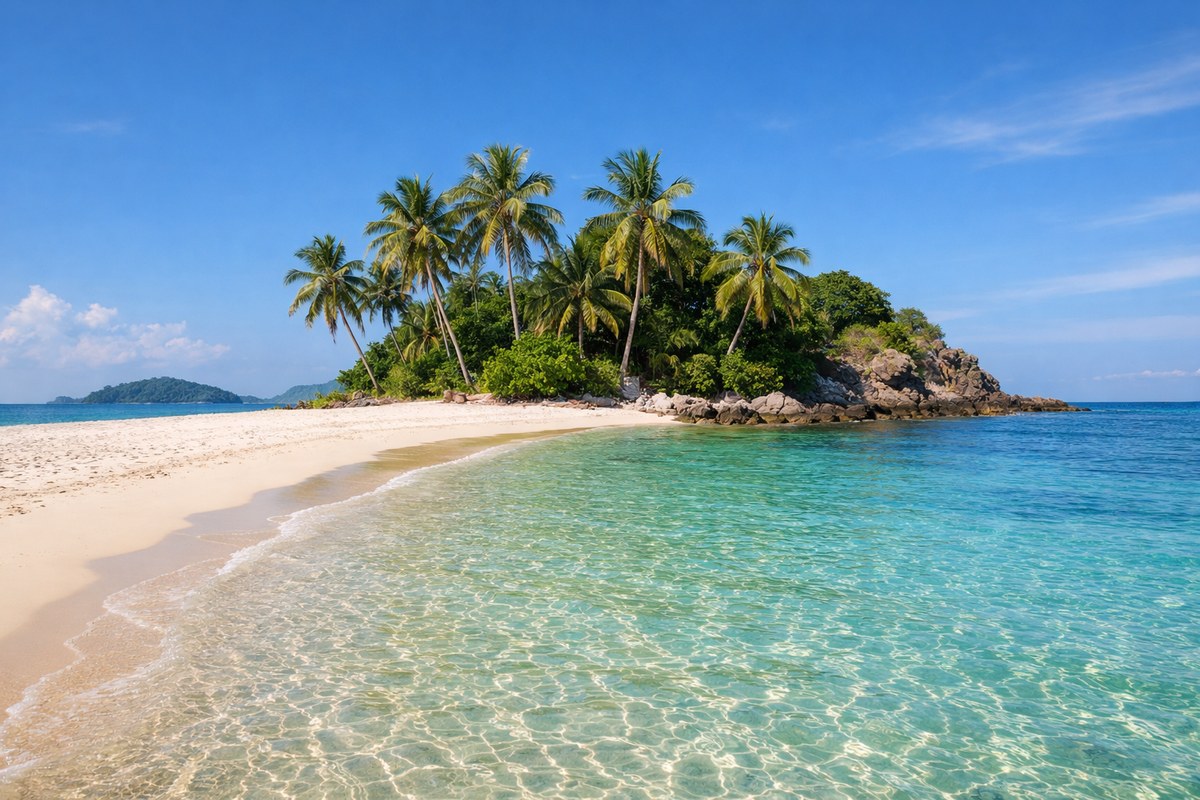
The jewel of the Ha Tien coast is the Hai Tac Archipelago, also known as the Pirate Islands, a scatter of around twenty islands floating off the coast in the Gulf of Thailand. Legend says pirates once sheltered among them, and the moody silhouettes of the islands at sunset certainly look the part.
Boat tours depart from Ha Tien harbour and typically run for a full day, visiting islands such as Hon Nghe and Hon Dua, with stops for swimming, snorkelling, beach time and a seafood lunch. The water is calm and shallow in the dry season, the sand is pale, and the pace is lazy. Some islands have small fishing communities, while others are simply empty strips of palm and rock.
Fishing villages around Ha Tien offer a window into the local way of life. You can watch nets being mended, squid dried in the sun and tiny wooden boats rocking in the morning swell. If you enjoy this kind of experience, our Vietnam island hopping guide shows how Hai Tac fits into the bigger picture of the country’s islands, from the Cham Islands to Cat Ba.
- Book a day tour from the harbour or through your hotel. Group boats are cheaper, while private boats are flexible.
- Bring sunscreen, a hat and water. There is little shade on the water.
- Pack a dry bag for phones and cameras.
- Check sea conditions before booking, particularly in the wet season.
What to Eat in Ha Tien: Seafood, Pepper and Local Specialities
Ha Tien is a food lover’s quiet secret. The sea provides squid, crab, snails, prawns and fish so fresh they were swimming that morning. Order them grilled over charcoal, steamed with lemongrass, or stir-fried with local pepper, which is famously aromatic and pungent. Crab dipped in a mix of salt, lime and pepper is a revelation.
Look out for bun ken, a fragrant noodle dish served in a coconut-based fish curry broth with fresh herbs, a legacy of the region’s Khmer heritage. Fish-sauce stalls, dried seafood shops and pepper vendors line the market, and they make excellent edible souvenirs. Our street food safety guide gives practical tips for eating adventurously and well. Pair your meals with a tall glass of sugarcane juice or a strong iced Vietnamese coffee, then take a walk along the river to let dinner settle.
Seafood restaurants along the waterfront serve large portions at modest prices, and prices are usually listed by weight, so confirm the cost before ordering. If you are shopping for gifts, our what to buy in Vietnam guide has more ideas, and pepper is easily the most local choice.
Best Time to Visit Ha Tien and Practical Tips
The best time to visit Ha Tien is the dry season, from December to April, when skies are clear, seas are calm and temperatures hover pleasantly. Island trips run most reliably, and sunsets are spectacular. The wet season, from May to November, brings heavy afternoon showers and rougher seas, though it is also greener and quieter, with lower prices. Our best time to visit Vietnam guide and rainy season guide will help you decide.
Practical points to keep in mind:
- Cash is king. ATMs exist in town, but small restaurants and boat operators usually want dong. See our Vietnam money guide.
- Stay near the river or at Mui Nai for the best views and easy walking. Options range from budget guesthouses to comfortable seaside resorts.
- Plan the border carefully. The Ha Tien crossing leads toward Kep and Kampot in Cambodia. Make sure your visas are in order on both sides; Vietnam’s official e-visa portal explains entry rules, and our land border crossings guide covers the process.
- Dress modestly at temples and remove shoes where asked.
- Travel light. A small bag, sandals and a rain jacket cover most needs.
For official information on the region, visit the Vietnam National Authority of Tourism.
Final Thoughts: Where Vietnam Slows to the Tide
Ha Tien is not a destination of checklists. It is a place to unhurry yourself: to watch a boat slip out under a violet sky, to eat crab with your fingers, to feel the border breeze carry both Khmer incense and sea salt. Add it to your southern route, give it at least two nights, and you may find it is the chapter you remember longest.
Planning more of your southern journey? Start with our Mekong Delta travel guide and let the rivers lead you to the sea.
Frequently Asked Questions
How do I get to Ha Tien from Ho Chi Minh City?
Ha Tien is about 300 km from Ho Chi Minh City. Direct buses and limousine vans take six to seven hours; some services run overnight.
How many days do you need in Ha Tien?
Two nights is ideal. That gives you time for the town sights, Mui Nai beach and a day trip to the Hai Tac Archipelago.
Can you travel from Ha Tien to Phu Quoc?
Yes. High-speed boats run between Ha Tien and Phu Quoc in around 90 minutes to two hours. Check the latest schedules locally.
Is Ha Tien worth visiting?
Yes, if you enjoy quiet beaches, island hopping, fresh seafood and a mix of Vietnamese, Chinese and Khmer culture without the crowds.
What is the best time to visit Ha Tien?
The dry season from December to April offers calm seas and clear skies, ideal for island tours and beach days.
Leave a Reply