Ba Be National Park travel guide: lake boat trips, Pac Ngoi homestays, Dau Dang waterfall and how to get there from Hanoi. Plan your northern escape today.
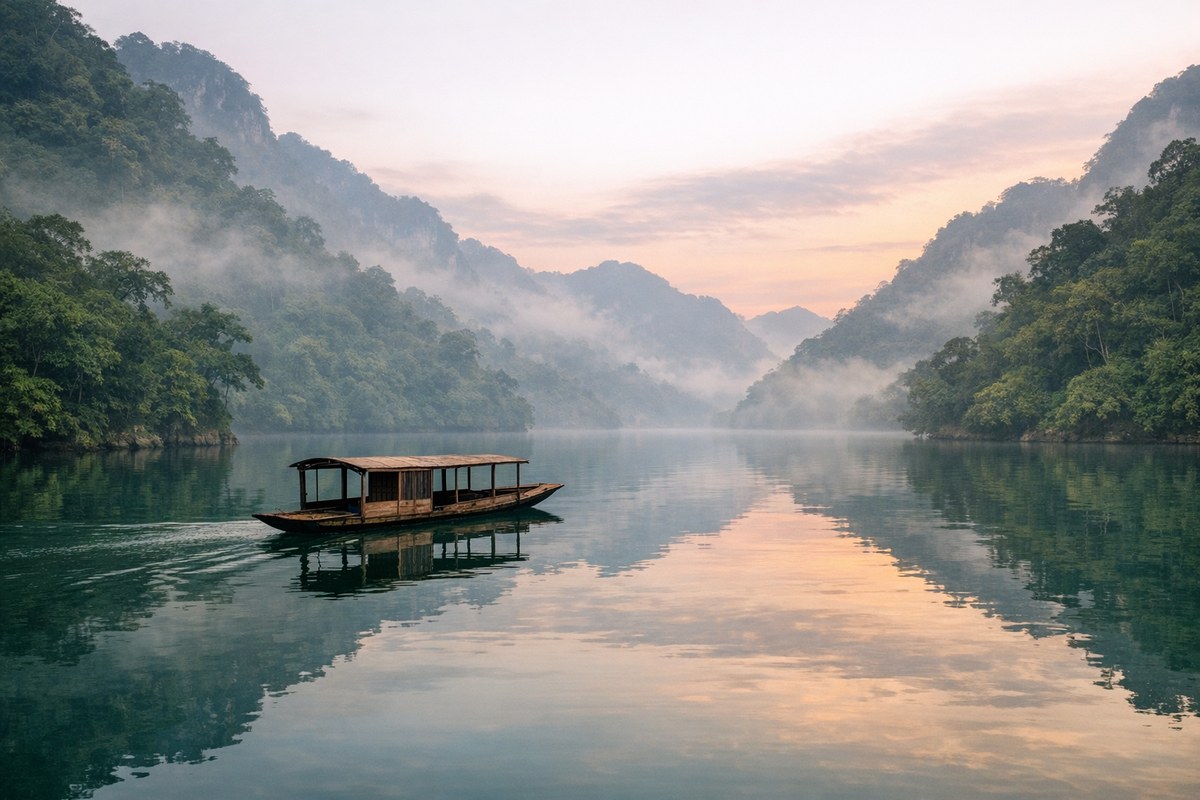
Ba Be National Park is the kind of place that makes you whisper without being asked. At dawn, mist lifts off a lake the colour of polished jade, a narrow wooden boat slides between forested limestone walls, and the only sound is the drip of the oar and a distant rooster in a Tay village across the water. This is Vietnam without the horns, the neon and the crowds, and it sits just a long morning’s drive north of Hanoi.
Tucked into Bac Kan province, Ba Be is home to the country’s largest natural freshwater lake, a tangle of caves, rivers and waterfalls, and the stilt-house communities of the Tay people, whose hospitality is as warm as the rice wine they pour. This guide covers how to get there, where to stay, what to do, and when the lake looks its absolute best.
Why Visit Ba Be National Park
Vietnam’s north is famous for high drama: the staggering passes of Ha Giang, the terraces of Sapa, the karst towers of Ha Long. Ba Be offers something quieter and, for many travellers, more restorative. Three linked lakes stretch for roughly eight kilometres through a valley of dense evergreen forest and sheer limestone cliffs, creating a landscape of liquid calm that feels almost Scandinavian in its stillness, yet unmistakably Vietnamese in its details: a buffalo grazing at the water’s edge, a fisherman casting a net from a bamboo raft, smoke curling from a stilt house kitchen.
The park’s value goes beyond scenery. Ba Be is recognised as an ASEAN Heritage Park and a Ramsar wetland of international importance, and its forests shelter rare plants, hundreds of butterfly species, birds and even elusive primates. Travelling here is a gentle way to support community-based tourism, since homestays and boat cooperatives are run by local families rather than international chains.
It is also a superb counterpoint to a busy itinerary. If you have spent a week in Hanoi’s chaos or taken on the mountain bends of the Ha Giang Loop, two nights at Ba Be will reset your senses. Travellers who love trekking and village life will find the same spirit here as at Pu Luong Nature Reserve and in the valley of Mai Chau, with fewer visitors and an even slower tempo.
For many, the real lure is simplicity. There are no cable cars, no giant resorts, and no curated selfie queues. You wake to bird calls, eat river fish and sticky rice, paddle a kayak across glassy water, and sleep under a mosquito net with the window open to the frogs. If that sounds like heaven, read on.
How to Get to Ba Be National Park from Hanoi
Ba Be is roughly 240 kilometres from Hanoi, and the journey takes between five and six hours depending on traffic and road conditions. The scenery improves with every kilometre, as the highways give way to winding provincial roads lined with maize, tea and bamboo.
The easiest option is a shared minibus or limousine van, which many Hanoi hotels and tour operators can book for a modest fare. Public buses also run from Hanoi’s Gia Lam and My Dinh stations toward Cho Ra, the nearest town, from where you can take a short taxi or xe om to the lake. If you want flexibility, a private car with a driver is comfortable and gives you room to stop at viewpoints along the way.
Adventurous riders can cover the distance on two wheels, which is an excellent way to see the countryside. If that appeals, read our full guide to motorbike rental in Vietnam first so you ride legally and safely, and check our guide to getting around Vietnam for all transport options in one place.
Plan Ba Be as a loop with other northern highlights. Many travellers combine it with the border waterfalls of Cao Bang, which lies a few hours further north, or continue west toward Moc Chau and Mai Chau. Allow at least two nights at the lake, since the long journey makes a single night feel rushed.
- Distance from Hanoi: about 240 km, five to six hours by road.
- Nearest town: Cho Ra, around 20 km from the lake area.
- Best arrival plan: leave Hanoi early so you reach Pac Ngoi village by early afternoon for a first boat ride in softening light.
Things to Do at Ba Be Lake: Boats, Caves and Waterfalls
The heart of any Ba Be itinerary is a day on the water. Local cooperatives run motorised wooden boats from the main pier, and a full-day excursion typically visits the park’s highlights in a gentle loop, with a lunch of grilled fish stop along the way. Prices are set for the boat rather than per person, so travelling in a small group is the best way to split the cost.
Puong Cave is the showstopper. A river flows through this limestone tunnel of several hundred metres, and your boatman steers or poles you through a cathedral of stalactites with bats rustling overhead. Bring a torch and a layer, since the air inside is cool and damp.
Dau Dang Waterfall lies on the Nang River in a sweeping gorge. Rapids tumble down tiered rocks in a long, roaring staircase, and the pool at its base is a good place to cool off during the warm months. A short walk from the boat landing brings you to the best viewpoints, though you should always respect slippery rocks and warning signs.

Ao Tien, the Fairy Pond, is a small, quiet pond ringed by forest, believed in local legend to be a bathing place for celestial maidens. Po Gia Mai, a small island in the lake known locally as Widow’s Island, adds a touch of folklore to the scenery: the story goes that it holds a tragic love story from long ago. Your boatman will happily tell it.
If you prefer your adventures self-powered, many homestays rent kayaks and bicycles. Paddling at first light, when the lake is mirror flat, ranks among the finest experiences in northern Vietnam, and fans of the sport should also read our guide to kayaking in Vietnam for more waterways to explore. Cyclists can pedal the village lanes between rice paddies and tea gardens, and trekkers can follow forest trails to viewpoints above the water.
Where to Stay: Pac Ngoi Village and Ba Be Homestays
For the full Ba Be experience, stay in Pac Ngoi, a Tay village on the lake’s edge. Here, traditional stilt houses open onto rice fields and bamboo groves, and homestay families welcome guests into their living spaces to share meals and stories. Sleeping on a mattress laid out on the wooden floor, under a mosquito net, with the lake only a stroll away, is an unforgettable experience.
Homestays range from very basic mattress-on-the-floor setups to more comfortable bungalows with private bathrooms, hot water and air conditioning. Book ahead during weekends and public holidays, when Hanoi families escape to the lake. Dinner is usually a communal feast: grilled river fish, stir-fried bamboo shoots, local pork, sticky rice and fiery chilli dips, washed down with homemade rice wine. Let your host know about dietary needs in advance, since menus are built around whatever the garden and the lake provide that day.
More upscale lodges and eco-resorts are scattered around the park’s edge for travellers who prefer a little polish with their wilderness, and there are simple hotels in Cho Ra for those who arrive late. Whatever your budget, the quality of Ba Be stays tends to be very good value, and our Vietnam budget travel guide shows how a night or two here can stretch your funds further than almost anywhere else in the north.
Be a thoughtful guest. Remove your shoes before entering a stilt house, ask before photographing people, and keep rubbish out of the water. The community has a gentle relationship with the lake, and visitors who honour it are invariably repaid with extra kindness.
Best Time to Visit Ba Be National Park
The best time to visit Ba Be National Park is spring and autumn. From March to May, the weather is mild, the hills are green and wildflowers dot the roadsides. From September to November, rice fields turn golden, the sky clears, and the air carries a light chill that makes the lake feel especially atmospheric.
Summer, from June to August, is hot and humid with heavy afternoon rain. The waterfalls roar, the forest is at its lushest, and crowds are thinner, but road conditions can deteriorate, and some trails become slippery. Winter, from December to February, is cold and foggy, particularly in the early mornings. Dawn mist over the water can be magical, but you will need warm layers, and boat trips can feel bitterly chilly.
For a bigger picture of the seasons across the country, our month-by-month guide to the best time to visit Vietnam will help you match Ba Be to the rest of your route. If you are travelling in monsoon months, our rainy season guide offers reassuring advice, and our seasonal packing guide lists exactly what to bring.

Practical Tips for Your Ba Be Trip
A little preparation goes a long way in a place this remote. Bring cash in small notes, since ATMs are scarce and many homestays and boat cooperatives only accept dong. Our Vietnam money guide explains how best to withdraw and carry cash before heading to the mountains. Mobile signal can be patchy around the lake, so consider downloading offline maps; our SIM card and eSIM guide will keep you connected where coverage exists.
- Pack light layers: mornings and evenings are cool all year, and boats are breezy.
- Bring insect repellent and a torch: both are useful for caves and village paths after dark.
- Wear shoes with grip: trails and landings are slippery after rain.
- Respect the park: follow ranger guidance, stay on paths and never remove plants or wildlife.
- Allow time: two nights lets you relax into the rhythm instead of racing it.
For official information on destinations and tourism, visit the Vietnam National Authority of Tourism, and for wider context on how Vietnamese wetlands and forests are managed, local rangers at the park office are happy to answer questions on arrival.
Final Thoughts: Let the Lake Slow You Down
Ba Be National Park does not shout. It murmurs. It is a place for long breakfasts, unhurried boat rides, hands wrapped around a cup of hot tea while the mist burns off the water. Add it to a northern loop, give it two full nights, and let it remind you that the best travel moments often arrive when nothing is scheduled at all.
Ready for more of the north? Browse our Hanoi travel guide to start your journey in style, and then point yourself toward the lake.
Frequently Asked Questions
How do I get to Ba Be National Park from Hanoi?
Ba Be is about 240 km from Hanoi. Take a shared minibus, a public bus to Cho Ra or a private car; the journey takes five to six hours. Many travellers also ride there by motorbike.
How many days do you need at Ba Be National Park?
Two nights is ideal. That gives you one full day for a boat trip to Puong Cave and Dau Dang Waterfall and a second morning for kayaking or village walks.
What is the best time to visit Ba Be National Park?
Spring (March to May) and autumn (September to November) offer the best weather. Summer is wet and winter is cold and misty.
Where should I stay at Ba Be Lake?
Pac Ngoi village is the most popular base, with Tay stilt-house homestays on the lake shore. Higher-end lodges and simple hotels in Cho Ra are also available.
Is Ba Be National Park worth visiting?
Yes, if you enjoy quiet nature, boat rides, caves, waterfalls and authentic village stays. It is one of northern Vietnam’s least crowded and most peaceful destinations.
Leave a Reply