What to buy in Vietnam is one of the most pleasurable dilemmas a traveller can face. From the lacquerware workshops of Hanoi’s Old Quarter to the tailor shops of Hoi An, from the ceramic villages of the Mekong Delta to the coffee stalls of the Central Highlands, Vietnam is a country where the shopping is as culturally rich as the sightseeing. The trick is knowing what’s genuinely worth bringing home — and what’s mass-produced tourist fodder that will gather dust on a shelf.
This guide cuts through the noise. These are the souvenirs that are beautiful, portable, authentically Vietnamese, and likely to become the most-asked-about things in your home.

What to Buy in Vietnam: The Essential Souvenir Categories
Vietnamese craftsmanship has a depth that reflects thousands of years of trade, cultural exchange, and artistic tradition. Before diving into specific items, it helps to understand the main categories — because knowing that a village near Hoi An has specialised in silk weaving for 500 years changes how you approach buying a silk scarf.
Lacquerware is one of Vietnam’s oldest and most sophisticated craft traditions. Objects — bowls, boxes, vases, trays, picture frames, decorative panels — are coated with layer after layer of natural lacquer extracted from the rhus succedanea tree, with each layer sanded before the next is applied. The result, after sometimes dozens of layers, is a surface of extraordinary depth and lustre. Traditional Vietnamese lacquer work uses eggshell inlay (a technique called vỏ trứng) to create patterns of extraordinary delicacy. High-quality lacquerware is weighty, smooth to the touch, and has a depth you can almost look into. Cheap tourist versions feel light and plasticky — avoid these.
Silk has been woven in Vietnam for centuries, and the country produces both raw and finished silk of outstanding quality. Hoi An is the undisputed centre of the silk trade, with a dedicated Silk Village nearby and dozens of fabric shops along its lantern-lit streets. Vietnamese silk is softer and more lustrous than much of what you’ll find in Western shops, and the price difference is significant. Scarves, ao dai fabric (Vietnam’s national dress material), cushion covers, and bed runners are all excellent purchases.
Ceramics and pottery have deep regional identities in Vietnam. Bat Trang, a village on the outskirts of Hanoi, has produced blue-and-white porcelain for over 600 years. Phu Lang in Bac Ninh province specialises in unglazed terracotta. The riverside town of Hoi An sits near several ceramic traditions that blend Chinese and Cham influences. A well-chosen piece of Vietnamese ceramics is both functional and beautiful — and tends to age gracefully.
Coffee deserves its own category. Vietnam produces some of the world’s most interesting coffee, and a kilogram of quality beans from a Da Lat specialty roaster costs a fraction of what you’d pay for equivalent quality back home. See our full guide to Vietnam’s coffee farm trail for detailed buying advice.
Hoi An: The Best Shopping Town in Vietnam

If you have time to visit only one place specifically for shopping in Vietnam, make it Hoi An. This UNESCO-listed ancient trading port has been a commercial crossroads for centuries — Chinese, Japanese, Dutch, and Portuguese merchants all left their mark — and the tradition of quality craft production is alive and thriving today.
Hoi An’s tailors are world-famous, and for good reason. Skilled local dressmakers can produce custom garments — suits, dresses, ao dai, shirts — in 24 to 48 hours from high-quality fabrics. The key to success with Hoi An tailoring is to bring clear reference photos of what you want, choose your fabric carefully (the quality range is enormous), allow proper fitting time, and build in at least one revision appointment. A well-made custom suit from a reputable Hoi An tailor is a genuinely remarkable value — and it will be the most memorable thing you wear for years.
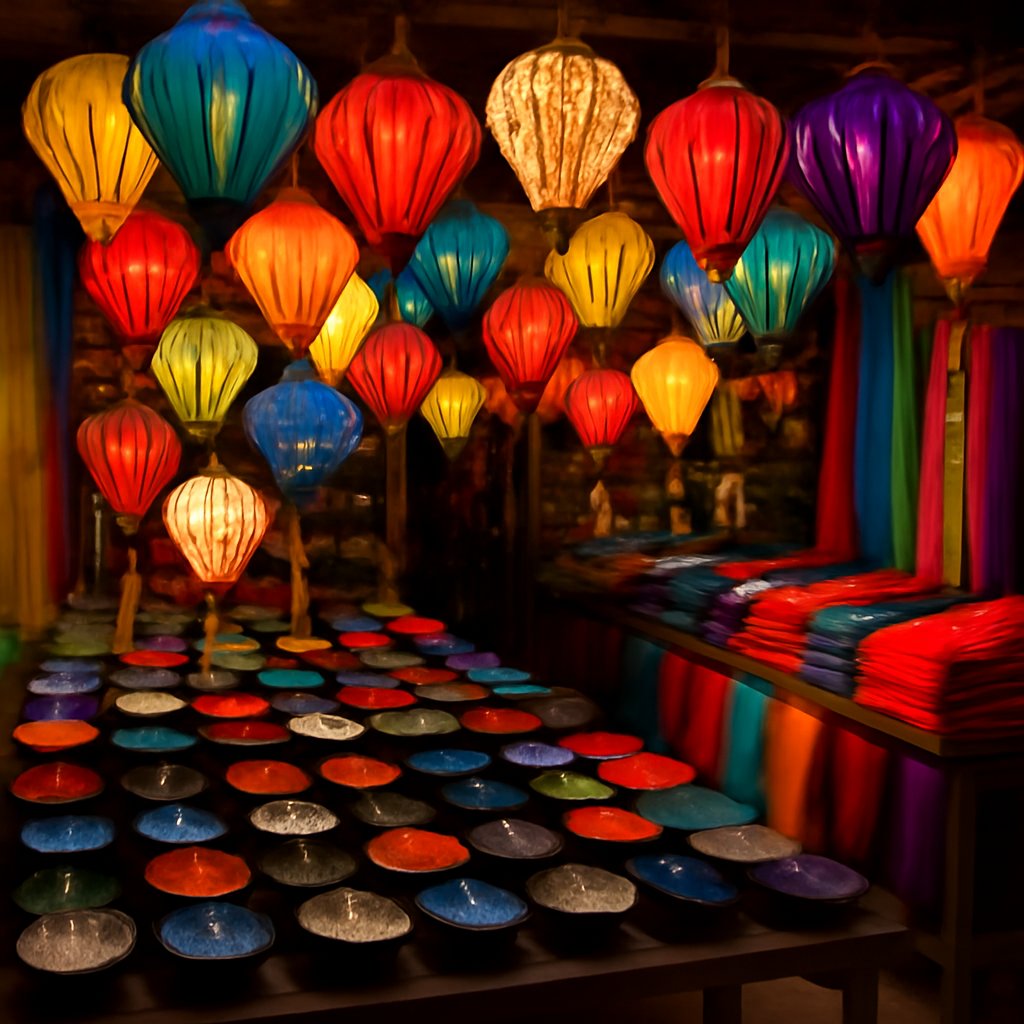
Beyond tailoring, Hoi An has excellent shops selling handmade lanterns (the town’s iconic coloured silk lanterns make superb gifts — they flatten for packing), hand-embroidered linens, wooden carvings, and leather goods. The old town is walkable and pleasantly compact; the best shops tend to cluster along Tran Phu, Le Loi, and Nguyen Thai Hoc streets. For everything you need to know about navigating the town itself, our Hoi An travel guide covers the logistics in full.
One practical note: Hoi An is noticeably more expensive than most Vietnamese towns, and persistent haggling is the norm. A polite counter-offer of 30–40% below the first asking price is a reasonable starting point. Always settle the price before work begins on any tailor-made item, and get the delivery date in writing.
Hanoi: Lacquerware, Silk, and the Old Quarter
Hanoi’s 36 Streets — the ancient trading quarter where each street historically specialised in a single craft — is one of the world’s most atmospheric shopping destinations. The specialist trades have evolved and blurred over centuries, but the character remains: this is a place where production and retail happen side by side, where you can watch an artisan at work in the shop’s back room and buy the finished product from the front.
For lacquerware, look for galleries and workshops on and around Hang Khai and in the streets leading off it. The best pieces are signed, weighted, and come with some explanation of the making process — if a vendor can’t tell you how many lacquer layers their piece has or where the materials come from, look elsewhere.
For silk, Hang Gai Street (known locally as “Silk Street”) is the main destination — dozens of fabric shops carrying everything from raw silk by the metre to finished ao dai and Western-style clothing. Quality varies enormously. Rub the fabric between your fingers; genuine silk has a warm, smooth feel and a subtle lustre that synthetic blends cannot replicate. Hold it up to light — real silk has a translucency that looks almost alive.
The Old Quarter is also the place for Vietnamese tea, herbal products, art prints, and the small practical items that make the best everyday souvenirs: lacquered chopsticks, ceramic tea sets, hand-painted bamboo fans, and the ubiquitous conical hats that look beautiful hung as decorative objects even if you never wear one. For a deeper dive into navigating the capital’s streets, our Vietnam itinerary guide has a dedicated section on Hanoi days.
Practical Shopping: Food, Drink, and Things That Pack Well

Some of the best things to buy in Vietnam are edible or drinkable, and they pack remarkably well. Here’s a checklist of food and drink souvenirs worth seeking out:
Coffee and a phin filter. Already mentioned, but worth repeating: a bag of specialty whole bean coffee from Da Lat and a small aluminium phin filter is the perfect gift for coffee drinkers. The phin costs almost nothing and brews an exceptional cup.
Dried spices and seasoning blends. Vietnamese cooking depends on a complex spice palette — star anise, cinnamon, dried chilli, lemongrass, galangal — many of which are sold fresh-dried at local markets at a fraction of Western health food prices. A set of spices for making phở at home, wrapped in paper from a market vendor, is both practical and evocative of the trip.
Fish sauce. This sounds unglamorous, but a good bottle of Phú Quốc fish sauce (the Vietnamese equivalent of a premier cru — the island produces some of the finest fish sauce in the world from pure anchovies) is a kitchen revelation. It travels fine in checked luggage wrapped in a ziplock bag. Buy it at a reputable supermarket or directly on Phu Quoc island.
Instant Vietnamese coffee packets. G7 brand (made from Vietnamese robusta) and Trung Nguyen Legend packets are excellent for gifts — lightweight, universally appealing, and far better than the instant coffee sold anywhere outside Southeast Asia.
Vietnamese tea. The highlands around Da Lat and the mountains of the north produce excellent oolong, green tea, and the distinctive Shan Tuyết ancient tree tea from Ha Giang. Loose-leaf tea in a pretty tin is a lightweight, non-perishable gift that travels impeccably. Our Ha Giang guide mentions the ancient tea tree villages of the far north, which are among the most extraordinary tea-growing areas on earth.
What NOT to Buy: Avoiding Tourist Traps
A few categories of “souvenirs” are worth actively avoiding.
Mass-produced lacquerware. The tourist markets are full of lightweight lacquered items that have been painted (not properly lacquered) and will chip within weeks. The giveaway is price — a genuine piece of lacquerware takes weeks to produce and cannot cost three dollars.
Anything involving endangered wildlife. Vietnam has a significant illegal wildlife trade problem. Items made from tortoiseshell, certain corals, tiger or bear products, and similar materials are both illegal to import in most countries and directly harmful. Do not buy them regardless of what the vendor tells you about their origin.
Loose gemstones from street vendors. Vietnam has genuine gemstone production (sapphires from Luc Yen, rubies from Quy Chau), but the stones sold by hawkers on tourist streets are almost invariably synthetic or misrepresented. If you want to buy genuine gemstones, visit a reputable jeweller with certifications.
Antiques. Genuine antiques cannot legally be exported from Vietnam without special permits. Most “antiques” sold in tourist markets are either reproductions or items that will be confiscated at customs. Decorative items with an antique aesthetic are fine — just don’t pay antique prices for them.
Conclusion: Shop Slowly, Buy Well
The best approach to shopping in Vietnam is the same as the best approach to eating: slow down, look past the obvious, and pay attention to what’s actually made rather than what’s just packaged for tourists. The country’s craft traditions are deep and genuine. A lacquer bowl made by a Hanoi artisan, a silk scarf woven on a handloom in Hoi An, a bag of arabica from a Da Lat roaster who grew the beans themselves — these are things of real value that will outlast the trip.
Buy a few things well rather than many things cheaply. The weight limit on your luggage will thank you, and so will your shelves at home.
What are the best souvenirs to buy in Vietnam?
The best souvenirs to buy in Vietnam include lacquerware (bowls, boxes, decorative pieces), silk scarves and ao dai fabric from Hoi An, handmade ceramics from Bat Trang village near Hanoi, specialty coffee beans from Da Lat, Vietnamese tea, Phu Quoc fish sauce, and custom-tailored clothing from Hoi An. These items are genuinely Vietnamese, high quality, and represent real craft traditions.
Where is the best place to shop in Vietnam?
Hoi An is widely considered the best shopping town in Vietnam for custom tailoring, silk, lanterns, and handicrafts. Hanoi’s Old Quarter (36 Streets) is excellent for lacquerware, silk, ceramics, and art. Ho Chi Minh City’s Ben Thanh Market and surrounding streets are good for bulk buying and food items. For coffee, the highland town of Da Lat is the best source for specialty beans.
How do I identify high-quality lacquerware in Vietnam?
High-quality Vietnamese lacquerware is heavy and solid, has a deep lustrous surface you can almost look into, and shows precise detail in any inlay work. The lacquer should be warm to the touch, not cold and plastic-like. A genuine piece has been built up with many layers over weeks — if the price seems too good to be true (under $5 for a bowl), it’s almost certainly painted rather than properly lacquered and will chip quickly.
Can I get clothes tailor-made in Vietnam?
Yes — Hoi An is famous for its skilled tailors who can produce custom garments (suits, dresses, shirts, ao dai) in 24–48 hours. Bring clear reference photos of what you want, choose your fabric carefully, allow time for fitting, and book at least one revision appointment. A custom suit from a reputable Hoi An tailor is exceptional value compared to Western equivalents. Confirm price and delivery date in writing before work begins.
What food items should I buy to take home from Vietnam?
The best food souvenirs from Vietnam include specialty coffee beans from Da Lat (with a phin filter), Phu Quoc fish sauce, dried Vietnamese spices (star anise, cinnamon, dried chilli, lemongrass), G7 or Trung Nguyen instant coffee packets for gifts, and loose-leaf highland tea. All of these pack well, are legal to export, and offer a genuine taste of Vietnam when you’re back home.
Leave a Reply