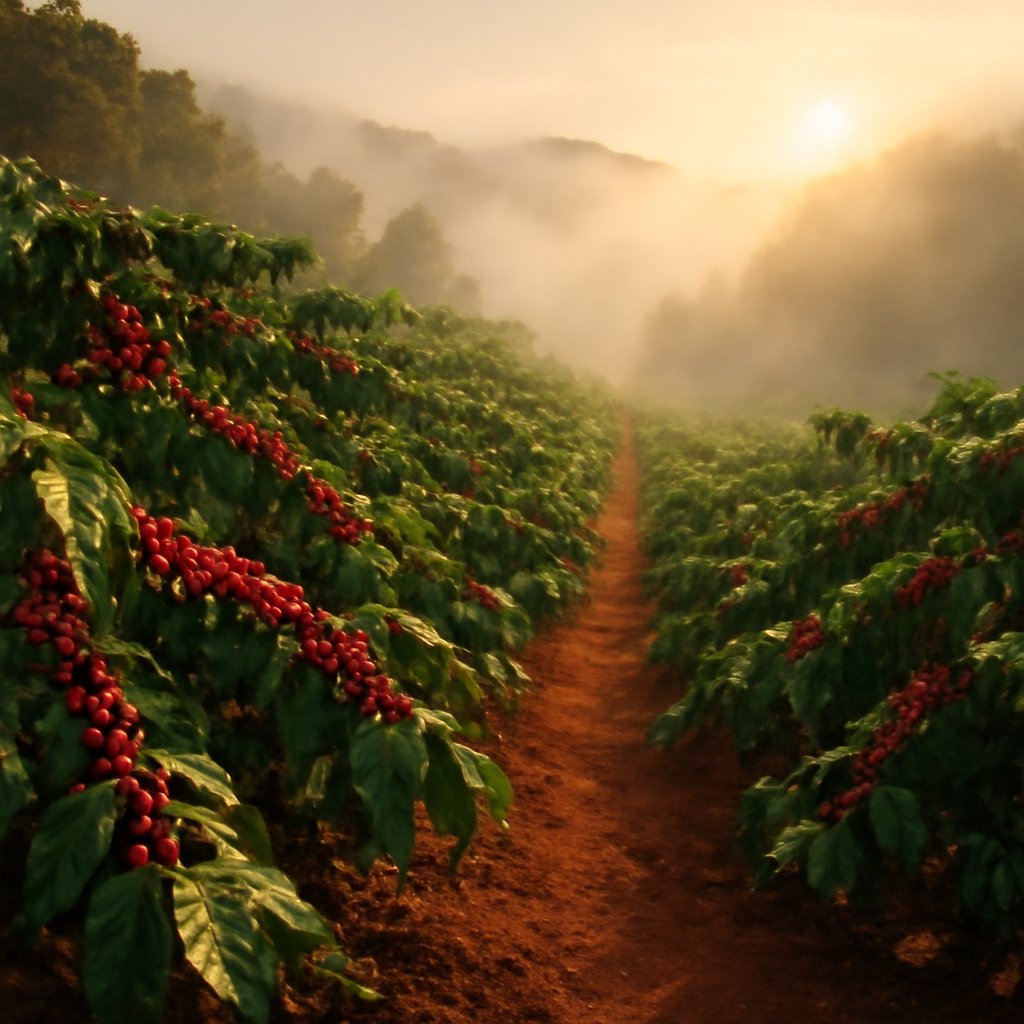
Vietnam’s coffee farm trail winds through one of the most spectacular highland landscapes in Southeast Asia. In the mist-draped hills around Da Lat, the air smells of pine and rain and something sweeter — the faint, fermenting richness of coffee cherries drying in the sun. This is Vietnam’s coffee heartland, and tasting it at the source, on the farm where the beans were grown, is an experience that will change how you drink coffee for the rest of your life.
Vietnam coffee farms produce something genuinely world-class. The country is the world’s second-largest coffee producer, yet most visitors never look beyond the glass of cà phê sữa đá sweating on their pavement table. The Vietnam coffee farm trail — stretching from the highlands around Da Lat through Buon Ma Thuot in the Central Highlands — offers a deeper story: one of robusta and arabica, of French colonial planting schemes repurposed into a thriving modern industry, and of small farmers who have spent generations coaxing extraordinary flavour from volcanic red soil.

Vietnam Coffee Farms: The Story Behind the Second Cup
Coffee arrived in Vietnam with French missionaries in the 1850s. The colonists quickly recognised that the Central Highlands — with their rich basaltic soil, consistent rainfall, and altitude between 500 and 1,500 metres — were ideal for large-scale cultivation. By the early twentieth century, coffee plantations stretched across Dak Lak, Lam Dong, and Gia Lai provinces. After reunification in 1975, the state took over production, and coffee became one of the country’s most important agricultural exports.
Today, Vietnam produces over 1.5 million metric tonnes of coffee annually, with robusta dominating at around 95% of output. Robusta — hardier, higher-caffeine, and more intensely flavoured than arabica — thrives in the lower-altitude Central Highlands around Buon Ma Thuot, widely considered the robusta capital of the world. Up in the cooler hills above Da Lat, arabica grows at elevations above 1,200 metres, producing beans with the acidity and floral complexity that specialty coffee drinkers prize.
In recent years, a new wave of specialty coffee producers has emerged in the highlands, experimenting with processing methods — natural, honey, anaerobic fermentation — that unlock entirely new flavour profiles from Vietnamese-grown beans. These small farms and mills have put Vietnam on the global specialty coffee map in a way that the country’s mass-market robusta exports never did. Visiting them is a window into the future of Vietnamese coffee.
The Da Lat area makes an excellent base for coffee farm visits. If you haven’t visited yet, our Da Lat travel guide covers everything you need to know about this extraordinary highland city — from getting there to where to stay.
Vietnam Coffee Farm Trail: Da Lat to Buon Ma Thuot

The Vietnam coffee farm trail is less a single route and more a loose constellation of farms, cooperatives, and processing mills scattered across the highlands, connected by mountain roads that wind through pine forests and past flower farms. Here are the key stops.
Da Lat and the Lam Dong Province highlands (1,200–1,500m) — This is arabica country. The area around Da Lat is dotted with small specialty farms producing some of Vietnam’s finest single-origin coffee. Look for farms growing Typica, Bourbon, and Catimor varieties, often processed using the natural or honey method to enhance sweetness. Several farms near the villages of Cầu Đất and Trạm Hành offer tours and tastings, where you can walk the rows of coffee trees, see the processing stations, and cup fresh roasted beans with the farmer.
Bảo Lộc (700–900m) — About 100km north of Da Lat, Bảo Lộc sits at a lower elevation where the landscape shifts from pine to a denser, more humid mix of coffee and tea. The town is a significant processing hub, and several cooperatives here have opened their doors to visitors. Tea and coffee are often grown side by side — mornings spent at a coffee farm can transition into afternoons at one of the hillside tea gardens that overlook the valley.
Buon Ma Thuot (Dak Lak province, 500m) — This is robusta heartland. Buon Ma Thuot is a working agricultural city that most tourists skip entirely, which is precisely what makes it worth visiting. The surrounding countryside is a sea of coffee plantations stretching to the horizon. The Vietnam Coffee Museum here is surprisingly good — an honest account of the industry’s history from colonial origins to contemporary specialty production. From October to December, the harvest season, you can see entire communities working the fields, stripping bright red cherries from the trees by hand.
Getting between these destinations requires some planning. From Da Lat, the drive to Bảo Lộc takes about 2.5 hours; continuing to Buon Ma Thuot adds another four hours on mountain roads. Our guide to getting around Vietnam covers bus, train, and rental options in detail — renting a motorbike or hiring a private car gives you the most flexibility in the highlands.
Specialty Coffee Farms Worth Visiting in Da Lat
The specialty coffee movement in Da Lat has produced a handful of farms that genuinely welcome visitors — not as a marketing exercise, but because the farmers are proud of what they grow and eager to explain it.
At a typical farm visit, you’ll be guided through the growing cycle: the flowering season (February to March, when the hillsides fill with the jasmine-like scent of coffee blossom), the green fruit period, and the harvest from October to January when the cherries ripen to a deep, lustrous red. After the grove, the processing area — where cherries are pulped, fermented, washed, and dried on raised beds under shade cloth — tells the second half of the story. Taste the same bean processed three different ways and you’ll understand immediately why processing matters as much as the terroir.
The cupping experience at the end of a farm tour is the real reward. Brewed in a celadon ceramic cup, a freshly roasted, locally grown Da Lat arabica tastes unlike anything in a Vietnamese street café: clean, bright, with notes of jasmine, stone fruit, and a lingering dark chocolate finish. It is the coffee equivalent of eating a tomato grown in the garden where you’re standing.
Several Da Lat specialty roasters also run farm-to-cup experiences from their city cafés, sourcing from farms within 30 kilometres and roasting on-site. These are a good option if you want the story without a full day of highland driving.
The Robusta Revolution: Why Buon Ma Thuot Matters
For decades, robusta was considered the lesser bean — the industrial grade, the blending coffee, the thing that went into instant packets and supermarket tins. But Vietnam’s robusta, grown at the right altitude and processed with care, is experiencing a quiet reappraisal. High-quality Vietnamese robusta has a distinctive flavour profile: earthy, chocolatey, with a body so thick it coats the back of your throat and a caffeine hit that explains why Vietnamese coffee is famous for its potency.
In Buon Ma Thuot and the surrounding Dak Lak province, a new generation of farmers is applying specialty-grade attention to their robusta crops — selecting only ripe cherries, experimenting with extended fermentation, and seeking out roasters who can showcase what the bean is actually capable of. The results are genuinely exciting: robusta that has shed the stigma of mediocrity and emerged as something worth seeking out in its own right.
The annual Buon Ma Thuot Coffee Festival, held every two years in March, draws producers, buyers, and coffee enthusiasts from across the world. If your visit coincides with it, the festival is a remarkable event — a small city that lives and breathes coffee throwing open its doors for five days of competitions, exhibitions, and tastings. Check the official Vietnam Tourism website for event dates and programming.
How to Plan Your Vietnam Coffee Farm Trail Visit
The best time to visit Vietnam’s coffee farms is during or just after the harvest season, which runs from October through January. This is when the plantations are most active — you’ll see the full sweep of the process, from picking to processing, and the freshest beans will be available for purchase. Outside harvest season, the farms are quieter but still beautiful; the flowering season in February and March has its own particular magic.
A practical three-day itinerary might look like this: Day 1 in Da Lat, visiting one or two specialty farms in the Cầu Đất area and spending the evening at a specialty café in the city. Day 2 on the road to Bảo Lộc, with a stop at a cooperative processing facility and a tea garden for contrast. Day 3 as a long drive to Buon Ma Thuot, with the Coffee Museum and a visit to a large plantation on the outskirts of town.
Accommodation in Da Lat is plentiful and excellent value — the city’s popularity as a domestic tourism destination means there are well-run guesthouses and boutique hotels in every budget bracket. Buon Ma Thuot has fewer options but enough comfortable hotels to make an overnight worthwhile. For budget guidance, our overview of travelling Vietnam under $50 a day has detailed per-city cost breakdowns.
If you’re combining the coffee trail with a longer trip, the highlands connect naturally with the central coast: Hoi An and Da Nang are both accessible from Da Lat by overnight bus or a short domestic flight, making the coffee trail a natural inland detour before or after time on the coast. Our Hoi An travel guide covers the coastal end of this loop in full.
Buying Vietnamese Coffee to Take Home

Vietnamese coffee makes one of the country’s best souvenirs — compact, lightweight, genuinely excellent, and impossible to replicate at home. Here’s what to look for when buying beans to take back.
Buy from the source where possible. Farm-direct or roastery-direct beans are fresher and better than the pre-ground packets sold at tourist shops. Most specialty farms and roasters in Da Lat sell whole beans in vacuum-sealed bags with roast dates printed on them.
Choose whole bean over pre-ground. Pre-ground coffee sold in traditional Vietnamese packs (often a dark green or gold wrapper with a phin filter symbol) is usually fine for making at home with a phin — but it’s pre-ground for that specific filter and may have been sitting on the shelf for months. Whole beans from a specialty roaster give you control over freshness and grind.
Look for a roast date, not just an expiry date. Specialty roasters will print the roast date on the bag. Buy beans roasted within the last two to four weeks for peak flavour.
For those who want to explore the Vietnamese coffee experience more deeply back home, a phin filter — a small aluminium or stainless steel dripper — costs almost nothing at any Vietnamese market and produces an authentic cup from any decent Vietnamese bean. Combine it with condensed milk and a glass of ice, and you have cà phê sữa đá regardless of which continent you’re on.
Conclusion: Follow the Beans
Vietnam’s coffee farm trail rewards the traveller who is willing to go slightly off the main tourist circuit. In the highlands above Da Lat, in the red-soiled flatlands around Buon Ma Thuot, a world of extraordinary flavour is being grown, harvested, and processed by farmers who take profound pride in their work. Visit them. Taste what they make. Take some home. It is one of the best things you can do in Vietnam — and it pairs remarkably well with a Vietnamese breakfast.
Where are the best coffee farms to visit in Vietnam?
The best coffee farm regions to visit in Vietnam are the highlands around Da Lat (Lam Dong province) for specialty arabica, Bảo Lộc for processing cooperatives, and Buon Ma Thuot (Dak Lak province) for robusta at scale. Several farms near Cầu Đất village outside Da Lat offer guided tours and tastings, and specialty roasters in Da Lat city run farm-to-cup experiences year-round.
What is the best time to visit Vietnam coffee farms?
The best time to visit is during the coffee harvest season, which runs from October through January. This is when farms are most active, cherries are being picked and processed, and fresh beans are available. The flowering season in February and March — when the hillsides fill with jasmine-scented coffee blossom — is also beautiful, though less productive to observe.
Does Vietnam grow arabica or robusta coffee?
Vietnam grows both. Around 95% of production is robusta, grown mainly in the Central Highlands around Buon Ma Thuot at lower altitudes (500–800m). Arabica is grown at higher elevations above 1,200m, primarily around Da Lat in Lam Dong province. A small number of specialty farms are also growing Catimor, Bourbon, and Typica varieties in the Da Lat area.
How do I get to the coffee farms near Da Lat?
The coffee farms around Da Lat are best reached by motorbike or hired car. The Cầu Đất farming area is about 25km from Da Lat city, along a scenic mountain road. Many specialty cafés and tour operators in Da Lat organise half-day and full-day farm visits that include transport. Da Lat itself is accessible by overnight bus from Ho Chi Minh City (about 7 hours), by bus from Nha Trang (about 4 hours), or by domestic flight to Lien Khuong Airport.
What coffee should I buy to take home from Vietnam?
For the best souvenir coffee, buy whole beans from a specialty roaster in Da Lat or Buon Ma Thuot — look for a roast date on the bag and choose beans roasted within the last 2–4 weeks. Traditional pre-ground Vietnamese coffee in the dark green or gold packets is also widely available and works well with a phin filter at home. Consider also picking up a small phin filter — cheap, compact, and the authentic way to brew Vietnamese coffee.
Leave a Reply