Ho Chi Minh City Travel Guide: Where to Go, What to Do and How to Do It Right
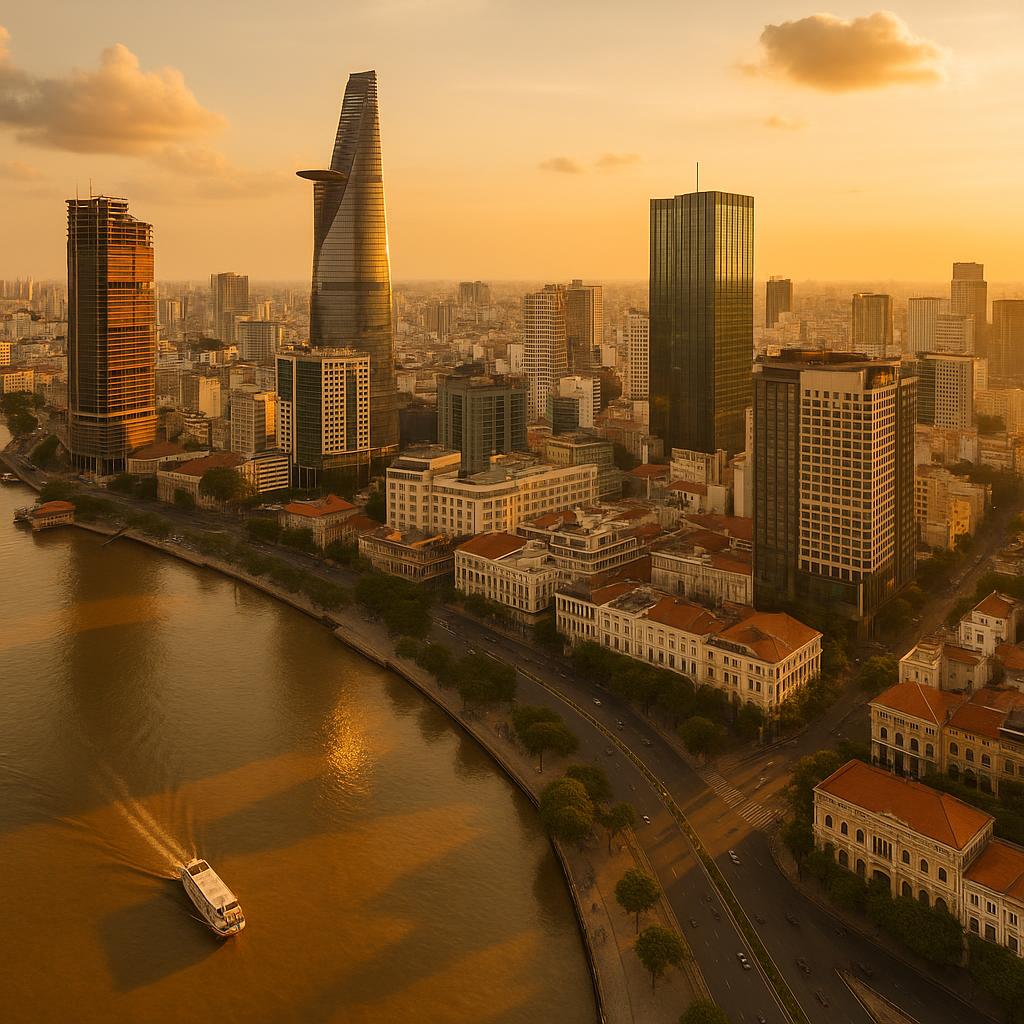
Ho Chi Minh City travel is an experience that hits you like the city itself — fast, loud, fragrant, and utterly alive. Formerly known as Saigon, Vietnam’s pulsing southern capital is a city of contradictions: Buddhist temples squeezed between glass towers, street vendors ladling pho at dawn beneath neon signs that never sleep, French-colonial boulevards buzzing with nine million motorbikes. This guide covers everything you need to know to navigate, savour, and fall in love with Ho Chi Minh City on your own terms.

Ho Chi Minh City Highlights: What Makes Saigon Unmissable
No city in Vietnam moves quite like Ho Chi Minh City. The energy is relentless — even at 3am the streets of District 1 hum with xe ôm drivers, food-cart smoke and the clatter of bia hơi glasses. But beneath the surface urgency lies genuine warmth. Saigonese locals are famously hospitable, quick to laugh, and ready to share a bowl of bún bò Huế at a pavement stall with a stranger.
The city’s soul lives in its layered history. The War Remnants Museum is among the most sobering exhibits in Southeast Asia, its photographs and artefacts tracing the American War through Vietnamese eyes. Nearby, the Reunification Palace — whose gates were famously breached by North Vietnamese tanks on 30 April 1975 — stands frozen in time, its 1960s interiors eerily intact. These are not easy sites, but they are essential ones.
For a lighter register, the Notre-Dame Cathedral Basilica and the ornate Central Post Office — both designed during French colonial rule — anchor the leafy boulevards of District 1 and offer a striking architectural counterpoint to the city’s glass-and-steel towers rising across the river in Thu Duc.
District 3 rewards slower exploration: crumbling colonial villas draped in bougainvillea, artisan coffee shops tucked into narrow lanes, and local bánh mì stalls that have been operating since before reunification. The city’s Chinatown district, Chợ Lớn, is a world unto itself — a maze of incense-thick temples, wholesale herb markets and dim sum restaurants where Cantonese has been spoken for three centuries.
Ho Chi Minh City Food Guide: Eating Your Way Through Saigon

If there is one reason alone to visit Ho Chi Minh City, it is the food. Saigon’s culinary scene is arguably the most diverse in Vietnam — a product of centuries of trade, migration, French occupation and the fusion of regional cuisines from across the country.
Start early. By 6am, the lanes of Bến Thành Market‘s surrounding streets are alive with women stirring cauldrons of hủ tiếu Nam Vang — Phnom Penh-style noodle soup with pork, shrimp and a broth that sings with umami. The local breakfast ritual is unhurried: you squat on a plastic stool, slurp your soup, and watch the neighbourhood wake up around you.
Bánh mì here reaches its pinnacle. The southern version is loaded: pâté, cold cuts, pickled daikon and carrot, cucumber, coriander and a slick of chilli sauce inside a baguette so crisp it shatters. The full story of bánh mì is worth knowing before you bite in. The queue at Bánh Mì Huynh Hoa on Lê Thị Riêng Street is worth joining.
For dinner, the rooftop restaurants of District 1 offer craft cocktails and skyline views, but the real action is at ground level. Bui Vien Walking Street is the backpacker strip — chaotic, neon-drenched, and raucous — while Thi Sach Street caters to locals who want seafood grilled over charcoal at pavement tables. A plate of cá lóc nướng trui — whole snakehead fish roasted in straw and wrapped in rice paper with herbs — is an experience no restaurant menu can replicate.
Don’t leave without trying Vietnamese iced coffee. Southern-style cà phê sữa đá — dark robusta dripped through a phin filter over sweetened condensed milk and crushed ice — is thick, sweet and utterly addictive. For a quieter experience than the tourist cafés, try the narrow laneway coffee shops around Hoàng Diệu Street in District 4.
Cu Chi Tunnels and Day Trips from Ho Chi Minh City
Ho Chi Minh City’s position as southern Vietnam’s transport hub makes it an excellent base for day trips. The most visited is the Củ Chi Tunnels, 40 kilometres northwest of the city centre. This extraordinary network of underground passages — stretching 250 kilometres in total — was used by Viet Cong fighters during the American War to move troops, supplies and wounded soldiers under the noses of US forces. Crawling through the hand-widened tourist sections gives a visceral sense of what life underground meant: darkness, heat, and near-silence broken only by the distant sound of artillery.
The Mekong Delta is another essential excursion. An hour south of the city, the delta’s network of canals, rice paddies and floating markets is a world apart from urban Saigon. A guided day trip typically visits the floating market at Cái Bè or Mỹ Tho, where vendors sell tropical fruit from boats stacked high with mangoes, dragon fruit and jackfruit. If you have more time, consider an overnight stay in Cần Thơ — for the full floating market experience, it’s hard to beat. You can read more about cycling the Mekong Delta if you want to explore it at a slower pace.
For beach escapes, Vũng Tàu is two hours by hydrofoil from Bach Dang Pier — a breezy, slightly faded seaside resort city popular with Saigonese on weekends, and just uncrowded enough to be worth the trip.
Getting Around Ho Chi Minh City

The first time you try to cross a road in Ho Chi Minh City, the traffic will seem genuinely impassable. It isn’t. The trick — locally understood and taught by every guide — is to walk slowly and steadily into the flow. Motorbikes will part around you like water around a rock. Hesitation is what causes accidents.
For getting around, Grab (Southeast Asia’s equivalent of Uber) is reliable, cheap and far less fraught than flagging down a xe ôm whose price will be negotiated in reverse. Both GrabCar and GrabBike operate across the city; a ride from the airport to District 1 costs around 150,000–200,000 VND by car (roughly $6–8 USD).
The city’s metro Line 1, which opened in late 2024 after years of delays, now connects Bến Thành Market to Suối Tiên in the east — a clean, air-conditioned alternative for travellers heading to or from the eastern suburbs. Extensions are under construction.
For visitors who want to move at the pace of the city itself, renting a motorbike is the transformative experience. Many guesthouses in the backpacker district around Phạm Ngũ Lão Street hire semi-automatics for $5–8 per day. Be aware that an International Driving Permit endorsed for motorcycles is technically required. For practical advice on moving between cities, the guide to getting around Vietnam covers intercity options in detail.
Where to Stay in Ho Chi Minh City
District 1 is the natural base for first-time visitors: central, walkable, and well-served by Grab. The backpacker enclave around Phạm Ngũ Lão and Bùi Viện streets offers hostels and budget guesthouses from $8–15/night; better mid-range hotels run $40–80. For boutique accommodation, District 3 has several restored colonial-era townhouses converted into small hotels — quieter, more atmospheric, and only a short ride from the main sights.
Luxury travellers gravitate to the waterfront hotels on the edge of District 1 — the Park Hyatt Saigon and the Reverie are the headline names — or to the cluster of five-stars in District 2 (Thảo Điền), the expat neighbourhood across the Saigon River that offers good international restaurants, yoga studios and independent coffee shops. For tips on keeping costs down during your stay, the Vietnam on a Budget guide has practical daily-cost breakdowns.
Ho Chi Minh City Travel Tips: Practical Information
The city’s official currency is the Vietnamese Đồng (VND). ATMs are plentiful in District 1; the best rates come from Vietcombank and Techcombank machines. Credit cards are accepted in mid-range restaurants and hotels but street vendors and markets are cash-only.
The best times to visit Ho Chi Minh City are December through April, when the dry season keeps skies clear and humidity tolerable. May to November brings afternoon rain showers — tropical and usually brief, but worth packing a compact umbrella or poncho for. For a deeper look at seasonality, the best time to visit Vietnam guide covers regional patterns in detail.
Visitors from most countries can enter Vietnam on an e-visa valid for up to 90 days, applied for online at evisa.xuatnhapcanh.gov.vn. The Vietnam Visa Guide 2026 covers eligibility and the application process step by step.
Learning even a few phrases in Vietnamese makes an enormous difference to how locals respond to you — and how much you enjoy the interaction. The Vietnamese phrases guide for travellers has the essential vocabulary to get started.
Ho Chi Minh City Travel FAQs
Is Ho Chi Minh City safe for tourists?
Ho Chi Minh City is generally very safe for tourists. Violent crime against visitors is rare. The main risks are petty theft — bag snatching from motorbikes is common in busy areas — and traffic. Keep bags on the side away from the road, be aware in crowded markets, and cross streets slowly and steadily. Solo travellers, including women travelling alone, report feeling safe throughout the city.
How many days do you need in Ho Chi Minh City?
Three days is enough to cover the main sights: the War Remnants Museum, Reunification Palace, Bến Thành Market, Chợ Lớn and the colonial quarter. Add one or two days if you plan to do the Củ Chi Tunnels day trip and a Mekong Delta excursion. Five days gives a comfortable pace with time for neighbourhood exploration and day trips.
What is the difference between Saigon and Ho Chi Minh City?
Saigon is the historical and colloquial name for what was officially renamed Ho Chi Minh City in 1976 following reunification. Locals still use both names interchangeably; “Saigon” typically refers to the urban core (Districts 1–3), while “Ho Chi Minh City” refers to the entire sprawling municipality including outer districts and suburbs.
What is the best neighbourhood to stay in Ho Chi Minh City?
District 1 is the best base for first-time visitors: it’s central, walkable, and has the widest range of accommodation. District 3 is quieter and more residential, with great cafés and local restaurants. District 2 (Thảo Điền) suits expats and longer-stay visitors who want a calmer environment with international amenities and good coffee shops.
How do I get from Ho Chi Minh City to other destinations in Vietnam?
Tân Sơn Nhất International Airport connects to Hanoi, Da Nang, Da Lat, Nha Trang and Phu Quoc via frequent domestic flights (1–2 hours). The Reunification Express train runs north along the coast, with stops at Nha Trang, Da Nang and Hue. Sleeper buses serve the Mekong Delta and central highlands. For full options, see the guide to getting around Vietnam.
Leave a Reply