
The Moc Chau travel guide you have been searching for begins with a feeling: cool mountain air on your face, the smell of fresh tea leaves and warm milk, and endless green hills rolling away like a sea frozen mid-wave. Perched on a high plateau in Son La province, roughly 180 kilometres west of Hanoi, Moc Chau is Vietnam’s gentlest highland escape. It lacks the vertigo of the far north and the crowds of the coast, offering instead something rarer: space to breathe, flowers in every season, and villages where life moves at the pace of the clouds.
For travellers who love the idea of the northwest but are unsure about long, punishing mountain roads, Moc Chau is an ideal introduction. It is close enough for a weekend, beautiful enough to anchor a week, and an easy stepping stone towards wilder places like Mu Cang Chai and the Ha Giang Loop. Here is how to plan your visit.
Moc Chau Travel Guide: Where Is It and How to Get There
Moc Chau sits at an altitude of around 1,000 metres, which gives it a refreshingly mild climate even when Hanoi swelters. The plateau is dotted with tea plantations, dairy farms, orchards and villages of the Hmong, Thai, Dao and Muong peoples, whose colourful clothing and stilt houses add warmth to the landscape.
Getting there from Hanoi is straightforward. The drive takes roughly three to four hours depending on traffic and the route, and the road improves steadily once you leave the capital’s sprawling suburbs. Most visitors choose one of three options:
- Sleeper or limousine bus: Comfortable vans and buses leave regularly from Hanoi’s western bus stations and drop you in Moc Chau town. It is the cheapest and simplest option for solo travellers.
- Private car or driver: Ideal for families and groups. You can stop at viewpoints along the way and set your own pace.
- Motorbike: Experienced riders can enjoy the open road, with the thrill of passing through mountain scenery as the air cools around them. Always check weather, wear a good helmet and read our advice in getting around Vietnam.
Once you arrive, the attractions are spread out across the plateau, so renting a motorbike or hiring a car for a day is the best way to explore. Many homestays and hotels can arrange this, and motorbike rentals are widely available in town. Moc Chau also pairs beautifully with a trip to Mai Chau and Pu Luong, forming a gentle northwest loop that rewards unhurried travellers.
Best Time to Visit Moc Chau: A Flower Calendar
Few places in Vietnam change character as dramatically as Moc Chau, which is why timing matters. The question of the best time to visit Moc Chau really depends on which flowers and landscapes you hope to see.
November to December is mustard flower season, when fields burst into white and yellow blooms against the green hills. Around the same time, the plateau can look as though dusted with snow. This is also the season for wild sunflowers in some valleys, a cheerful treat for photographers.
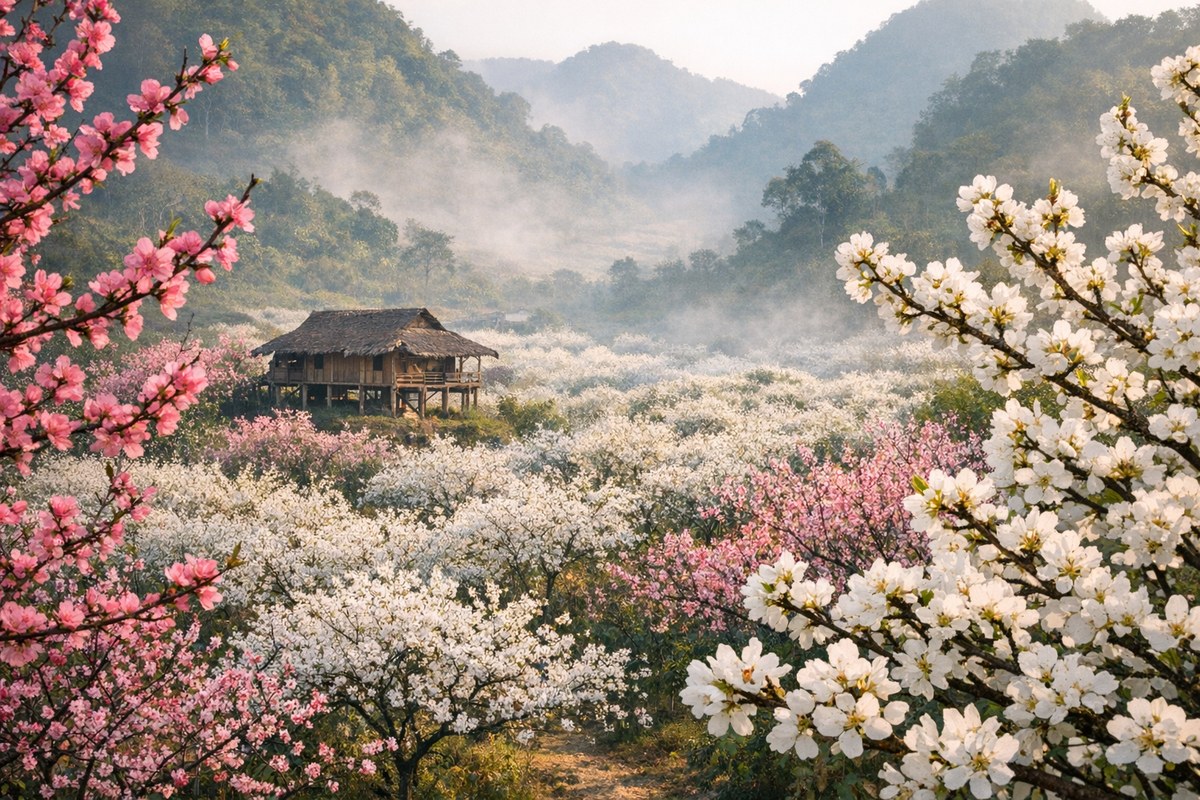
Late December to February brings plum and peach blossom, the most celebrated spectacle in Moc Chau. Entire valleys foam with delicate white plum flowers, with pink peach blossoms scattered among them. The season often peaks around Tet, the Lunar New Year, when local families welcome visitors with warm hospitality. It is also the busiest and most expensive time, so book accommodation well in advance. If you are curious about timing flowers across the country, our guide to Vietnam flower season has a full overview.
March to May turns the plateau a soft, fresh green. Plum trees are in fruit by late spring, and roadside stalls sell sweet, tangy plums by the basket. The weather is pleasant, and crowds thin out dramatically.
June to August is warm and rainy, but the tea hills glow an electric green, and waterfalls run at full power. September to October offers clear skies, golden light and the first hints of autumn, which many photographers consider the quiet sweet spot. If you wish to compare seasons across the whole country, see our best time to visit Vietnam guide.
Top Things to Do in Moc Chau: Tea Hills, Waterfalls and Skywalks
The soul of Moc Chau is its tea. Rows of tea bushes sweep across the hills in elegant curves, and a few of them have become celebrated photo spots. The famous heart-shaped tea hill and the Moc Chau Island tea hill are the most popular, particularly at dawn when mist lingers in the valleys and the first light rakes across the leaves. Arrive early and you may find yourself nearly alone with the view. Wander through a plantation and you will often see pickers in conical hats gathering the youngest shoots, a scene that feels timeless.
The plateau is also dairy country. Moc Chau milk is famous in Vietnam, and the cows graze on the cool, grassy hills. Stop at a dairy farm or café to try fresh milk, creamy yoghurt and caramel-topped sweets. A cup of yoghurt on a hillside terrace is a small, perfect pleasure.
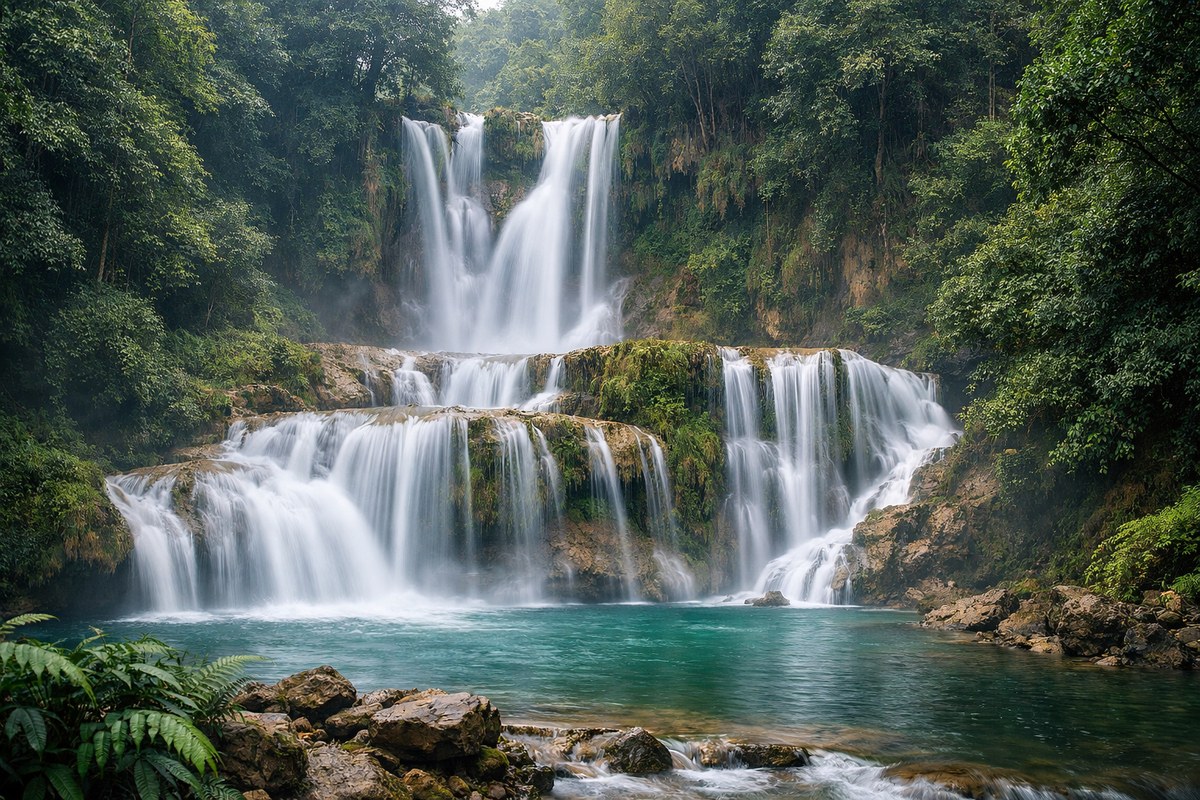
Nature lovers should not miss Dai Yem Waterfall, a cascading, multi-tiered fall that tumbles through green forest just outside town. A short walk leads to viewing platforms, and in the rainy season the roar and mist are thrilling. For something more daring, the Bach Long glass bridge, one of the longest of its kind in Vietnam, offers a stomach-fluttering walk above the valley. It is a favourite for those who love a thrill with their scenery.
- Watch sunrise over the tea hills, then have breakfast in a hillside café.
- Visit Dai Yem Waterfall in the morning before tour groups arrive.
- Pick fruit at an orchard: strawberries in winter and spring, plums in early summer.
- Explore pine forests and quiet viewpoints on a slow motorbike loop.
Moc Chau Villages and Ethnic Culture
The heart of Moc Chau lies not only in its scenery but in its people. Scattered across the plateau are villages where Hmong and Thai families keep centuries-old traditions alive. In Hmong villages, you may spot women in vivid embroidered skirts and children running along dirt paths. Thai communities live in wooden stilt houses and are known for their weaving and their warm, communal meals.
Villages such as Pa Phach, set among mustard flower fields, are particularly photogenic, and many offer homestays so you can stay a night or two. Waking in a stilt house, with the smell of woodsmoke and the sound of roosters, is one of the great pleasures of northern Vietnam. Respect is key here: ask before photographing people, dress modestly, and consider buying handwoven goods directly from families to support local livelihoods. If you want to explore this theme further, our look at Vietnam’s ethnic minorities offers rich context.
Local festivals add colour throughout the year. The Hmong New Year, celebrated in late autumn and winter, fills villages with music, dancing and games. Even if your timing misses a festival, village markets offer a feast of colours, herbs and handmade textiles. Visiting responsibly, with a smile and a few words of Vietnamese, opens many doors. A handy list of phrases is in our guide to Vietnamese phrases for travellers.
What to Eat in Moc Chau
Highland cooking is hearty, smoky and deeply satisfying, and Moc Chau serves some of the northwest’s best. Start with the region’s famous dairy: fresh milk, thick yoghurt and soft milk candies are everywhere. For savoury dishes, look for grilled meats flavoured with mac khen, a mountain pepper whose citrusy, numbing heat is unique to northwest cuisine. Smoked buffalo and pork, sticky rice cooked in bamboo tubes, and fragrant wild greens appear on many menus.
Another highlight is thit bo, local beef, and be chao, a Moc Chau specialty of lightly cooked veal dipped in a tangy sauce, often served with fresh herbs. Wash it all down with a glass of homemade corn wine or a pot of hot green tea grown just down the road. Breakfast might be a bowl of noodle soup in the market, or the sweet-savoury comfort of sticky rice with peanuts. Food lovers should also glance at our guides to Vietnamese breakfast and street food safety before diving in.
- Try yoghurt and fresh milk at a dairy farm café.
- Ask for dishes seasoned with mac khen pepper.
- Pick up Moc Chau tea, plums and dried fruit as souvenirs.
Where to Stay and a Sample 2-Day Moc Chau Itinerary
Accommodation in Moc Chau ranges from budget guesthouses and cosy homestays to boutique hillside lodges with floor-to-ceiling windows. Stilt-house homestays in villages deliver the most authentic experience, while resorts near the tea hills offer comfort and views. During Tet and flower season, book as early as possible.
Day one: Leave Hanoi early and arrive by lunchtime. Eat in town, then visit the tea hills in the afternoon light. Stop at a dairy café for yoghurt, then watch the sun slide behind the hills. Dine on grilled meats and sticky rice at a local restaurant.
Day two: Rise before dawn for sunrise over the tea fields. After breakfast, visit Dai Yem Waterfall and, if you are brave, the glass bridge. Spend the afternoon wandering a village or orchard, then begin the journey back to Hanoi, perhaps pausing for a final cup of tea. Extend to three or four days and you can add Mai Chau or Pu Luong to your route. Planning something longer? Our Hanoi travel guide is a great place to start or end your trip.
Frequently Asked Questions
How far is Moc Chau from Hanoi?
Moc Chau is about 180 kilometres from Hanoi, and the journey usually takes three to four hours by bus, car or motorbike depending on traffic and the route.
What is the best time to visit Moc Chau?
Late December to February is best for plum and peach blossoms, while November and December bring mustard flowers. Spring and autumn offer pleasant weather and fewer crowds.
How many days do you need in Moc Chau?
Two days is enough to see the tea hills, Dai Yem Waterfall and a village. Add a third day if you want to explore more slowly or combine Moc Chau with Mai Chau.
Is Moc Chau worth visiting?
Yes. Moc Chau offers tea hills, flower seasons, waterfalls, dairy farms and ethnic villages in a cool, peaceful setting close to Hanoi, making it one of the easiest highland escapes in northern Vietnam.
Can I visit Moc Chau without a motorbike?
Yes. Buses and limousine vans run from Hanoi, and you can hire a private car or driver locally to visit attractions across the plateau.
Let the Highlands Slow You Down
Moc Chau does not shout. It whispers: a ribbon of mist over a tea hill, a bowl of yoghurt in the cool air, a field of white blossoms humming with bees. In a country famous for its energy, it offers the loveliest kind of pause. Pack a jacket, bring an appetite for fresh air, and let the plateau work its quiet magic. For official planning resources, explore the national tourism portal at vietnamtourism.gov.vn, then set out for the hills.
Leave a Reply