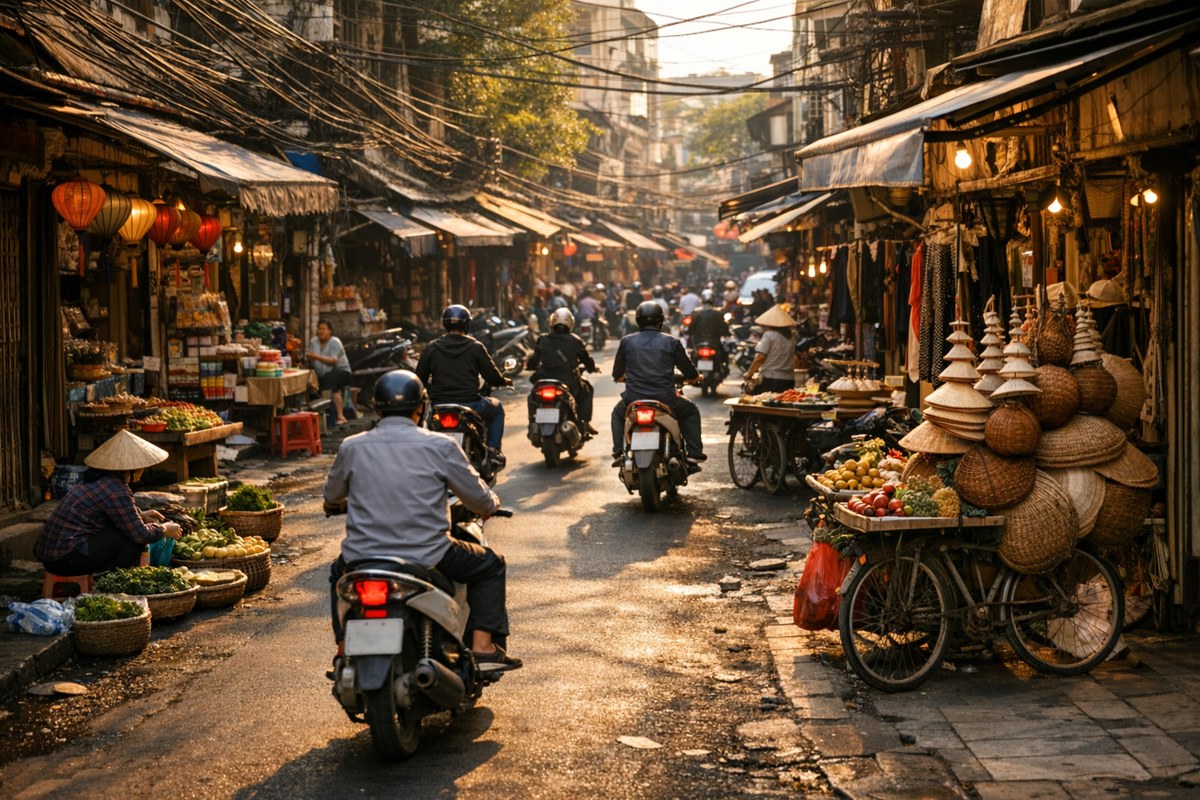
Is Vietnam safe? It is the question every first-time visitor asks, and the honest answer is a warm one: yes, Vietnam travel safety is generally excellent. Violent crime against tourists is rare, families welcome strangers into their homes, and you can wander a night market at midnight feeling more relaxed than in many Western cities. But like anywhere that welcomes millions of visitors, Vietnam has its share of petty tricks, and a little knowledge turns them into minor anecdotes rather than trip-wrecking dramas.
This guide covers the most common Vietnam tourist scams, how to cross those famously chaotic streets, and the practical habits that keep you safe from Hanoi to the Mekong. Read it, tuck it into your memory, and then forget about it, because the real Vietnam is far too delightful to spend worrying.
Is Vietnam Safe for Tourists? The Honest Answer
Vietnam consistently ranks as one of Southeast Asia’s friendlier and safer destinations. Locals are proud of their country, curious about visitors and eager to help, whether that means walking you to a hidden alley restaurant or rescuing you from a confusing bus station. Solo travellers, including women, regularly report feeling comfortable here, a topic we explore in our guide to solo travel in Vietnam.
The risks that do exist are mostly opportunistic and small in scale: overcharging, bag snatching from motorbikes, and traffic. None is a reason to stay home, and all are easy to manage. Think of safety here as a few quiet habits rather than constant vigilance:
- Agree prices before you commit to a ride, meal or service.
- Keep your phone and bag on the side away from the road.
- Trust your instincts; if an offer feels too good, it usually is.
For official guidance on entering and moving around the country, the national tourism portal at vietnamtourism.gov.vn is a reliable source. And if you are still planning the paperwork side of your trip, our Vietnam visa guide covers the official e-visa route.
Common Vietnam Tourist Scams and How to Avoid Them
The good news about scams in Vietnam is that they follow predictable patterns. Once you recognise the script, you can smile, say no thank you and carry on.
The taxi meter trick. The classic. A driver with a rigged or “slow” meter, a long detour, or a “broken” meter and a sky-high flat fee. The fix is simple: use a ride-hailing app such as Grab, where the price is fixed up front and the route is tracked. If you take a taxi, choose a reputable company, insist on the meter, and have your own map open. At airports, use the official taxi queue or pre-book a transfer.
The cyclo or motorbike taxi surprise. You agree to a short ride for a modest price, and at the end the driver claims the price was per person, or in a different currency, or per minute. Always confirm the total price and currency before you climb on. Written numbers on a phone screen help.
The overpriced street vendor. A woman balancing baskets on a shoulder pole offers you a photograph, a fruit sample or a taste, then hands you a bill many times the usual price. Do not accept anything without asking the price first. A friendly “how much?” (“bao nhieu?”) does wonders, and our guide to Vietnamese phrases for travellers includes more useful words.
The “closed attraction” line. A friendly stranger tells you the museum, market or temple is closed today but offers to take you somewhere “even better”, usually a shop or a pricey restaurant. Check opening hours yourself, and politely decline.
Fake or inflated tour deals. Rock-bottom prices for cruises and treks are often too good to be true, and the boat, the food or the itinerary is quietly downgraded. Book with well-reviewed operators or through your accommodation, and read recent reviews before paying, especially for popular trips like Ha Long Bay cruises.
Vietnam Travel Safety on the Road: Crossing Streets and Riding Motorbikes
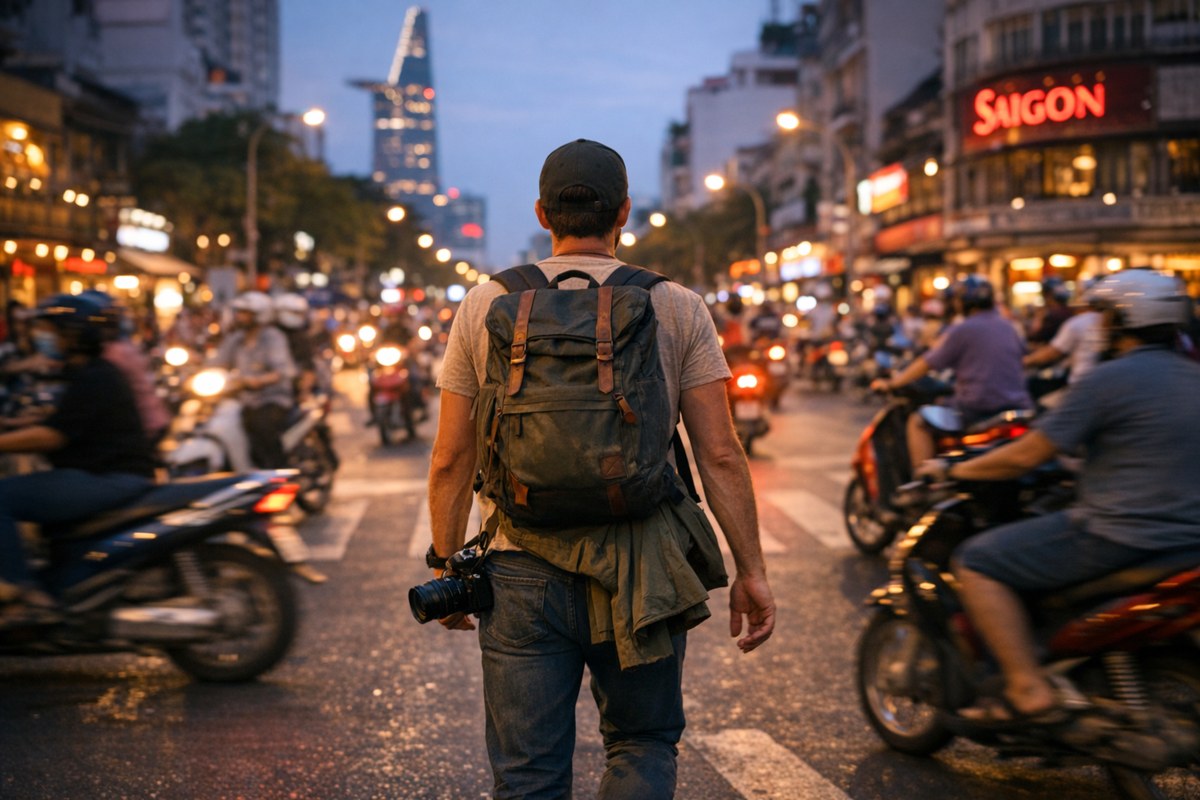
The biggest danger in Vietnam is not a scam at all. It is traffic. Millions of motorbikes flow through the cities like schools of fish, and the first time you face a busy junction in Hanoi or Ho Chi Minh City, it can feel impossible. The secret is almost counterintuitive: do not run, do not stop, and do not dart.
Wait for a gap, step off the kerb with confidence, and walk at a slow, steady pace. Riders will read your path and flow around you, as water flows around a stone. Make eye contact if you can, avoid sudden changes of direction, and cross with a local if you are nervous. Once you master it, it becomes one of the most thrilling little victories of your trip.
Renting a motorbike is another matter. It is a joyful way to see the countryside, from the Hai Van Pass to remote northern valleys, but it carries real risk, especially for inexperienced riders. If you choose to ride:
- Wear a proper helmet, not a flimsy novelty one, and closed shoes.
- Check that your travel insurance covers motorbikes and that you hold the appropriate licence.
- Avoid riding at night, in heavy rain or after drinking alcohol.
- Take photos of the bike before you rent it to avoid disputes over existing damage.
If you would rather not take the wheel, a hired driver or an experienced rider guide is a wonderful alternative. For help weighing the options, see our guide to getting around Vietnam.
Protecting Your Belongings: Bag Snatching, Pickpockets and Money Safety
Petty theft is the most common crime visitors encounter, and it is easily avoided. The notorious moment is the motorbike bag snatch: a rider glides past on the kerb side, grabs a loosely held phone or handbag and is gone. Cities like Ho Chi Minh City see this occasionally, particularly around busy tourist areas at night.
The defence is simple. Walk on the inner side of the pavement with your bag across your body, away from the road. Avoid holding your phone out at street edges while checking a map; step into a shop or a doorway instead. Use a cross-body bag with a zip, and keep valuables out of back pockets. In crowded markets and on buses, carry only what you need for the day, and leave your passport in the hotel safe, carrying a photocopy or a clear photo instead.
Money matters too. Count your change carefully, particularly with large banknotes. Vietnamese dong notes come in many zeros, and some blue and purple notes look surprisingly alike. Withdraw cash from ATMs inside banks or well-lit areas, and cover your PIN. Our Vietnam money guide explains denominations, tipping and ATM fees in more detail, and our guide to travelling on a budget shows how to stretch every dong without cutting corners on safety.

Food, Water and Health: Staying Well in Vietnam
Few things shape a trip like your stomach, and Vietnam’s food is among the greatest joys on earth. A few simple habits keep you eating happily. Choose busy stalls where locals queue and food is cooked fresh in front of you, a golden rule explained fully in our guide to street food safety in Vietnam. Be a little cautious with raw salads and ice in remote areas, and wash or sanitise your hands before eating.
Drink bottled or filtered water rather than tap water. Restaurants generally serve safe, commercially produced ice, but when in doubt, ask. Carry insect repellent, especially in the Mekong Delta and rural areas, and consider sun protection at the beaches, where the tropical sun is fierce even on cloudy days. Bring any prescription medicines with you in their original packaging, along with a basic first-aid kit.
Travel insurance is essential rather than optional. Choose a policy that covers medical care, evacuation and any adventure activities you plan, such as trekking, diving or motorbiking. Vietnam’s larger cities have good private clinics and hospitals, while remote areas have limited facilities, so it pays to know where the nearest help lies. In an emergency, you can reach the police on 113, fire services on 114 and ambulances on 115.
Respectful Travel: Cultural Etiquette That Keeps You Out of Trouble
The best safety tool of all is a smile. Vietnamese culture values harmony, politeness and respect, and small gestures go a long way. Dress modestly when visiting temples and pagodas, covering shoulders and knees, and remove your shoes where asked. Speak calmly, even when frustrated; raised voices cause embarrassment and rarely help. Ask before photographing people, especially in ethnic minority villages.
Remember a few sensitive topics. Vietnam takes its national symbols seriously, including the flag and images of Ho Chi Minh, so treat them respectfully. Public displays of anger or intoxication are frowned upon, and drug laws are strict, with severe penalties. Follow local rules, carry a copy of your passport, and keep your hotel’s address in Vietnamese on your phone in case you need to show a driver.
Above all, stay curious. Most of the time, the person approaching you on the street is not trying to trick you; they are simply being friendly, or practising their English. Learning to tell the difference comes quickly, and with it comes the freedom to say yes to the invitations that truly matter: the cup of tea offered by a shopkeeper, the grandmother pressing fruit into your hands, the family that invites you to join their meal.
Frequently Asked Questions
Is Vietnam safe for tourists?
Yes. Vietnam is widely regarded as safe for tourists. Violent crime against visitors is uncommon, and the main risks are petty theft, overcharging and road traffic, all of which can be managed with simple precautions.
What are the most common tourist scams in Vietnam?
Common scams include rigged taxi meters, price disputes with cyclo or motorbike drivers, overpriced street vendors, claims that attractions are closed, and misleading tour deals. Using ride-hailing apps and agreeing prices upfront avoids most of them.
Is it safe to walk at night in Vietnam?
Most tourist areas feel safe at night, with busy streets and night markets. Stay in well-lit areas, keep your phone and bag away from the road to avoid snatch thefts, and take a ride-hailing car for longer journeys.
How do I cross the street in Vietnam?
Wait for a gap, then walk slowly and steadily without stopping or changing direction. Motorbike riders will steer around you. If you are nervous, cross alongside a local.
Do I need travel insurance for Vietnam?
Yes, it is strongly recommended. Choose a policy covering medical care, emergency evacuation and any adventure activities such as motorbiking, trekking or diving.
Travel Smart, Then Travel Free
Vietnam rewards the prepared traveller with ease, and ease is a wonderful thing to carry through lantern-lit streets and misty mountain passes. Agree prices, guard your phone, cross the street like a river, and trust the warmth of the people around you. Do that, and the greatest surprises of your trip will be the happy ones. Pair these tips with a good plan, such as our 2-week Vietnam itinerary, and you will be ready for everything the road has in store.
Leave a Reply