Motorbike rental in Vietnam made simple: licence rules, prices, best bikes and safety tips for 2026. Read the guide, then hit the road with confidence.
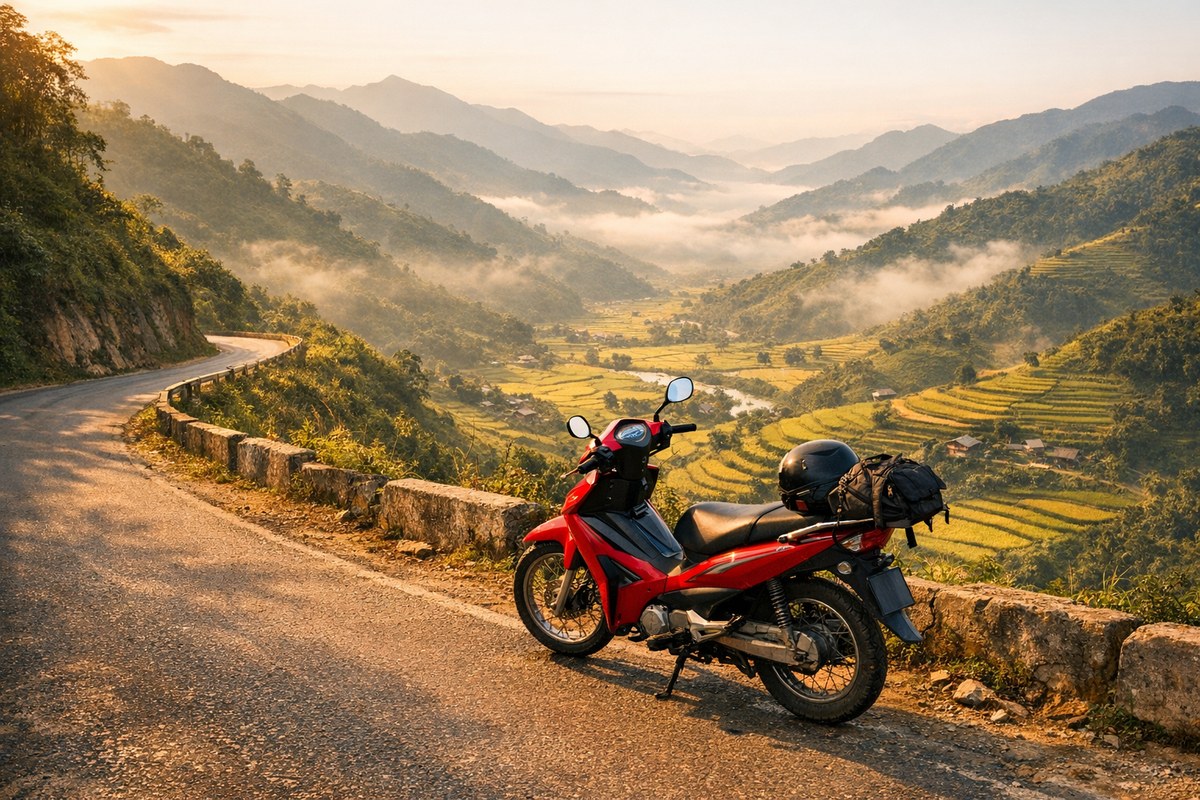
Motorbike rental in Vietnam is the closest thing the country has to a rite of passage. There is a moment, usually about ten minutes after you leave the city limits, when the traffic thins, the engine settles into a steady hum, and the road unspools between rice paddies the colour of new jade. Warm air smells of woodsmoke and wet earth. A farmer lifts a hand from a buffalo’s flank. Nobody on a tour bus will ever feel quite what you feel in that moment, and that is exactly why so many travellers fall in love with two wheels here.
It is also the part of a Vietnam trip that deserves the most homework. Licence rules have tightened, fines have climbed, and insurance is a minefield of small print. This guide walks you through everything: who can legally ride, where to rent, what it costs, which bike to choose, and how to stay safe once the horn-happy chaos begins. Read it once, ride happily ever after.
Why Motorbike Rental in Vietnam Is Worth It
Vietnam runs on motorbikes. More than 70 million of them hum across a country of roughly 100 million people, which means the whole infrastructure of the nation, from petrol stations in the smallest villages to mechanics under every second tree, has been built around two wheels. Rent one and you slot straight into the rhythm of the place.
The freedom is the obvious draw. Buses run to schedules and tours run to itineraries, but a motorbike lets you turn down the lane that smells of grilling pork, stop for a sugarcane juice beside a lotus pond, or linger on a headland until the sky blushes pink. The coast road past Quy Nhon, the limestone corridors around Ninh Binh and the high passes of the far north are all gloriously ridable, and some of them barely exist for travellers who stay on the bus.
There are practical upsides too. A bike rental costs a fraction of a private driver, and it lets you reach places public transport skips entirely. If you are weighing it against trains, buses and flights, our guide to getting around Vietnam lays out every option side by side. For stretches of scenery that simply demand a bike, you will find some of the finest in the country on the legendary Ha Giang Loop and the sweeping bends of the Hai Van Pass.
That said, riding in Vietnam is not for everyone. If you have never ridden a motorbike at all, the chaotic streets of Hanoi or Ho Chi Minh City are the wrong place to learn. Beginners are far better off practising in a quiet town such as Hoi An or Da Lat, or hiring an experienced rider-guide, known as an easy rider, for the first big journey.
Motorbike Licence Rules for Tourists
This is the section where cheerful guides tend to go vague, so let us be clear. To ride a motorbike in Vietnam legally you need a valid licence that covers motorcycles, and in practice that means an International Driving Permit that Vietnam recognises, carried together with your home licence. Vietnam recognises permits issued under the 1968 Vienna Convention on Road Traffic. Permits issued under the older 1949 Geneva Convention, which some countries still hand out, are not accepted. It is worth checking which convention your country’s permit follows before you pack.
Class matters as well. In Vietnam, bikes up to 125cc generally fall under a lower class of licence, while larger machines need a higher one, and the motorcycle category must appear on your own licence. A car-only licence does not cover a motorbike, however many years you have driven.
Many rental shops will hand over keys without asking for any paperwork. Do not take that as permission. If you are stopped by police, or worse, involved in an accident, an unlicensed rider faces fines and, critically, an almost certain refusal from your travel insurer to pay out a single dong. Penalties across the board were raised sharply in recent years, so treat the old stories about casual roadside bribes as outdated.
- Bring your home licence and a valid International Driving Permit (1968 Convention) with a motorcycle category.
- Check that your travel insurance explicitly covers motorbike riding in Vietnam, including the engine size you plan to hire.
- Rules change, so confirm the latest requirements with official Vietnamese government channels such as the Ministry of Foreign Affairs or your embassy before you travel.
Your visa is a separate matter altogether, and we cover entry requirements in detail in our Vietnam visa guide for 2026.
How to Rent a Motorbike in Vietnam: Prices and Where to Go
Renting is wonderfully easy. In every tourist town you will find rental shops within a short stroll of the main guesthouse streets, and most hotels and homestays can arrange a bike for you, often at fair prices and with a more trustworthy owner standing behind the deal.
Prices vary by city and season, but as a rough guide, a basic semi-automatic bike costs around 100,000 to 150,000 VND a day, an automatic scooter tends to run 150,000 to 200,000 VND, and manual touring bikes or larger machines for mountain routes start at around 250,000 VND and climb from there. Weekly and monthly rates can drop the daily price dramatically, which suits anyone planning a long north to south ride. If you are budgeting a trip, our guide to travelling Vietnam on a budget shows how motorbike hire fits into a daily spend, and our Vietnam money guide explains cash and ATM habits for the road.

Before you hand over any money, run through a quick checklist:
- Walk around the bike and photograph every scratch, dent and worn tyre with the shop owner watching. Time-stamped photos settle most disputes before they start.
- Test the brakes, horn, lights, indicators and mirrors. Check that the tyres have tread and the chain is not rusted solid.
- Insist on a proper helmet. Cheap hard-hat style shells are not enough for highway speeds, so consider bringing your own or buying a certified one.
- Confirm exactly what the deposit is. Many shops ask to hold your passport. A cash deposit or a photocopy is a much safer alternative, because a passport in a stranger’s drawer is a lever you never want to be on the wrong end of.
- Ask what happens if the bike breaks down and who pays for repairs and towing.
One-way rentals are also possible between popular cities such as Hanoi and Ho Chi Minh City, Hue and Hoi An, or Da Lat and Nha Trang, for a drop-off fee. Several reputable operators specialise in this, and it is often the cleanest way to tackle a long journey without circling back.
Choosing the Right Motorbike for Your Journey
The best motorbike for you depends on your experience and on where you plan to ride. There are three main types you will come across.
Automatic scooters are the easiest choice. Twist the throttle and go: no clutch, no gears. They are perfect for cities, flat coastal roads and beginners, and a model like the Honda Vision or Yamaha Janus is comfortable for two people over short distances. Their small wheels and light weight make them less stable on rough surfaces, so think twice before taking one up a rutted mountain track.
Semi-automatic bikes, often called underbones, such as the classic Honda Wave, have a clutchless gear shift operated by your left foot. They are cheap, almost indestructible, easy to repair anywhere in the country, and a favourite with budget travellers.
Manual touring bikes like the Honda XR150 or Honda Winner are the weapon of choice for mountain loops. Their longer suspension, bigger wheels and better engine braking make them far steadier on steep descents. They demand real riding skill, and a rider who is not comfortable with a clutch will find hairpin turns exhausting rather than exhilarating.
Whatever you choose, think about luggage. A small backpack on your back, a dry bag strapped to the rear rack, and a phone mount with a power bank will serve you better than a big rucksack. Pack a light rain jacket, since afternoon showers arrive faster than a taxi in a thunderstorm, especially in the monsoon months. Our rainy season guide will help you plan for it.
Vietnam Motorbike Safety Tips Every Rider Should Know
Traffic in Vietnam looks like chaos but runs on a gentle logic. Everyone flows around everyone else, speeds are modest in towns, and the cardinal rule is simple: be predictable. Hold your line, signal early, and never make sudden moves.
- Wear a helmet, always. It is the law, and it is the single most effective thing you can do for your own safety. Fasten the strap properly.
- Never drink and ride. Vietnam applies a zero-tolerance approach to alcohol for riders, with heavy fines for any reading at all. Beer is cheap and the night is warm, so leave the bike at the guesthouse.
- Stay out of the dark. Roads outside cities are unlit and full of unlit trucks, cattle and potholes. Aim to be at your destination by late afternoon.
- Watch the trucks. Large trucks and buses own the highway. When one blares its horn, it is announcing that it is coming through, so give way.
- Use the horn lightly. A short tap says here I am. It is a courtesy, not an insult.
- Slow down in the mountains. Fog, gravel, wandering livestock and blind corners make the north unforgiving. Many serious accidents on mountain loops involve riders going too fast on borrowed bikes.
It is also smart to keep personal security in mind. Our guide to Vietnam travel safety and common scams covers bike rental scams, such as false damage claims at return, so you know the tricks before anyone tries them on you. Save the shop’s phone number, take a photo of your bike parked at the end of each day, and keep a few hundred thousand dong in cash for unexpected repairs.
The Best Motorbike Routes in Vietnam
Once you have the keys, the real question is where to point the handlebars. A few routes stand out as true bucket-list rides.
In the far north, the Ha Giang Loop climbs through the Ma Pi Leng Pass and wraps around limestone peaks in a three to four day circuit. It is spectacular, steep and best tackled with a guide or a very confident hand on the throttle.
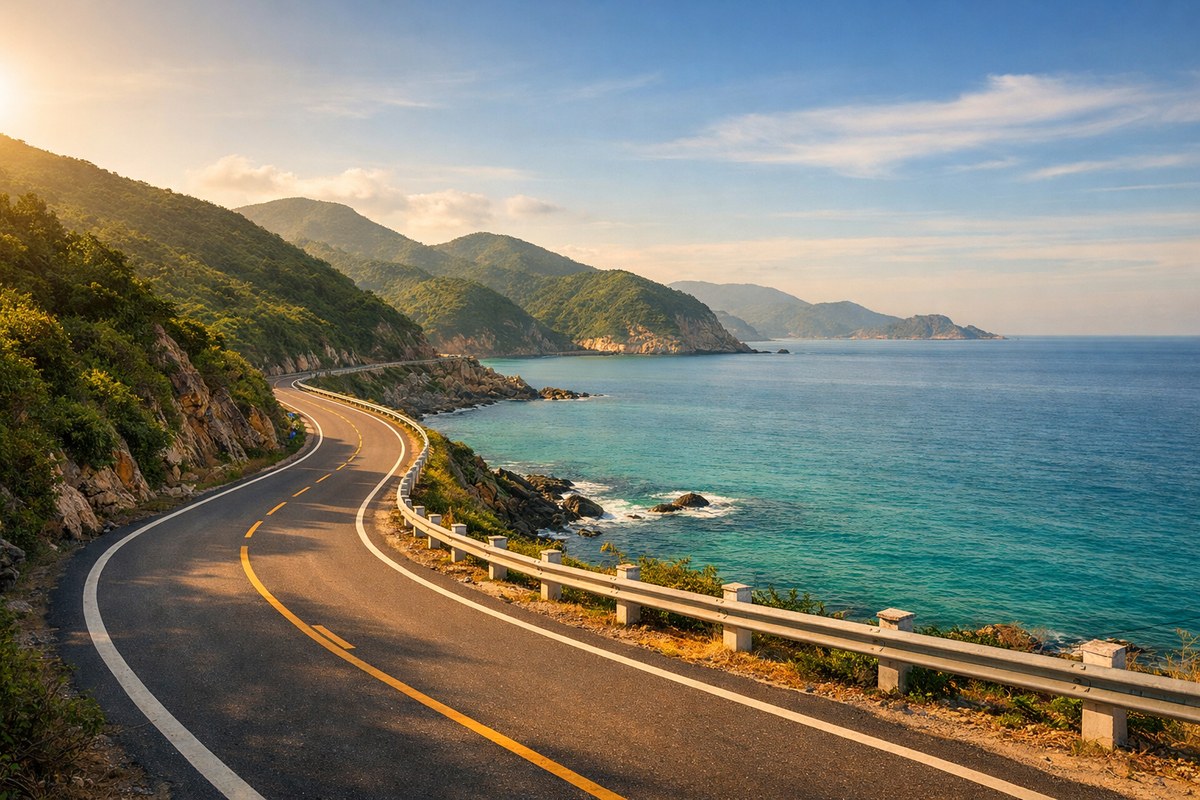
In the centre, the Hai Van Pass between Hue and Da Nang is a sweeping coast road with perfect surfaces and million-dollar views, and it is one of the gentlest big rides in the country. Our Hai Van Pass guide covers every viewpoint and the best coffee stop. Beyond it, the road to Hoi An makes a lovely slow ride, and the coast near Quy Nhon and Phu Yen is quiet, empty and beautiful.
The Ho Chi Minh Highway threads through the Central Highlands, taking in waterfalls, coffee plantations and cool misty hills around Da Lat. It is a favourite among long-distance riders who love rural Vietnam at an unhurried pace.
In the south, the flat roads of the Mekong Delta are friendly to beginners, with small lanes, coconut palms and countless river crossings. For travellers who prefer pedals, our guide to cycling the Mekong Delta offers a gentler alternative.
Whichever route you pick, build slow days into your plan. A hundred and fifty kilometres in Vietnam can easily take six hours, and the best moments usually happen where you stop, not where you speed.
Final Thoughts: Ride Slowly, Ride Well
Motorbike rental in Vietnam rewards the prepared traveller more than almost any other travel experience in Southeast Asia. Carry the right licence, choose a bike you can truly handle, wear a good helmet, and respect the road. Do those four things and you will return home with sunburnt forearms, a camera full of mountain light, and the quiet smugness of someone who rode through the heart of Vietnam.
Ready to plan the rest of your trip? Start with our month-by-month guide to the best time to visit Vietnam and pick the season that suits your ride. For more on the country’s official travel information, visit the Vietnam National Authority of Tourism.
Frequently Asked Questions
Can tourists rent a motorbike in Vietnam without a licence?
Many shops will rent without checking, but riding without a valid licence is illegal and will almost certainly void your travel insurance. Carry your home licence plus an International Driving Permit that Vietnam recognises (1968 Convention).
How much does motorbike rental in Vietnam cost?
Expect roughly 100,000 to 150,000 VND per day for a semi-automatic bike, 150,000 to 200,000 VND for an automatic scooter, and from about 250,000 VND for a manual touring bike. Weekly and monthly rentals are cheaper per day.
Is it safe to ride a motorbike in Vietnam?
It can be, provided you wear a certified helmet, avoid night riding, never drink and ride, and match the route to your experience. Beginners should avoid busy city traffic and mountain loops.
Should I leave my passport as a deposit?
It is better not to. Offer a cash deposit or a photocopy instead, and rent from shops recommended by your hotel or homestay.
Can I take a rented motorbike between cities?
Yes, many shops allow long-distance rides, and some offer one-way rentals between major cities for a small drop-off fee. Confirm the terms in writing before you leave.
Leave a Reply