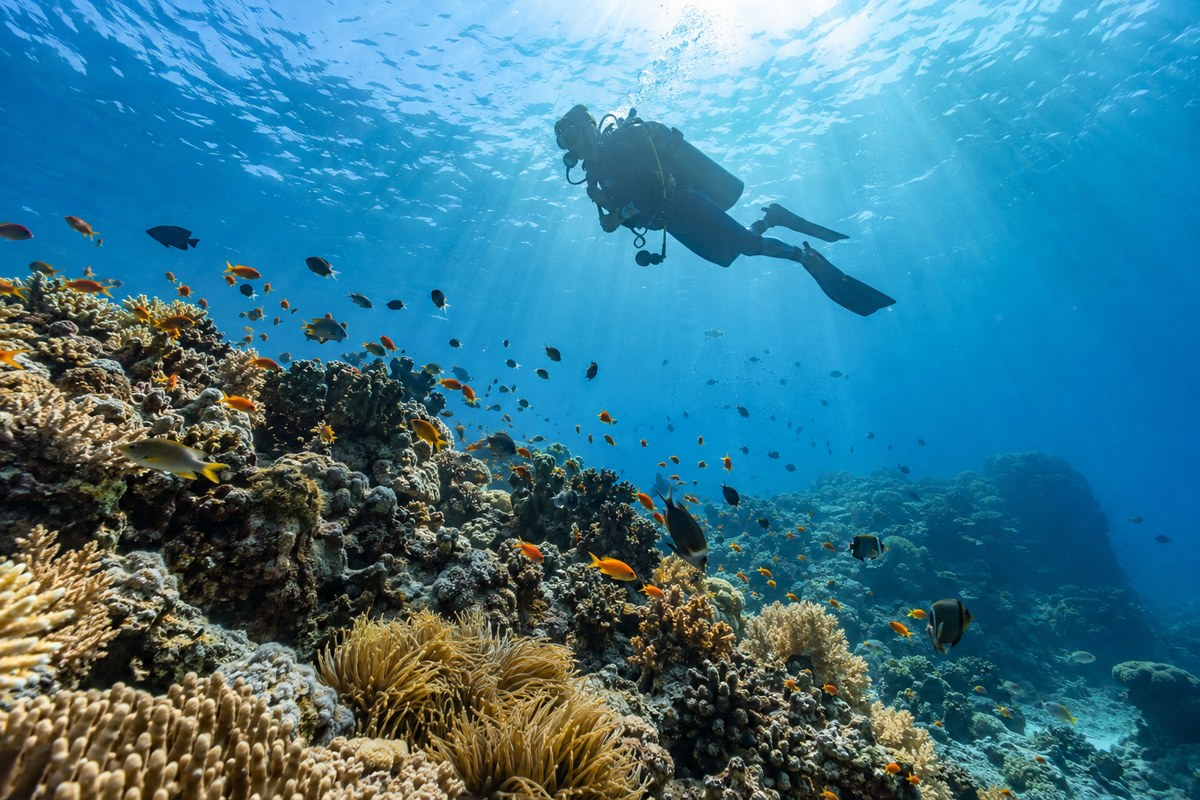
Scuba diving in Vietnam is one of Southeast Asia’s best-kept secrets: warm tropical water, thriving coral gardens, sea turtles gliding through blue light and a fraction of the crowds you will meet in Thailand or Indonesia. From the sheltered bays of Nha Trang to the wild, protected waters of Con Dao and the gentle reefs around Phu Quoc, Vietnam’s coastline offers genuine variety for beginners and experienced divers alike. Add affordable dive courses, friendly instructors and some of the best seafood on earth waiting at the surface, and you have a diving destination that feels like a discovery.
This guide covers where to dive, when to go, what you will see and how to plan around Vietnam’s seasons. If you are building a wider island trip, our Vietnam island hopping guide shows how to link the coast’s best islands, and our Vietnam budget guide will help you stretch your dive fund.
Scuba Diving in Vietnam: Why the Coast Is Worth the Plunge
Vietnam stretches more than three thousand kilometres along the South China Sea, and its reefs follow the same long arc. The country does not have the legendary walls of Palau or the megafauna of Komodo, but it offers something many divers now crave: warm, easy, uncrowded diving with a strong sense of place. You may drop into a coral garden in the morning and eat grilled squid on a plastic stool in the evening, with a total bill that would not cover a single dive in some other countries.
Conditions are generally gentle. Water temperatures sit around 26 to 30 degrees Celsius for much of the year, making a light wetsuit or even a shorty enough in most areas. Currents are mild at the main sites, which suits newly certified divers and those returning after a long break. Marine life includes colourful hard and soft corals, clownfish, nudibranchs, moray eels, groupers, rays, and with a bit of luck, turtles. Recreational dive courses are widely available, and prices are typically low compared with the global average, though you should always check operator safety standards rather than simply chase the cheapest deal.
- Variety: shore-sheltered bays, marine reserves, wreck sites and island walls.
- Value: dive courses and fun dives are generally affordable.
- Atmosphere: small operators, relaxed boats and the feeling of a frontier.
The key to enjoying diving in Vietnam is timing. Because the country is long and shaped by two monsoon systems, the best season changes depending on which stretch of coast you choose. Understanding this is the difference between glass-calm blue water and a choppy surface interval, so plan your dates before you plan your flights.
Nha Trang Diving: Hon Mun Marine Reserve and Beyond
Nha Trang is Vietnam’s dive capital, and for good reason. The city sits on a curving bay studded with islands, and the most famous of these is Hon Mun, part of a marine protected area known for its coral cover and its variety of reef fish. Dive boats leave the harbour in the morning, pass emerald islets and reach sites where walls drop gently into blue water and bright anemones sway in the current. Visibility can reach impressive levels in the calm season, and the topography is easy to enjoy.
Nha Trang is also the best place in the country to learn. Many dive centres offer PADI and SSI courses, from a one-day discovery dive through to Open Water certification over several days. Instructors are experienced with beginners and the bay’s sheltered conditions mean fewer cancelled days. Divers who already hold a licence can book a two-dive boat trip and combine it with a visit to nearby islands. Expect plenty of life: schools of fusiliers, parrotfish, butterflyfish and the occasional cuttlefish drifting across the sand.
If you need a base, our Nha Trang travel guide covers beaches, nightlife and food for your surface intervals. The best time for diving here is generally from around February to September, when the sea is at its calmest. The northeast monsoon late in the year brings rain, waves and reduced visibility, and boats may be cancelled by the authorities when the weather turns. Always dive with a licensed operator and listen carefully to the briefing.
Between dives, sit on the deck with a slice of watermelon and watch the limestone islands slide past. It is one of the quiet pleasures of the south-central coast.
Con Dao Diving: Turtles, Wrecks and Wild Reefs
If Nha Trang is the friendly teacher, Con Dao is the adventurer’s reward. This remote archipelago, a short flight from Ho Chi Minh City, has some of Vietnam’s healthiest reefs and richest marine life. Much of the area is protected as a national park, and the waters are known for green sea turtles, which nest on the islands’ beaches in the warmer months. Underwater, the landscape includes boulder fields, hard coral gardens and sloping reefs where schools of fish hang in the light.
The diving here tends to be quieter and less commercial than on the mainland. Boat trips are small, and dive operators emphasise conservation and respect for turtles and coral. Because of the islands’ history, divers are also reminded to behave respectfully on land. To see how the island’s past and nature intertwine, read our Con Dao Island travel guide. The best diving conditions in Con Dao are usually found in the drier months from roughly November to May, when the sea tends to be calmer and clearer, though local conditions vary year to year.
- What you may see: turtles, rays, reef sharks on rare occasions, groupers and large coral formations.
- Best for: certified divers, nature lovers and travellers seeking peace.
- Remember: never touch or chase turtles, and never disturb nesting sites.

Phu Quoc, Cham Islands and Other Dive Sites to Explore
Beyond the headline destinations, Vietnam has a handful of dive sites worth adding to a coastal itinerary. Phu Quoc, the southern island often called Vietnam’s tropical getaway, has dive sites off its southern and northern coast that suit beginners. The dry season from roughly November to April offers the best visibility, and shallow reefs make for relaxed snorkelling too. Our Phu Quoc travel guide details how to combine the sea with the island’s beaches, night markets and pepper farms.
Further north, the Cham Islands off Hoi An offer a protected marine park and a pleasant mix of diving and snorkelling, with boats departing from the coast during the calm months. You can read our complete Cham Islands guide to see how to pair reefs with fishing-village charm. Other places offering diving or snorkelling include Quy Nhon and Phu Yen on the central coast, where reefs remain quiet and you may share the water with only a handful of other divers. See our guides to Quy Nhon and Phu Yen for more.
When choosing a destination, match your skills with the site. Beginners will enjoy the protected bays around Nha Trang and Phu Quoc. Experienced divers might prefer the wild feel of Con Dao. Snorkellers have fantastic options almost everywhere, from Cham Islands to the quiet bays of Ly Son and beyond. Always book trips with reputable, insured operators and ask about group size, equipment checks and emergency procedures. A good dive centre will happily answer every question.
Scuba Diving in Vietnam: Best Season, Costs and Practical Tips
Planning is easier when you break Vietnam into three zones. The south and southwest, including Phu Quoc and Con Dao, tends to be best from about November to April. The south-central coast around Nha Trang and the central coast shine from roughly February to September. The north is less about diving and more about adventure, so most divers focus on the coast and islands. For a country-wide weather overview, see our best time to visit Vietnam guide.
Costs vary, but diving in Vietnam is often good value. A fun dive day with two dives, equipment and lunch is usually far cheaper than comparable trips in more developed dive markets, and certification courses typically cost less than in Europe, Australia or North America. Prices change with season and operator, so confirm what is included, such as gear rental, insurance, park fees and food. Do not choose purely on price; safety, equipment condition and instructor experience matter far more.
Practical tips for a smooth trip:
- Insurance: make sure your travel insurance covers scuba activities and depth, and consider dive-specific cover. Our travel insurance guide explains what to look for.
- Fitness: complete any medical questionnaire honestly and avoid flying within the recommended window after diving.
- Reef care: use reef-safe sunscreen, keep fins off the coral and take only photographs.
- Certification: bring your card and logbook if you are already qualified.
- Weather: be flexible; a spare day in your itinerary makes cancellations painless.

Where to Stay and What to Do Between Dives
One of the great pleasures of diving in Vietnam is what happens after you surface. In Nha Trang, evenings stretch along the seafront, with seafood restaurants and rooftop bars. In Con Dao, quiet streets lead to temples, hiking trails and empty beaches, and you can end the day with a cold drink as the sun slides into the sea. Phu Quoc offers night markets, pepper farms and sunset beaches. If you need to rest between days underwater, there are few better places to do it.
Pair your trip with the country’s wider attractions to make the most of your time. A week of diving on the coast fits neatly into a longer journey, such as our two-week Vietnam itinerary. Divers travelling as a pair can also consider the romantic angle of the islands, explored in our Vietnam honeymoon guide.
Finally, remember that the marine environment is fragile. Choose operators that brief divers on reef etiquette, avoid single-use plastic where possible and be mindful of where you eat seafood. The more travellers value healthy reefs, the more Vietnam will protect them.
Frequently Asked Questions About Scuba Diving in Vietnam
Is scuba diving good in Vietnam?
Yes. Vietnam offers warm water, healthy coral at protected sites such as Hon Mun and Con Dao, and relaxed conditions that suit beginners and experienced divers. It is also generally affordable compared with other Southeast Asian dive destinations.
What is the best place to scuba dive in Vietnam?
Nha Trang is the most popular base, especially for beginners and courses, while Con Dao is favoured by certified divers for its turtles and wilder reefs. Phu Quoc and the Cham Islands are good alternatives.
When is the best time to go diving in Vietnam?
It depends on the coast. Nha Trang and the central coast are generally best from about February to September, while Con Dao and Phu Quoc are usually best from about November to April.
Can beginners learn to dive in Vietnam?
Yes. Nha Trang and Phu Quoc have many dive centres offering discovery dives and internationally recognised certification courses in sheltered, easy conditions.
Take the Plunge in Vietnam
Vietnam’s reefs may not be as famous as those elsewhere, and that is part of their charm. Here you can drift above coral gardens in warm blue water, meet a turtle on a quiet morning and then eat the freshest seafood of your life with sand still between your toes. Pick your coast, pick your season and let the sea show you a different side of this extraordinary country. Start planning your Vietnam dive trip today.
Images in this article were generated using AI.
Leave a Reply