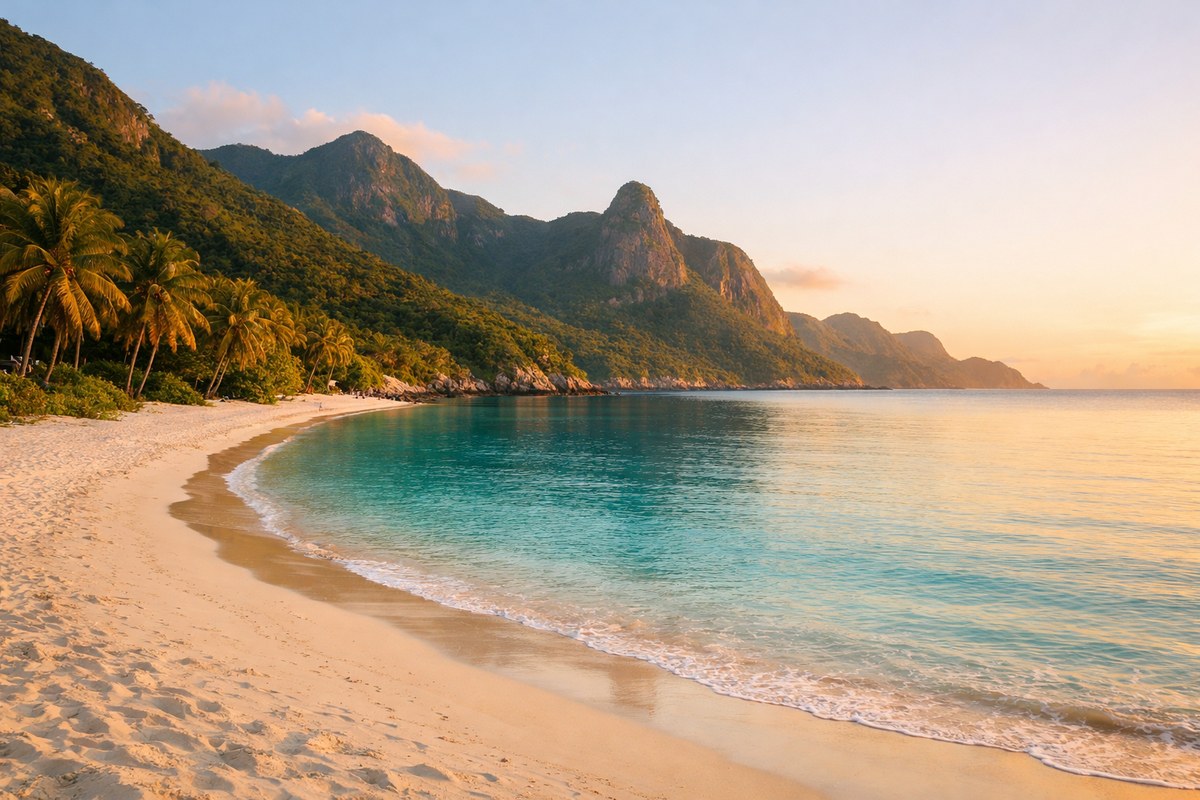
A Con Dao Island travel guide should begin with a feeling rather than a fact: the moment the small propeller plane tips over a sea of impossible blue and the green spine of the archipelago rises out of it, empty beaches curling along its edges like crescent moons. Sixteen islands, a protected national park, a coastline almost untouched by high-rises, and a past as heavy as the island is beautiful. This is the Vietnam that most itineraries skip, and it is exactly why you should go.
Lying about 180 kilometres off the southern coast, Con Dao is a place of contrasts. By day you snorkel over coral gardens and ride a rented scooter along cliff-hugging roads with no traffic at all. By night you may find yourself in a hushed cemetery where Vietnamese pilgrims leave incense and lotus flowers, or walking a dark beach where green turtles haul themselves ashore to nest. Whether you are planning a honeymoon, a quiet beach break or a journey into modern Vietnamese history, this guide covers what to see, how to get here, and when to come.

Why Visit Con Dao Island: Vietnam’s Quiet Archipelago
Most travellers who want sand and sea in Vietnam head to Phu Quoc or Nha Trang. Con Dao plays by different rules. Much of the archipelago is a national park, which has kept development low and the sea astonishingly clear. There are no neon-lit beach strips, no wall-to-wall resorts, and no touts. Evenings are for fresh seafood, a slow stroll along the waterfront in the small main town, and the sound of waves where other islands have karaoke.
The island’s reputation is also shaped by its history. For more than a century Con Dao was a prison island, first under the French colonial government from the 1860s and later under successive administrations. Thousands of Vietnamese political prisoners were held here, and the island is now regarded as a place of deep national remembrance. That gives a visit here a rare emotional weight: you can spend the morning at a historic prison and the afternoon floating in warm, glassy water, and somehow both feel right.
- Nature: a national park covering land and sea, with forest trails, coral reefs and nesting beaches.
- History: former prisons, tiger cages and a cemetery that draws visitors from across Vietnam.
- Calm: low-rise hotels, empty roads and beaches you can often have almost to yourself.
If you are mapping out a wider trip, Con Dao pairs beautifully with a few days in the Mekong region. Our Vietnam island hopping guide shows how it compares with the country’s other island escapes.
How to Get to Con Dao: Flights and Ferries
Getting to Con Dao takes a little planning, but the journey is part of the charm. The easiest option is to fly. Short flights connect Ho Chi Minh City with Con Dao Airport (also called Co Ong Airport) in under an hour, operated by Vietnam’s domestic carriers on small aircraft. Seats are limited and often sell out in peak months, so book as early as you can. Baggage allowances on the smaller planes can be tight, which is a good excuse to pack light. Our guide to domestic flights in Vietnam explains how to book and what to expect at the airport.
The alternative is the sea. Fast ferries run from the mainland coast near Tran De in the Mekong region, taking a few hours depending on the vessel and the swell. The crossing can be rough in the windier months, and schedules change, so check current times locally before you commit. It is cheaper than flying and gives you a feel for how remote the archipelago really is, but if you are prone to seasickness, fly.
- By air: roughly 45 to 60 minutes from Ho Chi Minh City; the best choice for most travellers.
- By sea: ferry from the Tran De area; slower, cheaper, and weather-dependent.
- On the island: the airport is a short drive from town, and hotels usually arrange pick-ups.
Once you land, the island is easy to get around. Many visitors rent a scooter, and the roads are quiet enough to make it far less stressful than on the mainland, but make sure you hold the right licence by reading our motorbike rental guide for Vietnam first. Electric buggies and taxis are available if you prefer.
Con Dao Prison History: Sites That Tell the Story
You cannot understand Con Dao without spending time with its past. The old prison complex in town includes cell blocks, the infamous tiger cages and small museums that document daily life behind these walls. Walking these narrow corridors is sobering. Guides, many with family ties to the island, speak quietly, and the atmosphere is one of reflection rather than spectacle. Go early in the day, when the heat is gentler and the light slants gold across the courtyards.
The emotional heart of the island is Hang Duong Cemetery, the resting place of thousands of prisoners. The most visited grave belongs to Vo Thi Sau, a young woman remembered as a national heroine who was executed here in 1952. Vietnamese visitors come in great numbers, often late in the evening or after midnight, to light incense and leave offerings. If you visit, dress modestly, speak softly and ask before taking photographs. It is a place of respect, not a tourist stop.
A wider look at the wartime story of the country adds context here; if the history is what draws you, read our guide to the Vietnam DMZ tour and our piece on Vietnam’s military history and battlefields.
- Con Dao Prison complex: allow two to three hours for the cells, courtyards and museum rooms.
- Hang Duong Cemetery: a place of pilgrimage; visit with respect and quiet.
- Tiger cages: a harrowing but important part of the island’s story.

Best Beaches in Con Dao and Things to Do on the Water
Now for the sun. Con Dao’s beaches are the sort you remember: powdery sand, clear water, a backdrop of forested hills. Dam Trau on the north side is often named as one of the prettiest, with a long arc of pale sand lined with trees. Bai Nhat, close to town, is perfect for a sunset swim. An Hai and Dat Doc are quieter again, and on a weekday you may share them with no one but a few crabs. Sea conditions change with the season, so ask your hotel which side of the island is calm on the day you plan to swim.
Beneath the surface lies the real prize. The national park protects reefs that are home to colourful corals, reef fish and, with luck, turtles gliding past. Snorkelling and diving trips run from town to nearby islets, including Hon Bay Canh, which is one of the better-known diving spots. Dive operators run both introductory and certified dives; if you want to get certified, the clear water and low crowds make this a fine place to do it. If diving is high on your list, our overview of Vietnam’s dive sites will help you compare other options.
Not into the water? The park has forest trails, including walks where you may spot the island’s endemic wildlife, and viewpoints with sweeping bay views. Cycling along the coast road at sunrise is a gentle joy: empty tarmac, the smell of salt, and birdsong in the trees.
- Dam Trau: an elegant beach on the island’s northern side.
- Bai Nhat: the easiest beach to reach from town, and lovely at sunset.
- Snorkelling and diving: day trips to nearby islets and reefs, best on calm days.
Con Dao Turtle Nesting Season and Best Time to Visit
Con Dao is one of the most important turtle nesting sites in Vietnam. Green turtles, and occasionally hawksbills, come ashore at night to lay their eggs on protected beaches, with nesting generally peaking from around May to September. Tours are managed by the national park, which limits visitor numbers and enforces strict rules: no flash photography, no bright torches, no touching. Joining one of these supervised outings is a profoundly moving experience, and an excellent reason to time your trip carefully. If you want to see hatchlings making their dash to the sea, ask the park rangers about the current schedule, since timing depends on nature rather than a calendar.

For general weather, the dry season from roughly February to September gives the calmest seas, with the clearest conditions often between March and June. From October to December the island can see heavier rain, rougher water and occasional storms, and ferries and flights may be disrupted. That said, the wet months bring deep green forests, fewer visitors and lower prices, so flexible travellers can have a lovely time if they accept some weather risk. For a wider picture across the country, see our best time to visit Vietnam guide.
- Turtle nesting: approximately May to September, on park-managed beaches only.
- Calmest seas: generally February to June.
- Wetter season: October to December; expect rain and possible transport disruption.
Where to Stay, What to Eat and Practical Tips for Con Dao
Accommodation on Con Dao ranges from simple guesthouses and homestays in town to boutique resorts and a handful of luxury properties set in quiet bays. Staying in town makes it easy to walk to restaurants and sights, while beachfront resorts offer silence and starlit nights. Book early for weekends and public holidays, because the island has relatively few rooms and Vietnamese visitors come in large numbers during national holidays.
The food is gloriously simple: grilled fish, squid, crab, clams and sea snails, served at modest waterfront restaurants where you choose from the day’s catch. Try the local seafood hotpots, and look out for sea almond-based treats and fresh fruit. Evenings in town have a gentle rhythm, with families strolling by the water and lights glimmering over the harbour.
A few practical notes. Carry some cash, as ATMs are limited and card acceptance is patchy outside larger hotels; our Vietnam money guide has tips. Mobile signal is generally fine in town but can be weak in remote corners, so consider a local SIM or eSIM using our SIM card and eSIM guide. Bring reef-safe sunscreen, a hat and a refillable bottle. Respect park rules: do not collect shells, coral or turtle eggs, and keep to marked paths.
Two or three nights is enough for most travellers, though many leave wishing they had booked four. Plan a day for the prison sites, a day for the sea, and a night for turtles if the season allows. For wider official visitor information, the Vietnam National Authority of Tourism is a useful starting point.
Frequently Asked Questions About Visiting Con Dao
How do I get to Con Dao Island?
The easiest way is a short domestic flight from Ho Chi Minh City to Con Dao Airport, taking under an hour. A slower ferry runs from the Tran De area on the mainland, but schedules depend on the weather and should be checked locally.
What is the best time to visit Con Dao?
The calmest seas and clearest water are generally from February to September. Turtle nesting is typically strongest from around May to September. October to December can be rainy and rough.
How many days do you need in Con Dao?
Two to three nights is enough to see the prison sites, enjoy the beaches and go snorkelling or diving. Add a night if you want to join a turtle-watching tour or simply relax.
Can you see turtles in Con Dao?
Yes. Green turtles nest on protected beaches, mostly from May to September, and visits are managed by the national park. You can also spot turtles while snorkelling or diving.
Is Con Dao worth visiting?
Absolutely, if you want quiet beaches, clear water and meaningful history without crowds. It suits couples, divers and travellers who prefer calm over nightlife.
Final Thoughts: Why Con Dao Stays With You
Con Dao rewards the traveller who is willing to go a little further. It is a place where beauty and memory sit side by side, where the sea is soft and the stories are not, and where you can end a day on an empty beach wondering why more people do not come. Book the flight, pack light, and let the island slow you down. Your Vietnam journey will be richer for it.
Leave a Reply