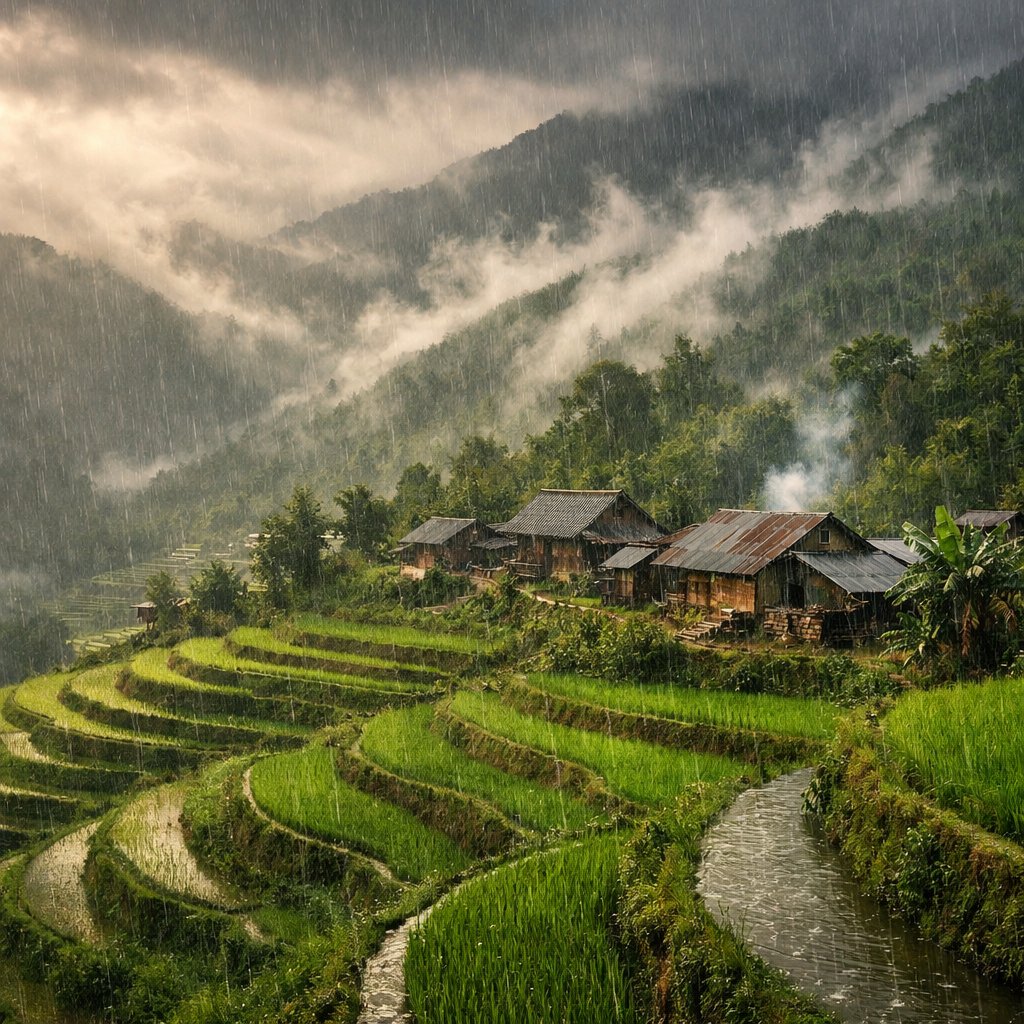
Ask most travelers when to visit Vietnam and they’ll tell you to avoid the rainy season. They’re wrong — or at least, they’re missing something important. Vietnam’s monsoon months are some of the most atmospheric, affordable, and genuinely rewarding times to travel the country. The rice terraces turn an almost hallucinatory green. Empty beaches materialise from what were once overrun resort strips. Street food stalls glow warmer, soup bowls steam harder, and the country slows to a pace that actually lets you breathe it in. This guide tells you everything you need to know about Vietnam in the rainy season — when it rains, where it rains, and why it’s often better than you think.

Understanding Vietnam’s Rainy Season: When and Where It Rains
The most important thing to understand about the Vietnam rainy season is that it doesn’t happen everywhere at the same time. Vietnam is a long, narrow country stretching over 1,600 kilometres from north to south, crossing multiple climate zones. Rain in one region can mean perfect sunshine in another — which is why savvy travellers simply shift their itinerary rather than shelving their trip entirely.
Northern Vietnam (Hanoi, Sapa, Ha Long Bay, Ha Giang) has its rainy season from May to October, with peak rainfall in July and August. Temperatures are hot and humid during this period but the landscapes — particularly the rice terraces of Sapa and Ha Giang — are at their most breathtaking green from late May through September. The terraces are flooded for planting in May and June and harvest-gold by September and October.
Central Vietnam (Da Nang, Hoi An, Hue) has its wet season from October through January, roughly opposite to the north. October and November can bring serious flooding in Hoi An and the surrounding lowlands. December and January see persistent grey drizzle but occasional dry spells. This is the shoulder season when beach towns are quiet and accommodation prices drop significantly.
Southern Vietnam (Ho Chi Minh City, Mekong Delta, Mui Ne, Phu Quoc) experiences monsoon from May through October. Rain typically falls in intense afternoon bursts — a downpour of 30–60 minutes, then clear skies again. Mornings are almost always dry. The south is the most manageable region to visit during rainy season precisely because of this pattern: plan activities for mornings, embrace a slow afternoon, and watch the sunset clear.
For a complete month-by-month breakdown of Vietnam’s weather across all regions, our Vietnam weather and festival guide has the full picture.
The Case for Travelling Vietnam in the Rain

The crowds thin dramatically. This is the single most transformative effect of visiting Vietnam in the rainy season, and it cannot be overstated. Hoi An’s ancient town — besieged by daytrippers in the dry months — becomes something close to its old self on a rainy November morning. The yellow walls deepen in the wet. Paper lanterns glow brighter against grey skies. The town breathes. You can photograph the Japanese Covered Bridge without elbowing through a selfie scrum. You can sit at a café and watch the rain fall on the Thu Bon River in genuine peace.
Prices follow the crowd: accommodation rates in many tourist areas drop 20–40% during low season. That mid-range boutique hotel you couldn’t justify in March? Perfectly affordable in September. Tour operators compete more aggressively for bookings. Restaurants are eager to please. The whole economy of tourism recalibrates in your favour.
The landscapes are genuinely different — and often more beautiful. Vietnam’s north is arguably at its most spectacular during and just after the rains. The rice terraces of Sapa, Ha Giang, and Mu Cang Chai are emerald and mirror-flat with water in June and July, then blazing gold at harvest in September and October. Ha Long Bay’s karsts emerge dramatically from low mist on overcast mornings in ways that clear-sky visits can’t replicate. The Mekong Delta fills to its banks, transforming the river landscape into something vast and cinematic.
And then there’s the food. There is something about the monsoon that makes Vietnamese street food revelatory. A bowl of bún bò Huế consumed under a plastic tarp as rain hammers the street around you is not merely lunch — it is an experience. The warmth of the broth, the chatter of locals sheltering alongside you, the smell of wet earth and lemongrass: this is Vietnam as it actually lives, not as it performs for visitors.
What to Do in Vietnam During the Rainy Season
The rain creates constraints but also opportunities. The key is choosing activities that either work in all weather or are actively enhanced by it.
Explore cities and towns. Urban Vietnam is largely unaffected by rain — covered streets, café culture, museums, and markets operate regardless of weather. Hanoi’s Old Quarter, HCMC’s District 1, and Hoi An’s ancient town are all rich enough to fill days without any outdoor component. Vietnamese coffee shops in particular are made for rainy afternoons: sit, sip, watch.
Do indoor cultural experiences. Vietnamese cooking classes are perfect rainy-day activities — most are held in covered kitchens or open-air pavilions and run regardless of weather. Water puppet performances, museum visits, temple exploration, and tailoring sessions in Hoi An are all weather-independent.
Chase the rice terraces. If you’re in northern Vietnam between May and October, don’t be deterred by mist and rain — embrace it. Sapa’s terraces are at their greenest and most lush. Organised treks to hill tribe villages still run; you’ll just need waterproof boots and a rain jacket. The reward is landscapes of extraordinary beauty with very few other tourists in frame.
Dive into the Mekong Delta. The wet season swells the Mekong’s tributaries and transforms the delta’s canal network into something extraordinary. Boat trips through flooded rice paddies and stilted village communities are only possible at high water. Cycling the Mekong Delta in October means riding through a landscape that’s half-submerged, impossibly green, and utterly unlike anything in dry season.
Surf Mui Ne. Counterintuitively, the windy season in Mui Ne — which overlaps with the shoulder of the wet season — is peak time for kitesurfing and windsurfing. The beach empties of sunbathers and fills with boards. Mui Ne is one of Asia’s top kitesurfing destinations and the conditions are best from October through April.
Packing for the Vietnam Rainy Season

Rainy season packing requires some thought, but the adjustments are minor. A compact packable rain jacket is the single most important item — not a poncho, which is unwieldy, but a proper jacket that folds to nothing. Quick-dry clothing is essential: cotton stays wet for hours; synthetic or merino fabrics dry in under an hour. Waterproof sandals or shoes (or sandals you don’t mind getting soaked) beat boots in heat and humidity for most urban travel.
A dry bag or waterproof pouch for your phone and documents is a sound investment. Local convenience stores and street stalls sell cheap plastic rain ponchos everywhere in Vietnam — useful as a backup for sudden downpours on motorbike taxis. Bring microfibre towels, which dry quickly in humid conditions. Our full Vietnam packing guide covers seasonal specifics in detail.
One practical note on footwear: flip-flops are genuinely appropriate for most of southern and central Vietnam in the wet season. The roads flood briefly and then drain. Dry your feet, change your footwear, and move on. Over-engineering your footwear for monsoon conditions often just means sweating uncomfortably in waterproof hiking boots that weren’t needed.
Rainy Season by Region: Where to Go When
If you have flexibility in your dates, the following rough calendar makes the most of Vietnam across the wet season months:
May–June: Northern Vietnam is lush and relatively uncrowded. Sapa and Ha Giang are spectacular. The south is entering its rainy season but afternoon showers are manageable. Avoid central Vietnam’s beach areas (still dry and very hot) if heat is a concern.
July–August: Peak rainy season in the north. Ha Long Bay is moody and dramatic. Central Vietnam is generally dry and sunny — this is actually the high season for Da Nang and Hoi An beaches. The south has its wettest months but the HCMC → Mekong Delta circuit still works well with morning scheduling.
September–October: One of the best-kept secrets in Vietnam travel. The north’s rice terraces turn golden for harvest. Crowds are minimal throughout the country. Central Vietnam begins its wet season in October — avoid Hoi An in late October and November if flooding is a concern, though it’s also extraordinarily atmospheric in the rain.
November–January: Central Vietnam’s wet season continues, but the north and south are entering their most pleasant weather. This is when Da Nang and Hoi An can be wet and grey, but Hanoi is cool, crisp, and lovely, and HCMC is at its most comfortable.
The bottom line: there is no truly “wrong” time to visit Vietnam. There is only a matter of choosing the right region for the right season — and packing accordingly. The travellers who write Vietnam off during rainy season are the ones missing some of the country’s most memorable experiences, its most honest moments, and its best deals.
When is the rainy season in Vietnam?
Vietnam’s rainy season varies by region. Northern Vietnam (Hanoi, Sapa, Ha Long Bay) has its wet season from May to October. Central Vietnam (Da Nang, Hoi An, Hue) gets its heaviest rain from October to January. Southern Vietnam (Ho Chi Minh City, Mekong Delta) has its rainy season from May to October, typically with intense afternoon showers and dry mornings.
Is Vietnam worth visiting during the rainy season?
Yes — Vietnam in the rainy season has significant advantages: far fewer tourists, lower accommodation and tour prices, lush green landscapes (especially rice terraces in the north), and a more authentic, unhurried atmosphere. Rain is usually manageable with the right gear, and in the south it typically falls in short afternoon bursts leaving mornings clear.
What should I pack for Vietnam in the rainy season?
Essential items include a compact packable rain jacket, quick-dry synthetic or merino clothing, waterproof sandals or shoes, a dry bag for electronics and documents, and a microfibre towel. Avoid cotton clothing, which stays wet for hours in humidity. Local shops sell cheap plastic ponchos everywhere as a backup for sudden downpours.
Which part of Vietnam is best to visit during the rainy season?
It depends on the month. During May–October, central Vietnam (Da Nang, Hoi An) is generally dry while the north and south are wet. During October–January, the north (Hanoi, Sapa) and south (HCMC, Phu Quoc) are dry while central Vietnam has its wet season. Shifting your itinerary to follow the dry weather is the smart traveller’s approach.
Does it rain all day in Vietnam during monsoon season?
Rarely. In southern Vietnam, rain typically falls in concentrated bursts of 30–60 minutes, usually in the afternoon, with dry mornings and evenings. In the north, rain can be more persistent but is often misty rather than torrential. Central Vietnam’s October–November rains are the most prolonged, sometimes lasting several days. With flexible scheduling, rainy days are very manageable.
Leave a Reply