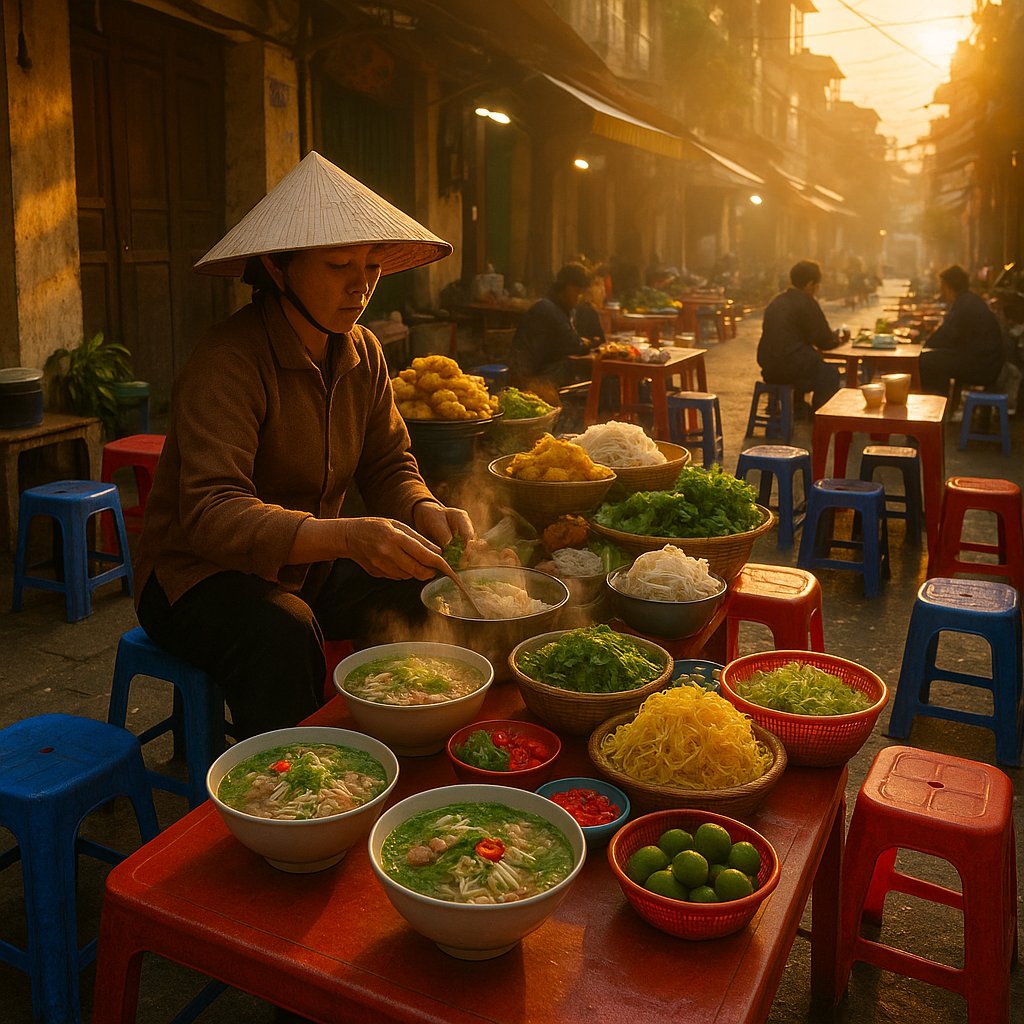
Vietnam street food safety is one of the first things travelers search before their trip — and understandably so. The country’s sidewalk kitchens are legendary: steaming bowls of phở ladled at dawn, crispy bánh mì assembled in thirty seconds, sizzling lemongrass pork skewers that perfume entire alleyways. But the same scenes that make your mouth water can also make you pause. Should you eat that? Is the ice safe? What about the meat sitting out in the heat?
The short answer is: yes, you can eat it — and you absolutely should. Vietnam’s street food scene, approached with a few simple principles, is one of the most rewarding and safe culinary adventures in Southeast Asia. Here is everything you need to know to feast freely and fearlessly.
Why Vietnam Street Food Is Safer Than You Think
The first thing to understand about vietnam street food safety is that street vendors are not casual hobbyists. Most run their stalls six or seven days a week, often from before sunrise until late at night. Their livelihood — and their reputation in the neighbourhood — depends entirely on not making people sick. A stall that causes food poisoning does not survive long in a community where word travels fast.

More importantly, the sheer volume of food moving through a busy street stall works as a natural safety mechanism. When a vendor sells two hundred bowls of bún bò Huế before 9am, nothing sits around. Ingredients are fresh, broth is boiling, and turnover is constant. Compare that to a quiet restaurant that prepared its dishes hours earlier and has been keeping them warm ever since.
Local eating habits also work in your favour. Vietnamese people are extraordinarily discerning about their street food — they return to the same vendor for years, sometimes decades. A stall packed with local office workers, school students, and elderly regulars at any hour of the day is the most reliable quality signal you’ll ever find. Conversely, a glossy setup with a laminated English menu and no Vietnamese customers warrants more scrutiny, not less.
That said, your digestive system simply isn’t accustomed to the local microbial environment — even perfectly safe food can cause temporary stomach upset because your gut flora hasn’t adapted yet. Start slowly on your first day, stay hydrated, and build up. By day three, you’ll be ordering extra chilli without thinking twice.
How to Choose the Right Street Food Stall in Vietnam

Choosing the right stall is an art that locals have perfected over a lifetime, but you can get there quickly with these principles.
Follow the crowds. The single most reliable indicator of a safe, quality stall is a queue of Vietnamese people — particularly office workers, construction crews, and elderly regulars. These are discerning, price-conscious diners who know exactly where the best food is. If a stall has a dozen plastic stools occupied at 7am, join them without hesitation.
Watch the cooking process. Street food cooked to order in front of you — fried, grilled, or boiled — is almost always safe. The heat eliminates pathogens, and the immediacy means nothing has been sitting out. Be more cautious about pre-cooked proteins displayed at ambient temperature, especially on a hot afternoon.
Look for basic cleanliness cues. You don’t need gleaming surfaces — this is a sidewalk kitchen, not a hospital. But look for chopsticks stored tip-up in a clean container, utensils rinsed between uses, and a vendor who doesn’t handle money and food simultaneously without a wipe-down. A vendor who cares about these small details usually cares about everything else too.
Time your visits wisely. Mornings are golden for street food in Vietnam. Ingredients are at their freshest, vendors are at full energy, and busy stalls sell out quickly — meaning everything you eat was made within hours. Midday and early evening are also excellent. For more on what to eat and when, check out our guide to Vietnamese breakfast food and culture.
Stick to specialties. The best stalls do one or two things brilliantly. A woman who has made bún chả for thirty years knows that dish better than any restaurant. If a menu runs to twelve items, it likely caters to tourists and doesn’t excel at any of them.
Foods to Approach With Care — and Safe Alternatives
Most street food in Vietnam is entirely safe, but a few categories warrant extra attention, particularly in your first few days before your body has adjusted.
Raw vegetables and fresh herbs. The mountains of fresh herbs piled onto dishes like phở and bún bò Huế are typically safe — vendors rinse them thoroughly and use them in enormous volume. If you’re still on day one and your stomach hasn’t settled, you could ask for herbs on the side and ease in gradually. By day three, you’ll toss them in without a second thought.
Pre-cooked seafood at market stalls. Freshly grilled or steamed seafood ordered directly from the grill is excellent and safe. Pre-cooked shellfish displayed at room temperature in direct afternoon sun is where food poisoning most commonly occurs. If shellfish looks like it’s been sitting out for a while, order from the live tank if available, or choose something else.
Meat at ambient temperature. Cooked meats — especially pork and chicken — kept at room temperature in afternoon heat are the most common source of traveler’s stomach trouble anywhere in Southeast Asia. Any protein that has gone from hot to cold to warm again is a risk. Prioritise dishes where the meat drops from a wok or grill directly into your bowl.
Safe alternatives are everywhere and glorious: a bowl of phở (always boiling hot), a bánh mì made fresh to order, grilled corn from a street cart, fresh fruit, or cơm tấm with char-grilled pork. Our complete bánh mì guide is a good starting point for understanding what to order and where to look.
Safe Street Food Drinks in Vietnam

The ice question stops many travellers from enjoying Vietnam’s extraordinary drink culture — and that would be a genuine shame. Here is the nuanced truth.
Commercial ice is generally safe. The large cylindrical tubes of ice delivered to cafés, restaurants, and street stalls on motorbikes each morning are made from filtered, purified water at licensed facilities. This is safe ice. You can recognise it by its uniform cylindrical shape, sometimes with a hollow core. Crushed ice at busy urban stalls almost always comes from this same commercial source.
If you’re unsure, ask for your drink without ice — không đá — and no one will bat an eye. But in practice, at any busy city stall or café, the ice is fine.
Fresh fruit juices and sinh tố (Vietnamese smoothies blended with sweetened condensed milk) from busy urban vendors are safe and utterly worth seeking out daily. The fruit is fresh, the blenders are rinsed frequently, and the commercial ice keeps everything cold and clean. If you’re at a quieter rural stall and genuinely uncertain, opt for coconut water straight from a green coconut — it’s sterile inside, naturally sweet, and one of Vietnam’s finest refreshments.
Bia hơi — Vietnam’s famously cheap draught beer, brewed fresh daily and served ice-cold — is perfectly safe, and at around 10,000–15,000 VND a glass, it’s one of the great bargains of any trip. Pull up a plastic stool, order a glass, and watch the street go by. This is Vietnam at its most essential. Travellers eating on a tight budget will find our Vietnam budget travel guide full of useful context.
Tap water is not safe to drink in Vietnam. Stick to bottled water, filtered water from your accommodation, or boiled water. Hot tea served at restaurants is made from boiled water and is safe.
What to Do If You Get a Stomach Upset in Vietnam
Even with good judgement, you might get an upset stomach — and this is worth normalising. It happens to travellers everywhere in the world, sometimes simply from a change in climate, different spice levels, or unfamiliar gut bacteria in otherwise perfectly safe food. Here’s how to handle it well.
Hydrate above everything else. The real risk with stomach illness is dehydration, not the infection itself. Drink plenty of bottled water. If vomiting or diarrhoea persists, use oral rehydration salts (ORS) — available at every Vietnamese pharmacy (nhà thuốc) for a few thousand dong. Pharmacies are everywhere, staff often speak basic English, and they stock everything you need.
Eat simply: cháo. Vietnamese rice porridge — cháo — is the local cure-all for an upset stomach. It’s warm, gentle, deeply comforting, and easy to find at any time of day. A bowl of plain cháo with a little ginger will do more for you than most medication.
Know when to see a doctor. Most traveller’s stomach resolves within 24–48 hours with rest and hydration. See a clinic if you have a fever above 39°C (102°F), blood in your stool, severe abdominal pain, or symptoms that worsen after 48 hours. All major cities in Vietnam have good private medical facilities, and most travel insurance covers consultations easily.
Don’t stop eating street food. One rough experience doesn’t mean the street food is at fault. Get back on the plastic stool, order another bowl, and keep going — your body is adapting, and once it does, you’ll be eating everything without a second thought.
The Best Safe Street Food Dishes to Start With in Vietnam
If you’re new to Vietnam and want to ease into the street food scene intelligently, these dishes are reliably safe, outrageously delicious, and available everywhere in the country.
Phở — The national dish. A deep, bone-simmered broth poured scalding hot over flat rice noodles scattered with fresh herbs, bean sprouts, and thinly sliced beef or chicken. The boiling broth ensures safety; the flavour ensures lifelong devotion.
Bánh Mì — A crisp Vietnamese baguette filled with pâté, charcuterie, pickled daikon and carrot, cucumber, fresh chilli, and coriander. Made in under a minute, served immediately, and one of the world’s great sandwiches. Learn more in our bánh mì guide.
Bún bò Huế — A lemongrass-spiked, deeply spiced beef noodle soup from the imperial city of Huế. Often overlooked by travellers who fixate on phở, but arguably more complex and exciting. Always served boiling hot straight from the pot.
Cơm tấm — Broken rice topped with char-grilled pork, a fried egg, pickled vegetables, and a drizzle of sweet fish sauce. The staple lunch of Ho Chi Minh City. The pork is grilled to order at most stalls.
Grilled corn and sweet potato — Street cart staples that cost almost nothing and carry essentially zero food safety risk. The vendors grill them over charcoal right in front of you, and the smoky sweetness is genuinely delicious as an afternoon snack.
The more you eat, the more confident you’ll become. Vietnam’s street food is not a minefield — it’s an invitation. Once you’ve had your first perfect bowl of phở on a plastic stool at 6am, watching the street wake up around you, you’ll understand why so many travellers say Vietnam changed how they think about food entirely. If you want to go deeper into Vietnamese food culture — understanding how the dishes are made and where the best versions are found — consider taking a Vietnamese cooking class early in your trip. It transforms everything that comes after.
Is street food safe to eat in Vietnam?
Yes — Vietnam’s street food is generally very safe, especially at busy stalls with high customer turnover. Choose stalls packed with local customers, prioritise freshly cooked food, and be cautious about pre-cooked proteins sitting at ambient temperature in the afternoon heat. Most stomach upsets travellers experience in Vietnam come from an unfamiliar gut environment rather than actual food contamination.
What should I avoid eating at Vietnamese street stalls?
Be cautious with pre-cooked shellfish and meats that have been sitting at room temperature in the heat, especially in the afternoon. Raw salads at very quiet or rural stalls may also be worth approaching carefully in your first couple of days. Stick to freshly cooked food — anything coming off a grill, out of a hot wok, or poured from a boiling pot is an excellent choice.
Is ice safe in Vietnamese street drinks?
In most cases, yes. Commercial ice — large cylindrical tubes delivered daily to stalls and cafés — is made from purified water and is safe to consume. This is what the vast majority of urban street stalls use. You can recognise it by its uniform shape. If you’re ever uncertain, ask for no ice by saying không đá.
What should I do if I get food poisoning in Vietnam?
Stay hydrated — this is the priority. Drink bottled water and use oral rehydration salts (ORS) from any pharmacy if symptoms are significant. Eat plain cháo (rice porridge) to settle your stomach. Most cases resolve within 24–48 hours. See a doctor if you have a fever above 39°C, blood in your stool, or symptoms that worsen after two days.
What are the safest street foods to try first in Vietnam?
The safest and most delicious introductions to Vietnamese street food are dishes served piping hot: phở (beef or chicken noodle soup), bánh mì (fresh baguette sandwich made to order), bún bò Huế (spicy lemongrass beef noodle soup), and cơm tấm (broken rice with grilled pork). Grilled corn and coconut water straight from the coconut are also excellent, low-risk starting points.
Leave a Reply